


Pakistan’s Bet on Cooperative Geo-Economics
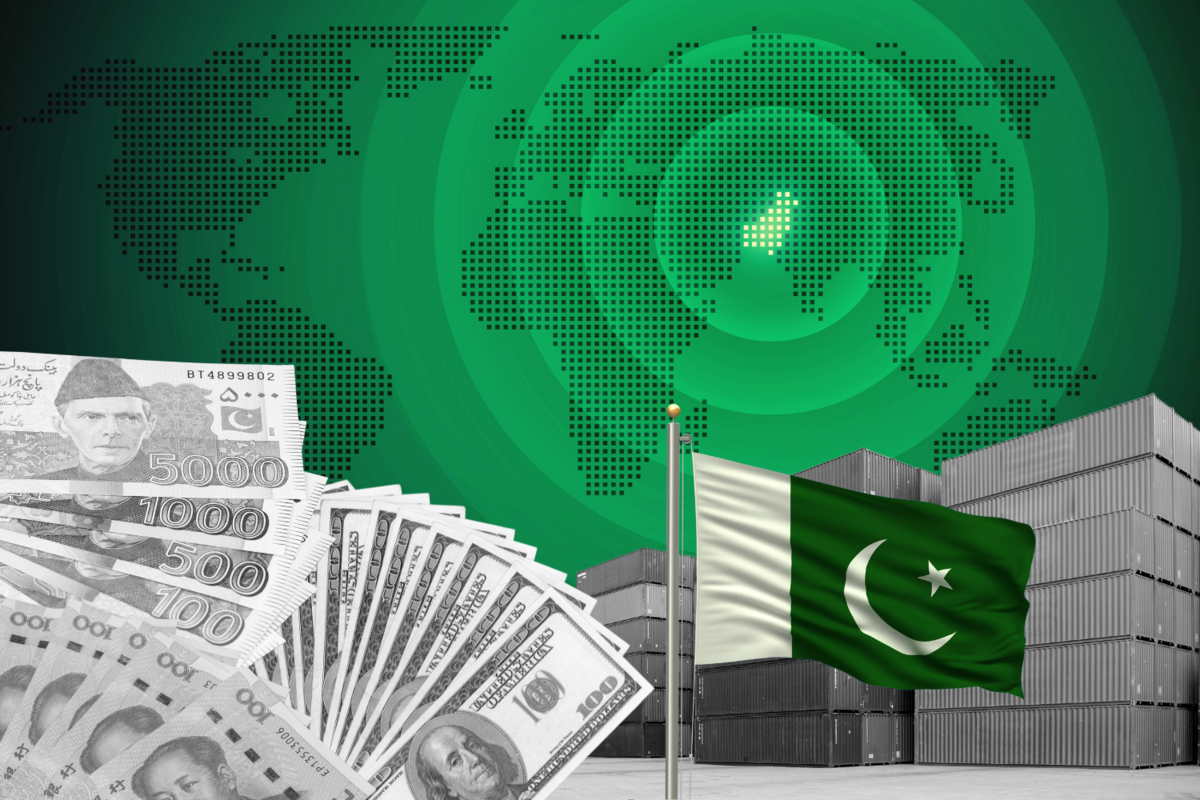
Pakistan has spent much of the past year trying to prove that a middle power can still refuse to choose. Rather than picking a lane in the US-China rivalry, Islamabad has been road-testing what a recent Belfer Center study calls cooperative geo-economics, an attempt to keep economic and security linkages alive with both Washington and Beijing simultaneously, rather than deepening dependence on either as the sole patron. It is a deliberately unglamorous strategy: no bloc, no bandwagon, just parallel hedges. Whether it can be sustained is a different question.
Courting Washington
The clearest evidence of the pivot is the speed of the US thaw. Field Marshal Asim Munir has become, in the words of one regional-security outlet, a frequent visitor to Washington, making three high-profile trips since June that culminated in a trade deal opening the door to American investment in Pakistani oil fields and minerals. That deal builds on a US Strategic Metals agreement that saw Pakistan ship its first load of rare earth minerals to the United States in October 2025 under a $500 million arrangement, and on a broader tariff deal that left Pakistan with a 19 percent US tariff rate that the lowest of any South Asian country, undercutting even India’s.
Islamabad has also worked the diplomatic angle hard. Pakistan drew Trump’s public gratitude for its counterterrorism cooperation, and after the four-day conflict with India in May, Islamabad publicly endorsed Trump for the Nobel Peace Prize for what both governments describe as his mediation. When the US and Israel struck Iran in June, Pakistan condemned the strikes while still keeping its channel to Washington open, a balancing act one analysis credits with letting Islamabad perform dual-track diplomacy trusted by both warring parties. Even the minerals push carries a strategic subtext: Washington’s interest may be less about Pakistani ore than about a symbolic signal to Beijing that the US has other options and cannot be strong-armed on critical minerals.
Managing Beijing
None of this has come at the declared expense of China. Pakistan and China used their January 2026 Foreign Ministers’ Strategic Dialogue to reaffirm what officials still call an All-Weather Strategic Cooperative Partnership, with an explicit emphasis on economic recovery and security capacity-building. CPEC’s second phase, the corridor’s newly rebranded push into special economic zones, energy and regional connectivity remains, on paper, the anchor of that relationship.
But the balancing act is visible here too, and not entirely by Pakistan’s choice. Analysts tracking the bilateral relationship note that while Beijing continues to provide financial support, CPEC’s second phase has been more restrained than its first, with new investment slowed by Chinese concerns over Pakistan’s political instability, mounting debt and persistent security threats to Chinese nationals. Some Pakistani commentary has gone further, warning that Islamabad’s rare-earths courtship of Washington risks antagonising a China that has spent four decades building dominance over rare-earth mining and processing, precisely the sector Pakistan is now offering to the Americans.
The limits of hedging
The Belfer Center’s account is careful not to romanticise the strategy. It frames Pakistan as a country poised between Washington and Beijing yet beholden to both, struggling to convert structural vulnerability into diplomatic leverage rather than the other way around. That vulnerability is not abstract: the same report puts Pakistan’s total debt and liabilities at $138 billion, a load that leaves little room for missteps with either creditor-patron. Academic work on the subject has long described this as Pakistan’s structural hedging dilemma, a country whose room for manoeuvre between the two powers has narrowed, not widened, as CPEC deepened Chinese entanglement even as Washington recalibrated toward strategic competition with Beijing.
Independent minerals analysis adds a further caveat: a CSIS assessment concludes that Pakistan’s critical minerals industry is largely nascent, with Chinese firms still controlling most of its few producing assets, meaning the very deals meant to demonstrate diversification may struggle to deliver much beyond symbolism in the near term.
Pakistan’s no-camp politics is, in that sense, less a triumph of strategic autonomy than a wager that both Washington and Beijing will keep tolerating ambiguity because each still needs something from Islamabad minerals and mediation from one, corridor loyalty and Indian Ocean access from the other. That wager has held for a year. Whether it survives the next debt renegotiation, the next Chinese security grievance, or the next American tariff review will determine whether cooperative geo-economics becomes a durable doctrine or simply the name given, in hindsight, to a longer drift toward one camp or the other.

