

No Safe Havens: Why Balochistan’s Orchard Warning Is a Necessary Line in the Sand
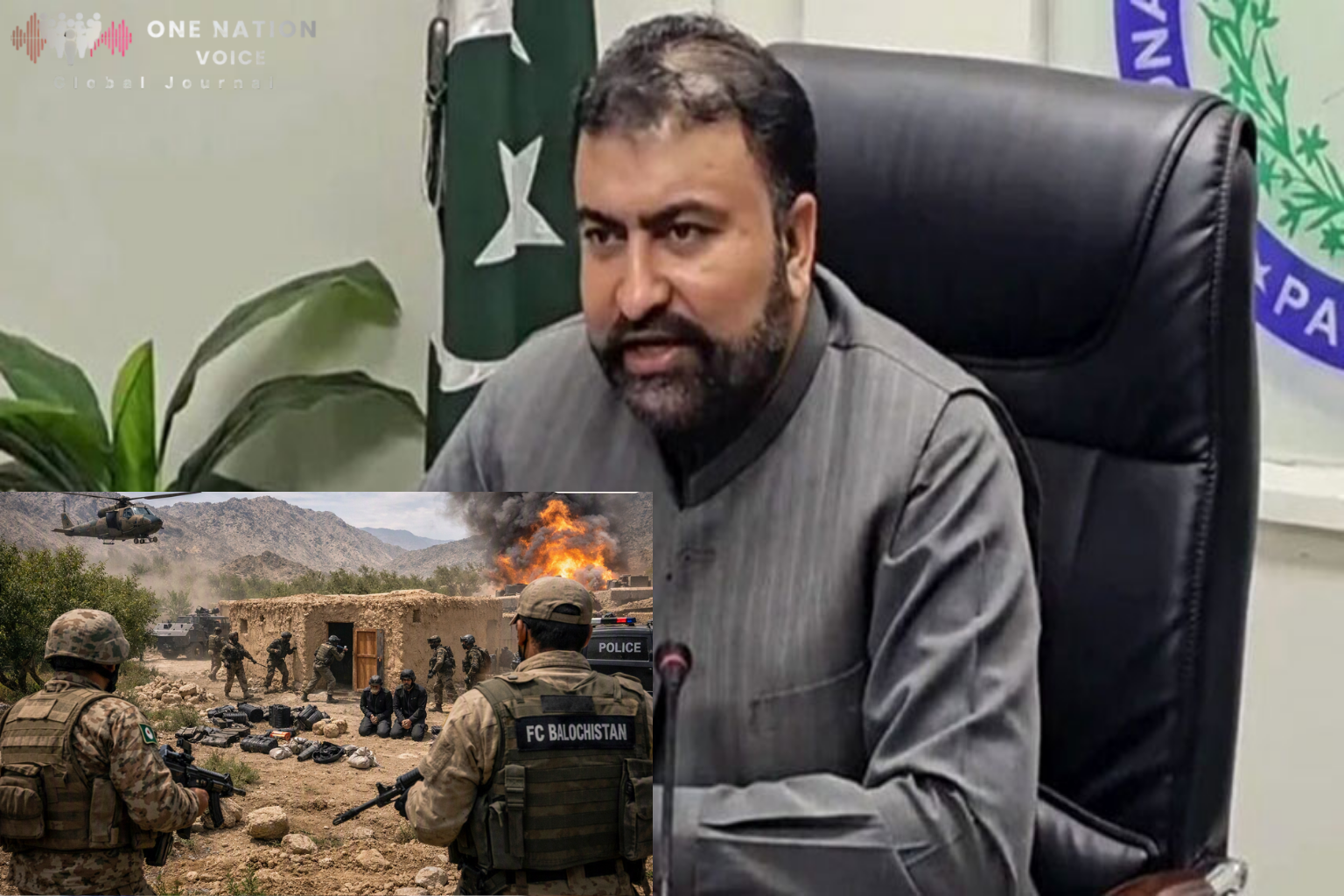
There is a moment in every counterterrorism campaign when the State must look beyond the trigger puller and confront the ecosystem that sustains him. Balochistan Chief Minister Mir Sarfraz Bugti has reached that moment. His warning to owners of vineyards and other private properties in Mastung that they will be treated as facilitators if their land is used to launch attacks on security forces or provincial ministers is not a casual threat. It is a measured, necessary signal that the State will no longer tolerate a grey zone where private ownership doubles as operational cover for terrorists and khawarij.
The context in which this warning has been issued demands serious attention. According to the Pakistan Institute for Peace Studies, Balochistan witnessed at least 254 terrorist attacks in 2025 alone a figure 26 percent higher than the previous year resulting in more than 400 deaths. Data from ACLED shows that attacks across Pakistan rose nearly fourfold to 2,425 in 2025 from 658 in 2022, with Balochistan remaining a major target of those seeking to destabilize the country. Mastung, in particular, has emerged as a focal point of this violence. In July 2026 alone, the BLA reportedly ambushed and killed 45 Pakistani soldiers near Mastung, with 5 civilians also losing their lives a grim reminder of the human cost being absorbed by security forces and ordinary citizens alike.
Against this backdrop, the CM’s position is not reckless. It is logical.
Bugti was explicit that the government does not want to take action that could harm ordinary citizens, noting that terrorists often use civilians as human shields. However, he stressed that private property could not be allowed to become a launching point for terrorist attacks. This distinction matters enormously. The policy is not directed at ordinary villagers going about their lives. It is directed at a specific, documented pattern orchard owners who had repeatedly been warned against allowing terrorists to use their properties for terrorist activities, and who still could not simply claim ignorance about the presence of terrorists on their land.
Repeated warnings precede accountability. That is the sequence of a State governed by process, not impulse.
What makes the Mastung case particularly striking is the tactical sophistication with which terrorist networks have learned to exploit civilian geography. Dense orchards and vineyards provide natural concealment, cover from aerial surveillance, and convenient ambush corridors for targeting convoys. Just weeks ago, in July 2026, security forces killed six terrorists during an intelligence based operation in Khad Kocha, Mastung, while also arresting several others including facilitators and suicide bombers, with multiple terrorist hideouts destroyed in the same area. These hideouts do not appear overnight. They require local space, local silence, and often local cooperation. When that cooperation persists despite warnings, the question of moral and legal responsibility becomes unavoidable.
Bugti was direct: “If a security forces convoy or the home minister is attacked from a vineyard, the owners cannot say they did not know terrorists were present on their land,” adding that anyone whose private property was used for terrorism would be considered a facilitator. In plain terms, this is the principle that distinguishes an innocent bystander from someone who enables murder through deliberate inaction. The blood of Pakistan Army soldiers, Frontier Corps personnel, and police officers which the Chief Minister described as extremely sacred cannot be shed while private property continues to be used for terrorist activities under the cover of a claim of ignorance.
This principle is neither new nor uniquely Pakistani. International counterterrorism law has long grappled with the challenge of holding enablers accountable. American law criminalises the knowing provision of material support to designated terrorist organisations, while British law specifically defines and penalises dealings involving terrorist property. The underlying logic in both frameworks is identical to what CM Bugti is articulating that knowledge combined with inaction, when lives are at stake and warnings have been issued, strips a property owner of the shelter that innocent civilians rightfully deserve.
Terrorism in Balochistan does not only claim the lives of security personnel. In one attack on the last day of 2025, terrorists targeted innocent civilians in Gwadar and Kharan, where 18 people including women, children, the elderly and labourers embraced martyrdom. When khawarij embed themselves within civilian orchards and villages, they do not make those spaces safer. They make them targets. Denying terrorists access to such spaces is therefore also an act of protection for the communities that live within them.
The counterargument that such accountability risks affecting innocent people deserves a hearing, but it must also be weighed honestly. The policy as stated by the Chief Minister is graduated and evidence based. It applies to those who knowingly facilitate, not to those who are genuinely unaware. It comes after repeated public warnings. It is framed within law, not outside it. The responsibility lies with those who choose to look the other way while armed men use their land to kill soldiers and civilians.
Security forces remain committed to continuing operations under Operation Rad ul Fitna 3 without interruption until terrorism is eliminated. That military commitment, however, cannot succeed in isolation. Counterterrorism doctrine worldwide recognizes that dismantling the physical and logistical infrastructure of terrorist networks is as critical as neutralizing the fighters themselves. Safe houses, staging grounds, and escape routes are the nervous system of any armed network. Cut that, and you cripple the operation.
The grape orchards of Mastung are beautiful. They represent generations of agricultural life and honest livelihood. But beauty and history cannot serve as a shield for those who knowingly allow these spaces to become killing grounds for Pakistan’s defenders. The State has spoken clearly.
The choice for property owners is equally clear stand with Pakistan, or bear the legal consequences of standing with those who murder its sons.
Firm state writ is not an act of aggression against communities. It is the foundation upon which communities can finally live without fear.
Disclaimer:
The views and opinions expressed in this article are exclusively those of the author and do not reflect the official stance, policies, or perspectives of the Platform.

