


Afghanistan’s Leftover Arsenal and Pakistan’s Rising Terror Threat
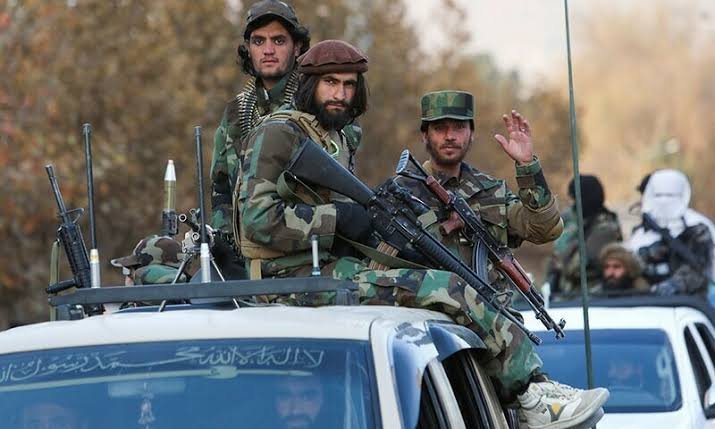
A war can end with the withdrawal of soldiers, but its weapons may continue fighting for years. Afghanistan is a stark example. When the United States completed its withdrawal in August 2021 and the Afghan state collapsed, the Taliban inherited an enormous stockpile of military equipment previously supplied to the Afghan National Defense and Security Forces. According to the US Special Inspector General for Afghanistan Reconstruction, or SIGAR, equipment worth approximately $7.12 billion remained in Afghanistan. This distinction matters: much of it was not literally abandoned on airfields by departing American troops but had been transferred to Afghan forces over two decades and subsequently fell under Taliban control.
The scale was extraordinary. SIGAR documented hundreds of thousands of weapons and tens of thousands of vehicles previously supplied to Afghan security forces. Its assessment identified more than 316,000 remaining weapons of various types, over 43,000 ground vehicles and approximately 17,400 helmet-mounted night-vision devices. Afghanistan had also received sophisticated communications systems, optics, laser-aiming equipment, GPS devices, surveillance systems and other technology designed for a conventional security force. When the Afghan government collapsed, controlling this vast inventory became almost impossible.
For Pakistan, the consequences have been severe. The most worrying development is not simply the existence of these weapons in Afghanistan, but their movement into militant networks. A United Nations Security Council Monitoring Team report provided unusually specific evidence. It reported that Taliban commanders had supplied the Tehreek-e-Taliban Pakistan with significant quantities of weapons, including M24 sniper rifles, M4 carbines equipped with ACOG sights and M16A4 rifles fitted with thermal scopes. The same report noted that night-vision capability was increasing the lethality of militant attacks against Pakistani security forces.
SIGAR reinforced these concerns in April 2025. Citing UN monitoring findings, it reported that groups operating in Afghanistan, including TTP and other extremist organisations, continued to obtain weapons seized from the former Afghan army. These weapons were reportedly transferred by Taliban authorities or acquired through black markets. This creates a dangerous ecosystem in which captured military stockpiles, militant organisations, smugglers and criminal markets overlap.
Investigative journalism has provided further evidence. A 2025 Washington Post investigation traced US-origin weapons recovered from militants in Pakistan back to equipment supplied to Afghan security forces before the Taliban takeover. The investigation found American rifles and night-vision equipment increasingly appearing among insurgents fighting Pakistan. Such findings make it increasingly difficult to dismiss the proliferation problem as merely Pakistani rhetoric.
These weapons have changed the tactical environment. M4 and M16 rifles, sniper systems, laser sights, grenade launchers and night-vision equipment provide militants with capabilities far beyond those offered by traditional assault rifles. Night-vision devices are particularly significant. Pakistan’s security forces once enjoyed a substantial technological advantage during night operations. Militants equipped with modern optics can now detect approaching troops, establish ambush positions, move through darkness and conduct more coordinated attacks.
Sniper and thermal capabilities create a similar problem. A militant positioned at distance with a modern rifle and advanced optic can threaten checkpoints, patrols and security installations without immediately revealing his position. Communication equipment and commercially available drones further improve reconnaissance and command-and-control. Weapons proliferation therefore does not merely increase the quantity of militant firepower. It improves accuracy, situational awareness, mobility and survivability.
Yet weapons alone cannot explain Pakistan’s deteriorating security environment. Guns become far more dangerous when combined with sanctuary. UN monitoring has repeatedly described Afghanistan as hosting numerous terrorist organisations. One report estimated TTP’s strength at roughly 6,000 to 6,500 fighters and stated that, with Taliban acquiescence and at times support, the organisation had intensified attacks inside Pakistan. It also reported increased collaboration among TTP, Taliban elements and Al-Qaeda. Another UN assessment said more than two dozen terrorist groups continued operating in Afghanistan and identified TTP as the largest.
The result is visible inside Pakistan. The Pakistan Institute for Peace Studies recorded 699 terrorist attacks in 2025, representing a 34 percent increase over 2024. Those attacks killed 1,034 people and injured 1,366. The trend worsened further during 2026. PICSS recorded 225 militant attacks in September alone, the highest monthly number in twelve years, while attacks during the first nine months of 2026 were 52 percent higher than during the corresponding period of 2025.
Pakistan therefore faces three mutually reinforcing threats: sophisticated weapons, militant sanctuary and organisational cooperation. Removing any one of them would reduce terrorist capacity. Allowing all three to coexist creates a far more serious regional security challenge.
Responsibility cannot end with arguments over who technically owned a rifle when Kabul fell. Washington, NATO states, Afghanistan’s de facto authorities and regional governments all have an interest in preventing military equipment from circulating through terrorist and criminal markets. Weapons tracing, border interdiction, intelligence cooperation and pressure against militant sanctuaries should become part of a coordinated international response.
Pakistan is paying in lives for the uncontrolled proliferation that followed Afghanistan’s collapse. The lesson of 2021 is therefore larger than Afghanistan itself. Military withdrawals end deployments, not necessarily wars. When sophisticated arsenals are left without effective accountability, yesterday’s security assistance can become tomorrow’s terrorist firepower.

