

Murad Saeed Case Tests PTI’s Accountability Narrative
For thirteen years, Pakistan Tehreek e Insaf built its entire political identity on a single, relentless promise: accountability. Its leaders delivered fire and brimstone speeches about corruption, pointed fingers at every rival, and told millions of Pakistanis that they alone represented honesty in public life. Today, that glass house is cracking and the stones are coming from inside.
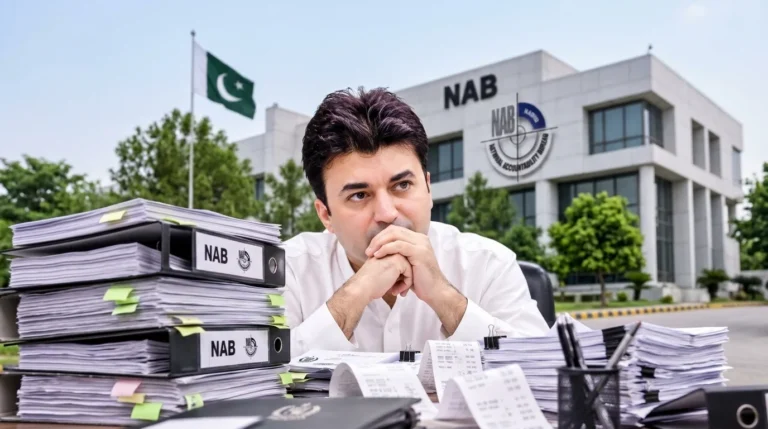
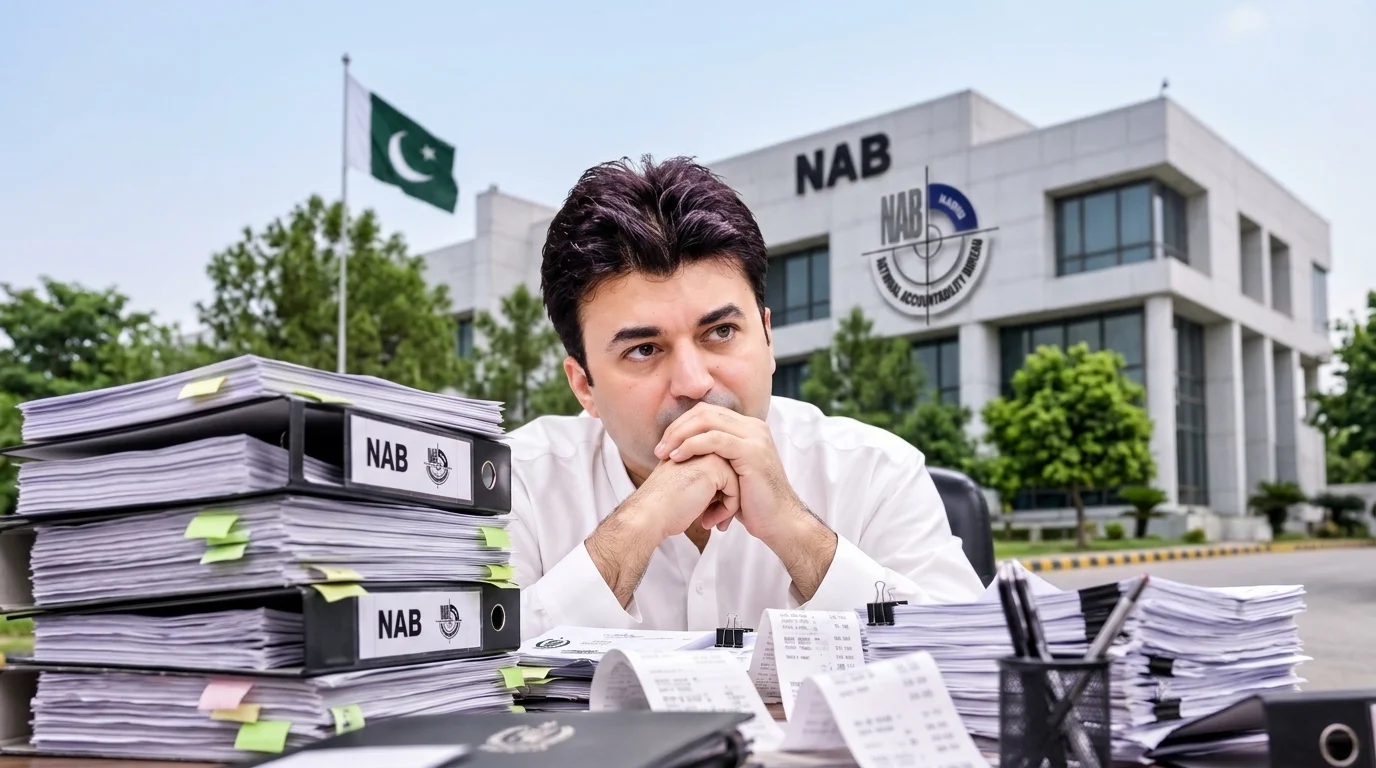
The National Accountability Bureau’s inquiry into former federal minister Murad Saeed is not a minor footnote. NAB launched an investigation into several allegations against the former PTI federal minister, seeking records from the Secretary of Local Government, Livestock, and Irrigation Department of Khyber Pakhtunkhwa. According to the NAB letter, Murad Saeed allegedly acquired properties through frontmen named Hameed and Fazal Mullah. Additionally, NAB Peshawar issued a notice to Murad Saeed over alleged irregularities involving his frontman Afzal Khan and others connected to a private transport company in Swat. The inquiry reportedly also covers Shamlati communal land purchased in Swat in 2020, the very year Murad Saeed was serving as a federal minister and wielded the authority of the state.
This is not incidental. When a minister holds the power of the state in his hands and land acquisition happens simultaneously through alleged frontmen, the question of conflict of interest writes itself. The public has a right to ask: under whose authority, and using whose money?
The case of Dr. Amjad Ali, PTI’s Special Assistant to the Chief Minister for Housing in KP, tells a parallel story. The Peshawar High Court temporarily barred NAB from taking action against Dr. Amjad Ali, who had filed a petition alleging harassment, after a complaint alleged illegal acquisition of 200 kanal property, a residential house, and other assets. During subsequent proceedings, NAB’s special prosecutor informed the court that certain assets held in the names of a female relative and close associate of the minister allegedly belonged to him but had not been declared. Meanwhile, the Election Commission of Pakistan also summoned Dr. Amjad Ali after discrepancies were found in his 2023 to 2024 Statement of Assets and Liabilities. A man entrusted with overseeing housing for the people of KP facing questions about undisclosed properties is, at minimum, a deeply uncomfortable irony.
The irony sharpens further when one recalls that Prime Minister Imran Khan publicly announced Murad Saeed as the “best performing minister” in his federal cabinet. Praise from the top insulates leaders temporarily. It does not protect them from paper trails.
There is also the larger picture of PTI’s governance in Khyber Pakhtunkhwa that demands honest scrutiny. The party governed the province for over a decade while promising systematic reform and a model of clean administration for the rest of the country. Yet a mega scandal worth approximately Rs 40 billion emerged in Upper Kohistan, where enormous sums were allegedly drawn from the provincial treasury. NAB KP formally upgraded the matter into a full investigation, and by July 2025, eight suspects including officials, bankers, and contractors had been arrested.
A party that spent years lecturing Pakistan about corruption watched Rs 40 billion vanish from its own province.
The defence that PTI’s supporters often deploy, that these inquiries are politically motivated, deserves a direct response. The existence of political motivation behind accountability proceedings does not make corruption disappear. Documents do not change their content because of who asked for them. Property records do not rearrange themselves because a party considers itself above suspicion. If the allegations are baseless, the answer is transparency and cooperation, not flight. As recently as this month, the government’s political adviser publicly claimed that Murad Saeed was in Afghanistan and had been controlling KP’s affairs from there, including allegedly influencing the appointment of a new KP chief minister. Whether that specific claim proves accurate or not, the image of a leader evading accountability from across a border is damaging on its face.
Pakistan’s accountability crisis is not partisan, that must be stated clearly. Corrupt practices have thrived across party lines for decades. But PTI’s case is particularly stark because no party in Pakistan’s recent history staked more of its identity on the promise of clean governance. When other parties’ leaders face NAB, there is little philosophical contradiction involved.
When PTI’s leaders do, the party’s foundational claim collapses.
The people of Pakistan who rallied behind PTI’s accountability slogan were not wrong to want what the slogan promised. They deserve exactly that, accountability applied equally, regardless of political affiliation, without exception. Public money is not a reward for political loyalty. It belongs to the citizens of this country, to the farmer in Swat, the daily wage worker in Peshawar, the school student in Kohistan whose future was pledged as collateral for political ambition.
No amount of rhetoric, no threat of protest, no claim of victimhood settles these questions. Only honest answers do. If Murad Saeed’s hands are clean, let him say so before the law, not in press statements, not in social media videos, but in front of the investigators who hold the records. The same applies to every PTI leader and every leader of every party under scrutiny. The law does not negotiate with slogans.
Pakistan does not need another political performance of accountability. It needs the real thing, applied without fear or favour, to every name on every file, wherever the evidence leads.

