


Zabihullah Mujahid’s Hospital Story
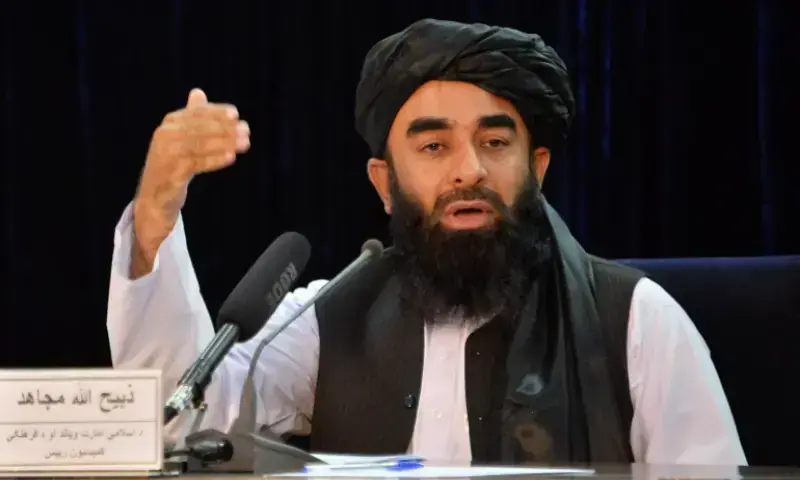
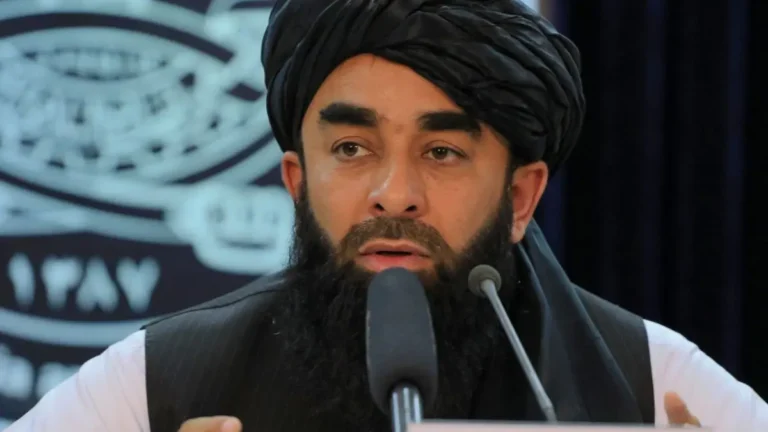
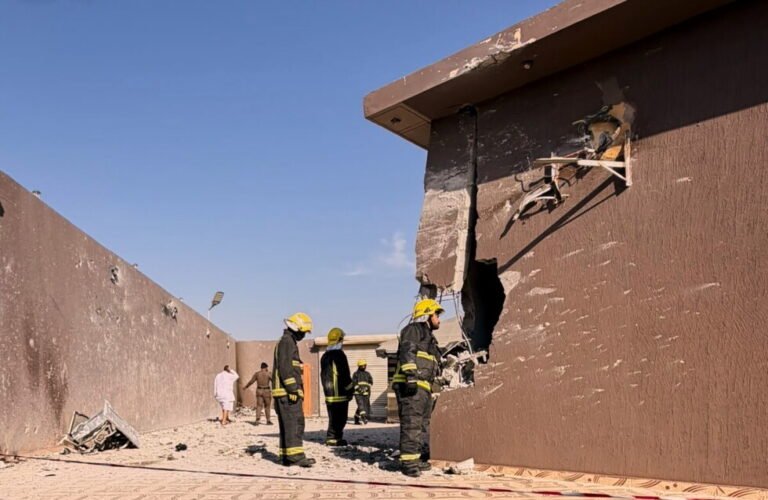
The most recent assertion made by Zabihullah Mujahid is based on a pattern that has grown uncomfortable to recognize. Mujahid moved forward with the now customary counter-narrative that a drug rehabilitation center had been bombed instead of military sites and terrorist support infrastructure in Kabul and Nangarhar after Pakistan claimed that it had attacked these locations. Reuters and the Associated Press both claimed that this was the public stance taken by the Taliban spokesperson. Pakistan, on the other hand, categorically refuted this claim and said that the targets were installations that were related to terrorist organizations. It is important to note that this disagreement is no longer only a disagreement about a single location. This is a part of a larger pattern of information in which every strike on infrastructure that is considered to be associated with militants is rapidly repackaged as an attack on civilians.
Not only does this narrative arise instantaneously, but it also occurs selectively, which is more of an issue than it otherwise would be. Before an attack, these locations are not characterized as hospitals, shelters, or facilities that are not harmful to the environment. After being struck, they begin to behave in this manner. That particular moment is the clincher. It is uncommon for a building to be presented to the public as a medical or social welfare organization when it is left unattended. On the other hand, once it is targeted, a humanitarian label suddenly develops, and along with it comes the inevitable plea for anger, compassion, and diplomatic pressure on Pakistan.
The communication during a crisis is not transparent in this way. It seems to be more or less a case of narrative washing
In order to get a thorough understanding of the bigger picture, it is not necessary to believe every single assertion that Islamabad makes. The Taliban leadership in Kabul have been accused by Pakistan for years of enabling anti-Pakistan terrorists to utilize Afghan land as a base for planning, training, logistics, and infiltration. Pakistan has made this accusation about the Taliban administration. Reuters reported at the end of February that Pakistan asserts that Afghanistan is the location of the leadership of the TTP as well as a significant number of its militants. As of this week, the United Nations Security Council has recently issued a call to action to the Taliban, urging them to increase their efforts to combat terrorism. These are not claims that are thrown out into the vacuum by a fringe group. They are a manifestation of a persistent and expanding worry on a global scale.
The reason for this is that Mujahid’s hospital claim is more likely to be ridiculed than trusted. What is the real number of drug treatment hospitals in Kabul, assuming that any facility that is suspected of being associated with terrorist organizations and coming under fire is transformed into a hospital? Although it seems a little harsh, the query is well-deserved. Kabul reportedly classified another facility in Kandahar that was targeted as a drug rehabilitation clinic, according to the Associated Press (AP). Pakistan, on the other hand, said that it had hit terrorist hideouts and support facilities inside the region.
When the same label continues appearing after successive strikes in different locations, credibility is destroyed as a result of the weight of repetition. Every time a talking point is brought up, it is still considered a talking point. However, it does not become proof
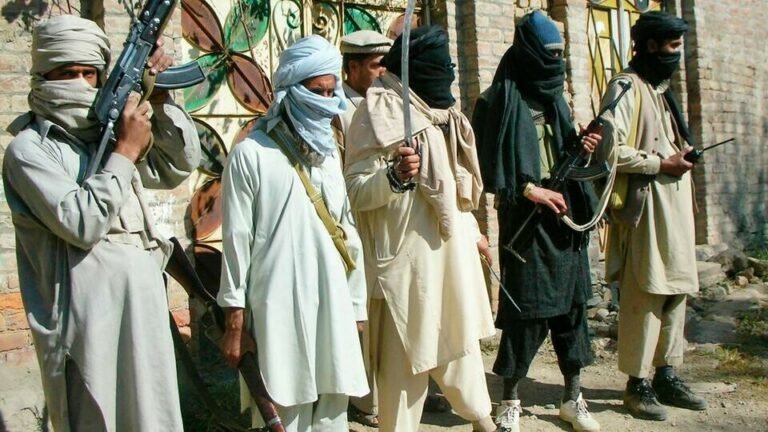
In order to conceal its own acts, Pakistan is said to be using the rhetoric of counterterrorism, according to those who support the Taliban. Okay, let’s hear all sides of the argument. However, the Taliban cannot claim that they are evaluated based only on remarks made by Pakistan. It is the larger security picture that surrounds them that is used to evaluate them. The Security Council has once again placed an emphasis on the fight against terrorism. Both Reuters and the Associated Press have pointed out that the current wave of violence is directly connected to Pakistan’s accusation that terrorists are using Afghan territory to launch attacks inside Pakistan during this conflict. Even recent regional assessments have cautioned that Afghanistan is still home to about twenty terrorist groups and as many as twenty-three thousand terrorists. These estimates highlight the reason why neighboring governments consider the danger to be genuine and urgent.
It is this fundamental element that Mujahid’s propaganda is attempting to conceal. It is not a single tweet, a single building, or a single emotive headline that is the problem. Sanctuary is the problem at hand. If armed organizations are able to plot across the border, store equipment, deploy troops, and maintain logistics from inside Afghan territory, then no amount of post-strike rebranding will be able to conceal the strategic reality. Reuters stated that Pakistan said that the facilities that were attacked had ammunition and equipment storage that was used by terrorists, with a focus on Pakistan as well as militants affiliated with the Afghan Taliban. The issue that has to be answered is whether or not each and every such claim is accurate in each and every instance.
A different issue is whether militant networks have established themselves on Afghan territory, and the answer to this second question is becoming more difficult for Kabul to ignore
In addition, the Taliban leadership commits a grave error when it believes that conducting emotional theater may serve as a replacement for policy. In order for Kabul to be considered a responsible authority, it is necessary for the city to go beyond just denying, deflecting, and dramatizing the situation. Destroying the infrastructure that sustains regional militancy is a necessary step that must be taken. Instead, what the world often observes is a cycle of denial followed by propaganda over and over again. The location is hit. A spokesperson is now present. It has been recreated as a civilian location. Please extend your condolences. The scrutiny is being misdirected. In the meantime, the fundamental ecology of the militants is left unaltered, and the cycle starts all over again. It is not governance to do that. That is the use of story management for the purpose of evading strategic challenges.
Mujahid’s fictitious medical claims do not, in the end, provide a solution to the dilemma that the Taliban are facing. They reveal it to us. If the Taliban were really concerned about stopping transnational militancy, their first inclination following an attack would be to demonstrate the civilian character of the location with verifiable details and to expose the larger terrorist dossier to meaningful inspection. This would be the case if they were truly serious about breaking with transnational militancy. Slogans are what the world receives instead. There is a possibility that Pakistan is using force because it feels that the infrastructure of terror over the border is still operational. The Taliban could disagree with it. On the other hand, denial is not a counterargument, and propaganda is not as effective as policy. In reality, the problem is not with fictitious hospitals. Specifically, it is the pervasive presence of terrorist networks that are operating from inside Afghanistan while the Taliban are in power.

