
Pakistan’s Measurable Progress on Women’s Empowerment
Public debate about Pakistan’s social progress often begins, and too often ends, with international rankings. Those reports matter. They can spotlight gaps, pressure governments to act, and give civil society a framework for accountability. But they can also flatten reality. A country as large, unequal, and institutionally layered as Pakistan cannot be understood through a single scorecard or an annual recommendation from abroad. When the discussion turns to women’s empowerment and the protection of religious minorities, the better question is not whether Pakistan has solved its problems. It clearly has not. The real question is whether the country is moving forward in measurable, institutional ways. On that test, the answer is yes.
Take the debate around the Women, Business and the Law 2026 report. Much of the commentary has zoomed in on Pakistan’s legal framework score of 46.68 and its enforcement perception score of 27.35, both below global averages. Those numbers are real, and they should not be brushed aside. But they are not the whole story. They reflect one way of measuring progress, not the only one. If we look at domestic data, a more layered and more honest picture emerges. Pakistan’s Labour Force Survey 2024 to 25 shows female labour force participation rising to 24.4 percent, up from 21.4 percent in 2020 to 21.
That is not a symbolic change. It means more women are entering economic life, earning incomes, supporting families, and claiming public space in a country where structural barriers remain serious
The significance of that rise becomes even clearer when set against the broader expansion of Pakistan’s labour force, which grew from 71.8 million to 85.6 million people over the same period. Women were not standing still while the economy shifted around them. They were part of that expansion. The International Labour Organization’s estimate of 24.26 percent female labour force participation in 2024 reinforces the same trend. In other words, the movement is visible across sources, not just in one national survey. For a country dealing with inflation, debt stress, recurring political strain, and climate shocks, that kind of steady increase matters.
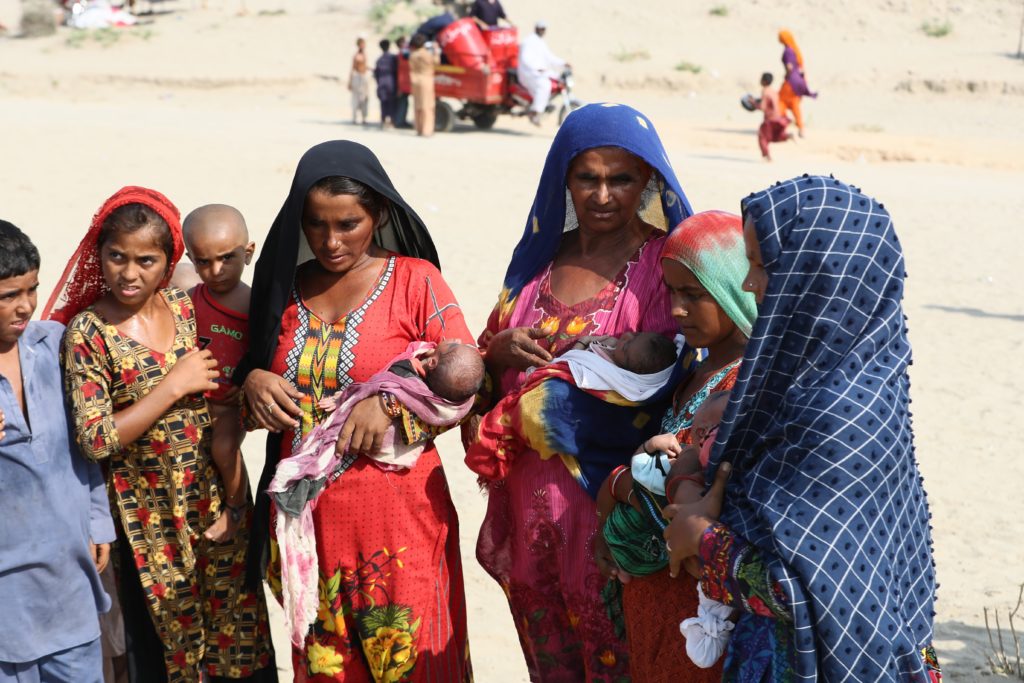
It matters even more when we remember where many Pakistani women actually work. Around 61.4 percent of employed women are in agriculture. They are not a side story in the rural economy. They are central to it. They help sustain food production for a population nearing 240 million. Yet women’s work in agriculture has long been undercounted, underpaid, and taken for granted. The fact that more women are being recognized within the labour force is itself part of progress. So is the rise in female entrepreneurship, from 19 percent to 25.2 percent. That shift points to women pushing beyond survival work into enterprise, small business, digital services, and market activity that gives them greater autonomy.
Education tells a similar story. Pakistan’s overall literacy rate for those aged 10 and above has reached 63 percent, with female literacy at 54 percent and youth literacy at 77 percent. The most encouraging sign may be the gains among rural young women, whose literacy rate rose by nine percentage points in six years to reach 63 percent. That is not a miracle, and it does not erase the millions of girls still out of school. But it is exactly how real social change tends to happen, unevenly, gradually, and then all at once once momentum builds.
If rural young women are advancing at one of the fastest rates in the education sector, that is not a footnote. It is a signal
Even the Women, Business and the Law 2026 report contains evidence that deserves more attention than it gets. Pakistan’s score for supportive policy frameworks stands at 50.68, above the global average of 47. That does not mean the country has perfected implementation. It means the state has been building tools that can support women more effectively. The Benazir Income Support Programme is one such tool. With more than 10 million low income women receiving support through digital and mobile linked transfers, and with Rs 716 billion allocated in the 2025 to 26 federal budget, BISP is not just a welfare scheme. It is one of the largest platforms for women’s financial inclusion in the country.
The same pattern appears in legal and institutional reform. Provincial domestic violence laws, Women Protection Authorities, gender based violence courts, shelter homes, women police desks, and virtual reporting systems all point in one direction. The system is trying, slowly and imperfectly, to become more responsive to women’s needs. Reserved seats for women in the National Assembly and provincial legislatures also matter for the same reason. Quotas are often dismissed as procedural, but they create political presence, and presence can shape priorities, budgets, and lawmaking.
A similar mistake is often made in discussions about religious freedom in Pakistan. External reports, including the 2026 annual report of the United States Commission on International Religious Freedom, tend to dominate the conversation. Yet those recommendations are not the final word on conditions inside the country. Pakistan’s own constitutional framework already contains strong guarantees through Articles 20, 25, and 36. More importantly, recent reforms suggest those guarantees are being given firmer institutional form. The National Commission for Minorities Rights Act 2025, passed in December 2025, created a statutory body dedicated to monitoring and protecting minority rights.
That was not cosmetic. It fulfilled a longstanding Supreme Court directive from 2014 and gave minority protection a clearer institutional anchor
Other reforms show similar intent. Punjab’s Child Marriage Restraint Ordinance 2026 raised the legal age of marriage to 18 for both boys and girls and introduced serious penalties for violations. In practice, that matters deeply for vulnerable minority girls who face risks of forced marriage and coercion. Efforts to prevent misuse of blasphemy laws also point to a state that, however unevenly, is trying to respond to one of the country’s most dangerous fault lines. Procedural safeguards, judicial training, and court ordered scrutiny are not a complete answer. But they are better than denial, and better than drift.
None of this means Pakistan should be congratulated into complacency. Women still face exclusion, violence, and wage inequality. Religious minorities still face fear, prejudice, and legal vulnerability. But it is lazy to pretend nothing is changing because the rankings remain harsh. Real progress is often messy, partial, and hard won. Pakistan’s story on women’s empowerment and minority protection is not one of perfection. It is one of reform under pressure, institution building under strain, and social change pushed forward by policy, persistence, and public demand. That story deserves to be measured not only by what outsiders rank, but by what the country is actually building.