


Balancing the Unbalanceable
Pakistan’s Diplomacy in the Iran US Israel Crisis
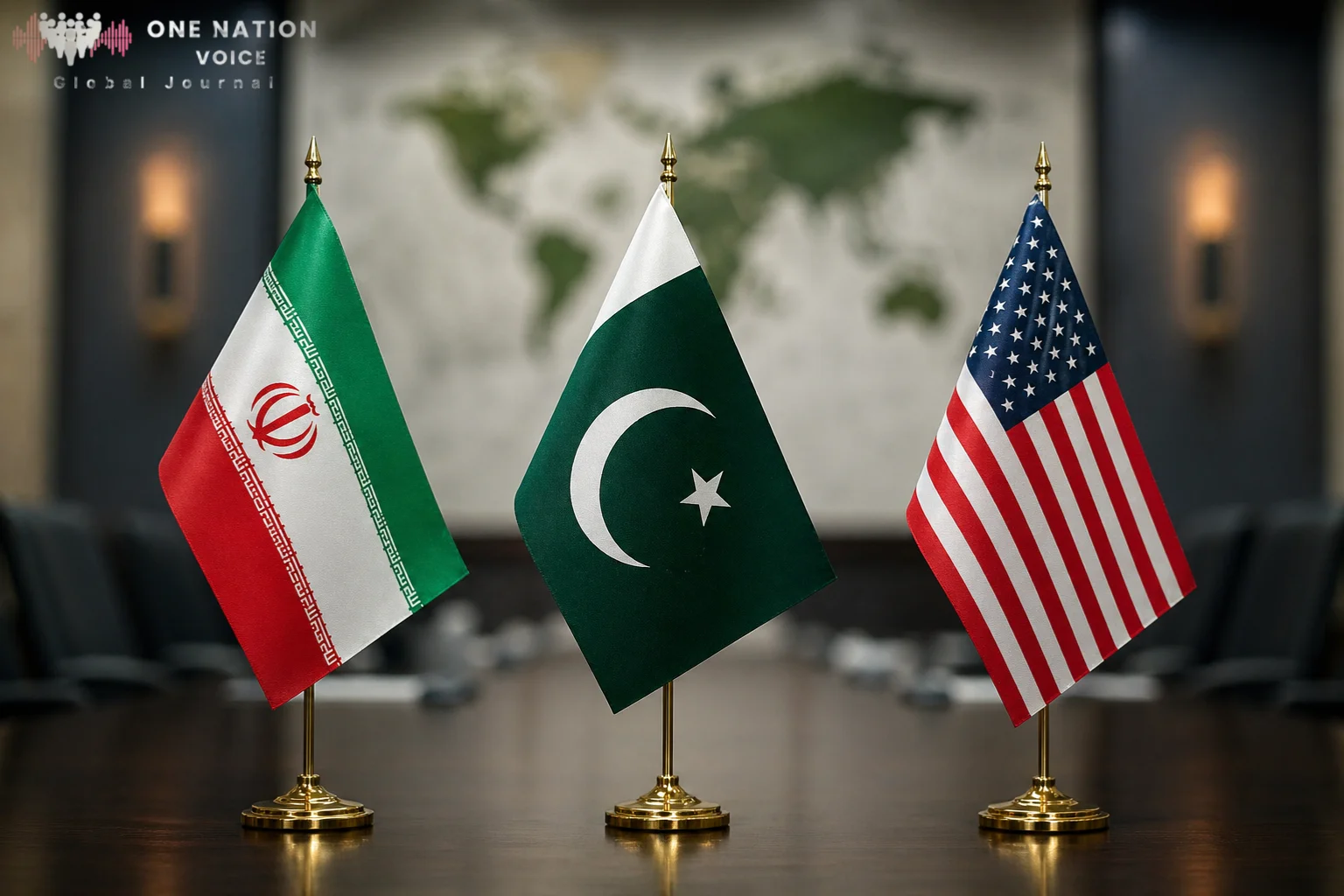
As tensions deepen in the unfolding Iran US Israel crisis, the search for credible mediators has intensified. While traditional diplomatic hubs like Qatar and Oman have long served as neutral venues for backchannel negotiations, Pakistan is increasingly being viewed as a viable alternative. This shift is neither accidental nor temporary. It is rooted in Pakistan’s evolving foreign policy doctrine i.e. defined by strategic clarity, balanced global relationships, and a growing capacity to engage multiple stakeholders simultaneously. In a polarized world, Pakistan’s ability to maintain working relations with both China and the United States adds a unique dimension to its diplomatic profile. How Pakistan is balancing this unbalanceable situation through its calibrated diplomacy? The answer to this interesting question may be explained in the following paragraphs:
1. Strategic Autonomy and Hedging
Pakistan’s diplomatic posture today is best understood through its pursuit of strategic autonomy, reinforced by a policy of strategic balancing. Rather than limiting itself to a single bloc, Islamabad has proactively cultivated relationships across competing blocs. Its deepening partnership with China, particularly in economic and strategic domains, coexists with continued engagement with the United States on security, trade, and regional stability.
This dual engagement enhances Pakistan’s credibility as a neutral actor. In the Iran US Israel crisis, where mistrust defines interactions, Pakistan’s ability to communicate with all sides without being perceived as partisan is a significant advantage. Strategic hedging provides Islamabad with flexibility, allowing it to facilitate dialogue while safeguarding its own national interests. It is this balance, between engagement and independence, that positions Pakistan as a potential bridge in an otherwise fragmented diplomatic landscape.
2. Geostrategic Location: A Crossroads of Regions
Geography has always been central to Pakistan’s strategic importance. Situated at the intersection of South Asia, Central Asia, the Middle East, and China, Pakistan occupies a pivotal position in global geopolitics. Its proximity to Iran, coupled with access to the Arabian Sea and key maritime routes, makes it directly relevant to the dynamics of the current crisis.
This geostrategic location enhances Pakistan’s diplomatic leverage. It is not merely an external observer but a neighboring state with immediate stakes in regional stability. Energy corridors, trade routes, and security considerations all converge in Pakistan’s vicinity, amplifying the consequences of any escalation in the Middle East.
Moreover, Pakistan’s position allows it to engage a wide spectrum of actors, from Gulf states to global powers, making it a natural conduit for communication.
In a crisis where direct dialogue is often constrained, such geographic centrality can translate into diplomatic opportunity.
3. Historical Credibility and Diplomatic Legacy
Pakistan’s emergence as a mediator is also underpinned by its historical record of facilitating sensitive international engagements. One of the most notable examples remains its role in the early 1970s in enabling the historic rapprochement between the United States and China. Acting as a discreet intermediary, Pakistan helped bridge a divide that had seemed insurmountable, reshaping global politics in the process.
This legacy contributes to Pakistan’s present day credibility. In the Iran US Israel crisis, where trust deficits are profound, a mediator’s past performance carries significant weight. Pakistan’s track record of quiet diplomacy and its ability to handle sensitive negotiations strengthen its claim to a constructive role.
4. Civil Military Coordination: A Foundation of Trust
A crucial factor behind Pakistan’s diplomatic effectiveness is the coordination between its civilian leadership and military establishment. Where internal alignment strengthens foreign policy credibility, Pakistan has increasingly demonstrated to present a relatively unified stance on key external issues, particularly those involving national security.
This civil military alignment enhances trust among international actors. In a crisis as sensitive as the Iran US Israel confrontation, stakeholders seek assurance that commitments made at the negotiating table will be supported by all relevant institutions. Pakistan’s coordinated approach helps provide this assurance.
Furthermore, the military’s experience in regional security complements the diplomatic efforts of civilian authorities, creating a comprehensive and coherent foreign policy framework. This synergy strengthens Pakistan’s ability to engage effectively with all parties involved.
5. Societal Dimension: The Significance of a Shia Population
An often overlooked aspect of Pakistan’s diplomatic positioning is its internal societal composition, particularly its significant Shia population alongside a Sunni majority. This demographic diversity provides Pakistan with a unique vantage point within the broader Muslim world, enabling it to engage with different sectarian constituencies with a degree of legitimacy.
In the context of tensions involving Iran, a predominantly Shia state, this internal balance can serve as a subtle yet important diplomatic asset. It allows Pakistan to project itself as a bridge rather than a partisan actor in sectarian or ideological divides that often shape Middle Eastern geopolitics.
While domestic harmony remains essential to fully leverage this advantage, the presence of a sizeable Shia community adds an additional layer of credibility to Pakistan’s engagement with Iran, without alienating its ties with other regional actors.
In conclusion, Pakistan’s growing role in the Iran US Israel crisis reflects a convergence of strategic foresight and structural advantages. Through strategic autonomy, geostrategic relevance, historical credibility, institutional coordination, and societal diversity, Islamabad is positioning itself as a credible mediator in a deeply polarized conflict.
Balancing such competing interests is undoubtedly a daunting task. Yet, in attempting to do so, Pakistan is redefining its place in global diplomacy, not merely as a participant in great power rivalries, but as a potential facilitator of dialogue in one of the world’s most volatile regions.
Disclaimer:
The views and opinions expressed in this article are exclusively those of the author and do not reflect the official stance, policies, or perspectives of the Platform.