







Afghanistan’s Resistance Widens
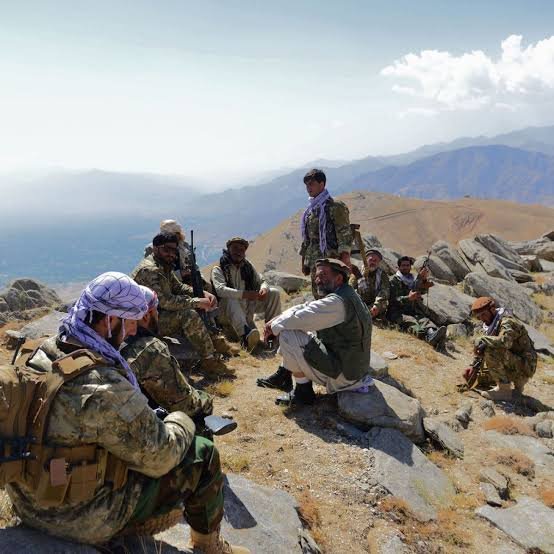
Nearly five years after the Taliban returned to power, Afghanistan’s armed opposition appears to be entering a more consequential phase. Resistance is no longer defined solely by scattered ambushes in Panjshir or symbolic attacks in Kabul. It is increasingly characterized by multiple organizations, a widening geographical presence, recurring operations and signs of local logistical support. This does not mean the Taliban regime is approaching military collapse. It does, however, suggest that anti-Taliban forces are moving beyond organizational survival and developing the foundations of a sustained, dispersed insurgency.
The Taliban’s central political claim is that it has restored security and exercises uncontested authority throughout Afghanistan. That claim becomes harder to maintain when armed groups repeatedly strike checkpoints, intelligence facilities and military units. A UN Security Council report stated that the National Resistance Front claimed 73 attacks and the Afghanistan Freedom Front 43 between January and July 2025. Although these totals were lower than the groups’ claimed figures for 2024, 261 NRF attacks and 83 AFF attacks, they still demonstrated continuing operational capability despite Taliban counterinsurgency pressure.
The UN assessment described the violence as sporadic and not yet a serious threat to Taliban rule, but the persistence of attacks confirms that the resistance has not been eliminated
Badakhshan has emerged as the most important theatre in this evolving campaign. Its mountainous terrain, difficult access routes, historical anti-Taliban sentiment and proximity to Tajikistan make it particularly suitable for guerrilla warfare. In May 2026, the AFF announced that its operational units were active in Badakhshan and had engaged Taliban forces several times. UN reporting cited by KabulNow also confirmed that the AFF and NRF retained active military elements and continued to claim attacks across Afghanistan. In July, the NRF claimed that an attack on a Taliban brigade in Ragh district killed two Taliban members, wounded three others and destroyed a military vehicle. Such claims cannot always be independently verified, but their frequency and geographical consistency indicate more than isolated propaganda.
The brief seizure of the Yaftal-e-Paeen district headquarters on 17 July 2026 was particularly significant. A newly visible organization, Sepahiyan-e Mihan, claimed that its fighters overran Taliban positions, disarmed personnel, captured weapons and raised their flag over government facilities before withdrawing. Local sources reportedly confirmed that the district headquarters remained under the group’s control for several hours. Taliban authorities acknowledged that an attack had taken place but maintained that their forces quickly restored control.
If independently confirmed in full, the incident would represent the first known occasion since 2021 when an anti-Taliban formation temporarily seized an Afghan district headquarters
Even a temporary occupation carries considerable political and psychological weight. It challenges the image of permanent Taliban dominance and demonstrates that local fighters can concentrate forces, assault a defended administrative target and withdraw with captured equipment. The operation may not have changed territorial control, but insurgencies are not measured only by the amount of land permanently held. They are also assessed through operational continuity, freedom of movement, recruitment, intelligence penetration and the ability to compel the government to divert forces toward internal security.
Resistance activity is also no longer confined to Panjshir and Andarab. Attacks and armed cells have been reported across Kabul, Baghlan, Takhar, Kunduz, Parwan, Kapisa, Balkh, Herat and other provinces. This dispersed pattern forces the Taliban to defend multiple vulnerable points rather than concentrating its manpower in a few traditional resistance strongholds. Insurgents do not need to capture major cities to impose costs. Their immediate objective is better understood as stretching Taliban forces, exposing intelligence failures, disrupting district-level administration and gradually weakening confidence in the regime’s ability to guarantee security.
Coordination represents another indicator of insurgent maturation. In April 2024, NRF leader Ahmad Massoud and AFF leader Yasin Zia held their first public joint meeting, emphasized solidarity and called for stronger cooperation among anti-Taliban factions. Since then, their operations have frequently unfolded in parallel against similar categories of Taliban targets. The AFF’s reliance on former Afghan National Defense and Security Forces personnel also gives it access to military experience, intelligence contacts and knowledge of local security structures.
Meanwhile, the appearance of formations such as Sepahiyan-e Mihan demonstrates that opposition is becoming more decentralized and potentially harder to suppress through conventional security operations
Decentralization, however, presents both opportunities and risks. It can complicate Taliban infiltration and allow local groups to operate according to provincial conditions. Yet it may also produce competition, fragmented command structures, exaggerated battlefield claims and conflicting political objectives. The armed resistance remains lightly equipped and incapable of holding major population centres. The Taliban continues to possess overwhelming advantages in manpower, captured weaponry, intelligence institutions and administrative control. Describing the resistance as an immediate existential military threat would therefore be premature. The stronger argument is that it is becoming a persistent strategic threat capable of increasing the long-term cost of Taliban rule.
The Taliban’s own governance failures are creating conditions in which such resistance can expand. Ethnic grievances, factional rivalries, economic hardship, the exclusion of former security personnel and repression of women, minorities and political dissent have narrowed peaceful avenues for opposition. Badakhshan has already witnessed public unrest over Taliban policies, including protests connected to poppy eradication in 2024.
Every coercive response risks expanding the number of individuals willing to provide armed groups with shelter, intelligence, recruits or material assistance
The trajectory is therefore more important than any single attack. Afghanistan is witnessing the evolution of anti-Taliban resistance from one prominent movement into a broader ecosystem of armed organizations operating across several provinces. Should these groups sustain coordination, deepen local support networks and transform tactical operations into durable political organization, northern Afghanistan will become increasingly difficult for the Taliban to govern. Badakhshan is the most likely testing ground. It may not yet be ready to break completely from Taliban control, but it is becoming the province where the regime’s claim of uncontested authority is being challenged most visibly, and where resistance based on survival is beginning to resemble a sustained insurgency.

