



When Process Becomes a Political Target: The AJK Election Commission’s Case for Procedural Integrity
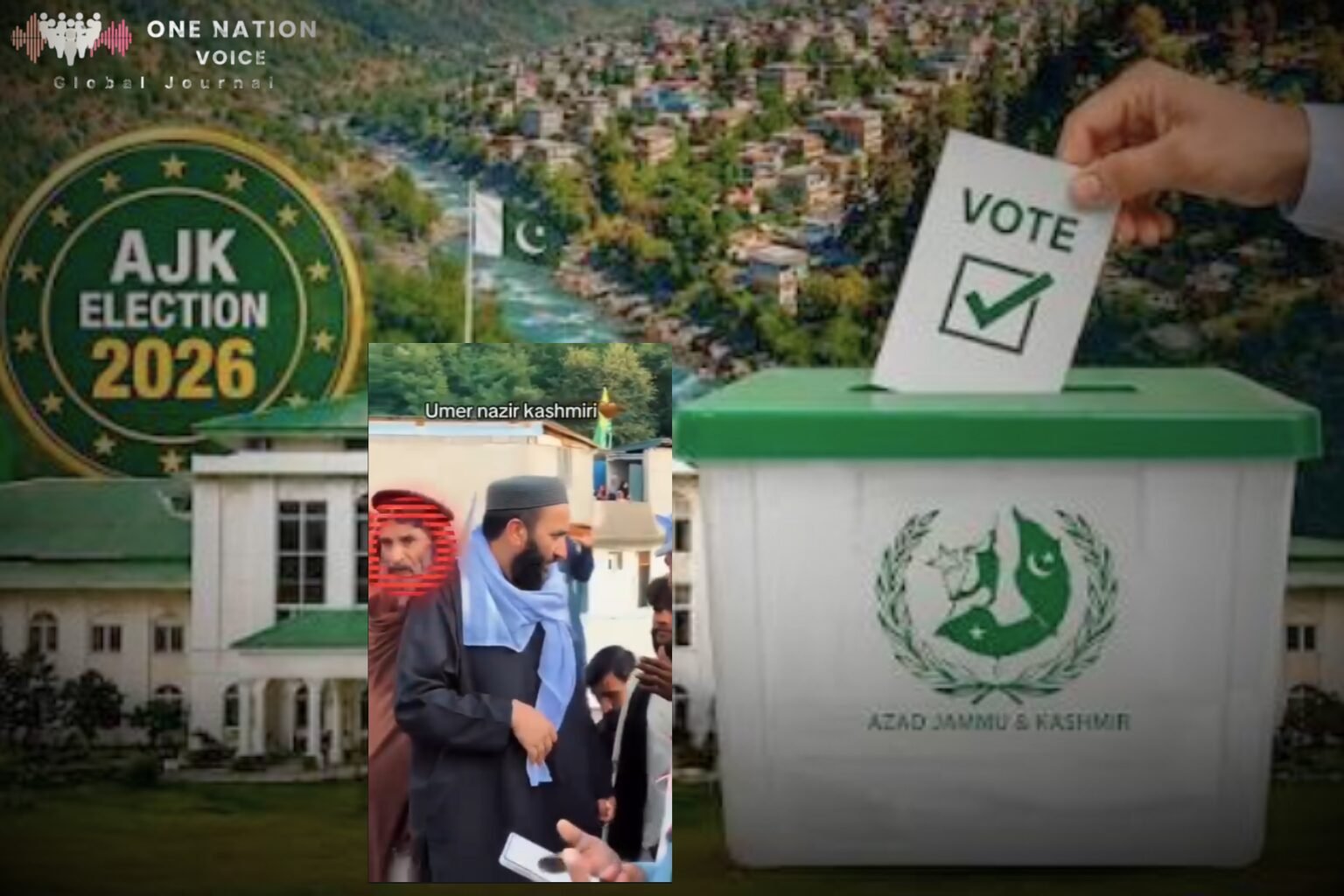
In the theatre of Pakistani electoral politics, the loudest voice after polling day is rarely that of the voter. It belongs instead to the losing side, which almost inevitably reaches for the most convenient weapon in its arsenal: the allegation of rigging. The first phase of the Azad Jammu and Kashmir Legislative Assembly elections, held on July 27, 2026, has proven no exception. Within hours of polling closing, accusations flew across political lines, social media buzzed with unverified claims, and the credibility of an entire democratic exercise was placed on trial not in a court of law, but in the court of noise.
It is worth pausing to examine what actually happened, rather than what was alleged.
The AJK Election Commission had already made clear its commitment to conducting the elections in a free, fair, transparent and peaceful manner well before a single vote was cast. The phased electoral schedule itself covering Mirpur Division on July 27, Muzaffarabad Division on August 2, and Poonch Division on August 10 was the product of consultations with all major political parties. This was not a commission operating in secrecy or haste; it was one that had taken deliberate, documented steps to balance security imperatives with democratic participation.
The rationale for the phased schedule was straightforward: security forces were engaged in other parts of the country, and a staggered timetable would allow their systematic deployment from one division to the next. To that end, 18,560 personnel from police and law enforcement agencies were deployed under a three tier security plan, with 1,241 polling stations classified as highly sensitive and 724 as sensitive. This was not a commission cutting corners; it was one investing considerable institutional effort into making the process work.
Yet the moment results began to emerge in a phased, verified manner precisely as announced some political actors chose to interpret the procedural delay not as transparency in action, but as evidence of manipulation. This is a familiar pattern and a deeply troubling one.
The AJK Election Commission’s response to these allegations deserves to be read carefully. According to the Commission, returning officers were specifically instructed to update the public and candidates on result progress every hour during the counting process. This hourly update mechanism was not a bureaucratic afterthought; it was a deliberate design choice intended to prevent the spread of unconfirmed information. In the past, results from some constituencies arrived deep into the night or even the following morning with no structured communication in between. This time, a phased and verified release system replaced that opacity. To then characterise this improved system as evidence of tampering is to punish transparency for succeeding.
To its credit, the Commission also demonstrated that it would not shield its own officials from accountability. Two presiding officers were arrested after being found at a private residence with polling bags instead of at their designated polling station. The returning officer immediately secured the bags, replaced the officers, and action was initiated against them a clear signal that negligence and irregularity would be met with swift consequences. This is not the behaviour of an institution engaged in systematic fraud. This is the behaviour of an institution with enough institutional backbone to act against its own personnel when required.
Meanwhile, the competing rigging allegations traded between PPP and PML N the very parties that together form the ruling coalition at the federal level illustrate an uncomfortable truth about electoral politics in this region: allegations of rigging have become reflexive, deployed not as a sincere legal challenge but as a political positioning tool. When both sides of an alliance simultaneously accuse each other of tampering, the credibility of the allegation itself must be interrogated.
This phenomenon is not new. Allegations of electoral manipulation have remained a persistent feature of Pakistan’s political discourse for years, often surviving long after any evidentiary basis has crumbled. The AJK elections of 2026, being conducted under unique circumstances including a three phase format applied for the first time in the territory’s history, were always going to attract heightened scrutiny. That is appropriate and healthy. What is neither appropriate nor healthy is the weaponisation of that scrutiny to undermine legitimate institutional processes before a legal challenge has even been filed.
Democratic institutions are not strengthened by those who shout the loudest in press conferences.
They are strengthened by those who engage with the legal and constitutional mechanisms available to them. The AJK Election Commission has made clear that every complaint will be addressed on the basis of law and evidence. That is precisely what should happen. Candidates and parties who believe that specific results were tampered with have the right and the responsibility to approach the relevant legal forums with specific, documented grievances. That is the constitutional path.
What they must not do is substitute rumour for evidence, or confuse procedural caution with fraudulent intent.
A commission that verifies before announcing, that arrests its own officers for misconduct, that updates the public every hour, and that consults political parties before revising its electoral schedule, is not a commission that needs to answer to mob pressure.
It needs to be held accountable through law and through law alone.
The Chief Election Commissioner expressed satisfaction over the full preparedness of all institutions and directed them to ensure free and fair elections. That satisfaction now rests on whether the remaining phases hold to the same standard and whether political actors choose the constitutional path over the convenient one.
The people of Azad Jammu and Kashmir exercised their right to vote. Their mandate deserves better than to be buried under allegations that serve political careers rather than democratic principles.
Disclaimer:
The views and opinions expressed in this article are exclusively those of the author and do not reflect the official stance, policies, or perspectives of the Platform.

