


How Land Policies Are Reshaping Kashmir?
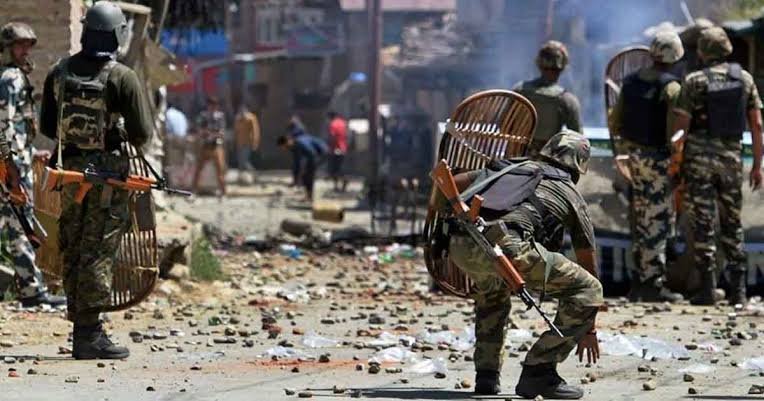
The most consequential political changes are often carried out not through dramatic announcements, but through legal amendments and administrative orders that gradually redefine who controls land, resources and institutions. In Indian Illegally Occupied Jammu and Kashmir, the post-2019 legal restructuring has raised precisely such concerns. What New Delhi presents as administrative reform and economic integration is increasingly viewed by many Kashmiris as an effort to weaken local ownership, expand central authority and alter the region’s political character. The issue is therefore not merely about land. It concerns identity, representation and the right of a people to influence decisions affecting their future.
The removal of the region’s limited constitutional autonomy created the foundation for an extensive rewriting of laws. Since then, measures affecting domicile, property, agriculture, administration and security have been introduced in an environment where Kashmiris possess little institutional power to resist or amend them. Laws that once required consultation with an elected local legislature can now be changed through executive orders issued by authorities answerable to the central government. This imbalance has transformed governance from public service into an instrument of political control.
When legal change occurs without consent, representation or accountability, even formally enacted measures lose democratic legitimacy
Land is especially sensitive in Kashmir because it is inseparable from livelihood, culture and collective memory. Agricultural property supports rural families, sustains local economies and anchors communities to ancestral areas. Changes allowing wider access to agricultural land for leases, mortgages, development projects or private investment therefore generate fears that local farmers may lose control over their most valuable asset. Economic pressure and unequal competition can produce dispossession even when land is not directly confiscated. A policy may appear neutral on paper, yet its effects can be deeply unequal when powerful corporations, state agencies and outside investors negotiate with politically vulnerable communities.
The designation of land as “strategic” for the operational and training requirements of the armed forces is another cause for concern. In a heavily militarised territory, such provisions can expand the state’s ability to acquire or control land with limited public scrutiny. Security requirements may be legitimate in clearly defined circumstances, but vague powers invite abuse. The central question is whether affected residents receive transparent information, independent legal remedies and fair compensation.
Without these safeguards, national-security language can override property rights and normalise exceptional authority
Equally troubling is the reported attachment or seizure of properties belonging to individuals accused of supporting militancy or terrorism. States have a duty to prosecute violence, but punishment must follow due process and apply to individuals whose guilt has been established in court. Confiscating homes, shops or agricultural land on the basis of accusation risks imposing collective punishment on families. It also creates a climate in which political dissent can be blurred with criminality. When the state controls both the accusation and the property action, judicial independence becomes indispensable.
Supporters of the new land regime argue that outside investment will create jobs, modernise agriculture and accelerate development. Yet development cannot be measured simply by investment figures or projects announced. Genuine development strengthens local ownership, improves public welfare and allows communities to influence economic priorities. A model that transfers control to outside institutions while reducing local decision-making may increase economic activity without producing economic justice. Roads, industrial estates and tourism projects cannot compensate for the loss of political agency or insecurity over land.
The deeper danger is that legal and administrative restructuring may permanently change the relationship between Kashmiris and their homeland. Once land patterns, settlement rules and ownership structures are altered, reversing them becomes extremely difficult. Human rights principles therefore emphasise protecting property, preventing arbitrary displacement and safeguarding communities living under prolonged conflict.
Even when authorities invoke domestic law, the manner in which those laws are created and implemented remains subject to scrutiny
New Delhi must recognise that stability cannot be manufactured through decrees, security powers or demographic engineering. Durable peace requires consent, political dialogue and respect for the dignity of the people most directly affected. Kashmiris should not be treated as passive subjects of administrative experimentation. They are entitled to participate in decisions concerning land, resources and governance. Independent review of land laws, transparent acquisition records, judicial oversight and meaningful local representation are essential first steps.
The international community should also examine the slower transformation taking place through law and bureaucracy. Territorial disputes are shaped not only by military deployments, but also by property regulations and administrative classifications. Silence in the face of gradual dispossession can allow irreversible changes to occur without adequate attention.
Kashmir’s future cannot be secured by weakening the bond between its people and their land. Any legal framework that produces fear, dispossession or demographic anxiety will deepen alienation rather than resolve it. The real test of governance is not how efficiently authority is imposed, but whether rights are protected, communities are heard and justice remains accessible. Until those standards are met, the changing land regime in Kashmir will continue to be seen not as reform, but as a project of control.

Author

Mozammil Khan has a keen interest in politics and international economics. His academic work examines how infrastructure and geopolitical dynamics influence trade routes and regional cooperation, particularly in South and Central Asia. He is passionate about contributing to policy dialogue and sustainable development through evidence based research, aiming to bridge the gap between academic inquiry and practical policymaking.
