

When Security Claims Become Political Labels
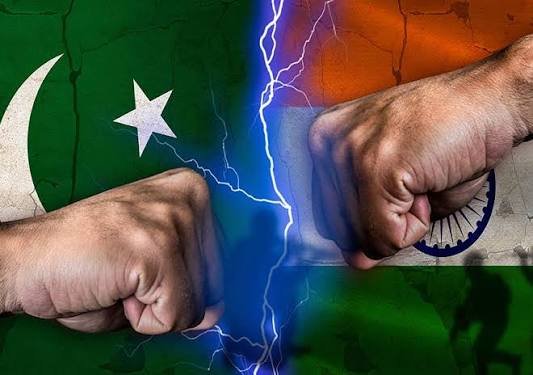
India unquestionably faces legitimate security challenges. No responsible observer should dismiss terrorism, organized crime, radicalization, or cross-border militancy when credible evidence establishes them. Yet national security becomes politically dangerous when an allegation begins to substitute for evidence and an entire category of citizens is viewed through the prism of an external enemy. India’s recurring invocation of a “Pakistan link” in domestic security cases increasingly deserves precisely this kind of scrutiny.
The latest example came in August 2026. India’s Ministry of Home Affairs announced a sweeping operation against what it described as the Pakistan-based and ISI-backed Shahzad Bhatti Network. According to the official account, 253 people were detained across 14 states, more than 80 FIRs had been registered and over 200 arrests recorded in cases connected with the alleged network.
The government also claimed recovery of improvised explosive devices, firearms, ammunition, surveillance equipment and grenades carrying Pakistan Ordnance Factory markings
These are serious claims and deserve serious investigation. But seriousness is precisely why they should be tested rather than simply repeated. An arrest is not a conviction. A detention is not proof of membership in a foreign intelligence network. A recovered weapon, even if its provenance can be established, does not automatically demonstrate the culpability of every individual swept up in an operation. In any system governed by the rule of law, criminal responsibility must ultimately rest on evidence attributable to particular defendants.
That distinction often disappears in the political presentation of Indian security operations. Terms such as “Pakistani module”, “cross-border handler” and “ISI-backed network” move rapidly from police assertions to television graphics and political speeches. The audience receives a conclusion long before a court receives the complete evidentiary record. Once the accusation has been nationalized through media coverage, the individual standing behind it is easily forgotten.
This is particularly concerning when many people detained in these operations are themselves Indian citizens. Security agencies may have legitimate grounds for investigating them, but citizenship matters to the political argument. If an alleged foreign network can recruit, influence or operate through individuals across Uttar Pradesh, Haryana, Delhi, Punjab, Rajasthan, Maharashtra and numerous other states, then the problem cannot be understood exclusively as something arriving across a border.
It also raises questions about domestic radicalization, policing, organized crime, social alienation and governance
Blaming Pakistan may explain part of a security threat if evidence supports the allegation. It cannot explain away the domestic environment in which that threat supposedly operates.There is another reason New Delhi should exercise restraint in converting accusations into settled political narratives. India itself has faced increasingly serious scrutiny abroad over allegations of extraterritorial activity.
In October 2024, the United States Department of Justice charged Indian government employee Vikash Yadav in connection with an alleged murder-for-hire plot targeting a U.S. citizen in New York. The allegation remained a criminal charge against Yadav rather than a judicial finding of collective Indian state responsibility. But the case became substantially more consequential when Nikhil Gupta, the alleged intermediary, pleaded guilty in February 2026 to murder-for-hire, conspiracy to commit murder-for-hire and money-laundering conspiracy.
US prosecutors stated that Gupta acted at the direction of an Indian government employee
Canada has raised similarly grave concerns. In October 2024, the Royal Canadian Mounted Police publicly said its investigations had identified links between agents of the Government of India and homicides and violent acts, the use of organized crime, clandestine information gathering and interference in democratic processes. These remained allegations and investigative findings rather than a blanket judicial verdict against India, a distinction that must be preserved. Nevertheless, their seriousness cannot reasonably be dismissed when discussing New Delhi’s own insistence that foreign-link allegations elsewhere should be accepted almost automatically.
Canada later designated the Bishnoi Gang as a terrorist entity in September 2025, citing violence and intimidation targeting communities in Canada. The wider controversy has therefore moved beyond a bilateral war of words. It has entered criminal justice, law-enforcement and national-security institutions in Western countries.
Pakistan has its own experience of making allegations of Indian involvement in covert activity. The Kulbhushan Sudhir Jadhav case remains the most internationally recognizable example. Jadhav, an Indian national and former naval officer, was arrested by Pakistan in 2016 and accused by Pakistani authorities of espionage and terrorism-related activity. The case eventually reached the International Court of Justice. The ICJ’s 2019 judgment principally addressed Pakistan’s obligations under the Vienna Convention on Consular Relations, finding breaches concerning consular notification and access and requiring effective review and reconsideration of Jadhav’s conviction and sentence. It did not transform every political assertion made by either side into an internationally adjudicated fact.
That is precisely the lesson worth remembering. States make allegations. Security agencies develop intelligence assessments. Governments construct narratives. Courts, however, require evidence
The contradiction becomes more visible when India demands that Pakistan-linked allegations made by its agencies be treated internationally as inherently credible while resisting external allegations involving Indian-linked actors as politically motivated or insufficiently established. The same evidentiary principle should apply in both directions. If India expects Pakistan to answer documented allegations, India must also answer documented concerns raised by foreign law-enforcement institutions. If New Delhi demands transparency from Islamabad, transparency cannot stop at India’s own borders.
There is also a domestic political cost to overusing the Pakistan frame. India has genuine debates over unemployment, communal tensions, centre-state relations, minority rights, political polarization, institutional independence and the treatment of dissent. None of these issues proves anything about an individual terrorism investigation.
But habitually explaining instability through a foreign enemy can discourage governments from confronting weaknesses that are fundamentally internal
A strong state does not need to blame another country for every grievance within its society. It distinguishes foreign interference from domestic dissatisfaction, terrorism from political opposition, suspicion from guilt and intelligence assessment from judicially tested evidence.
This is particularly important for Indian Muslims and other minorities who can become vulnerable to generalized suspicion after high-profile security operations. Terrorists should be prosecuted irrespective of religion, ethnicity or political identity. At the same time, communities should not be politically branded because individual suspects happen to emerge from within them. Counterterrorism gains legitimacy when it is precise. It loses legitimacy when it becomes collective profiling.
Pakistan, too, should resist triumphalism. Allegations against Indian actors in the United States or Canada should not become an excuse for Islamabad to treat every Indian institution or citizen as complicit. The stronger Pakistani argument is much simpler. Apply one standard to everyone.
If New Delhi possesses verifiable evidence of Pakistani direction of terrorism, it should present that evidence through credible investigative and judicial channels. Islamabad should respond to substantiated allegations. Equally, when American, Canadian or Pakistani institutions raise evidence concerning alleged Indian-linked operations, India should cooperate rather than demand a different standard of proof.
The real contest, therefore, is not over who can produce the louder accusation. It is over whose claims survive independent scrutiny
India may announce hundreds of arrests and dozens of alleged modules. But the measure of a functioning justice system is not the size of a crackdown or the language of a government press release. It is how many accusations are sustained through admissible digital evidence, financial trails, forensic examination, transparent chains of custody, credible witnesses and independent courts.
Pakistan cannot credibly be portrayed as the source of every Indian political or security difficulty. India is a vast country whose internal challenges have domestic histories, domestic actors and domestic causes. Where a genuine Pakistani connection exists, establish it. Where it does not, the label should not become a substitute for explanation.
National security is strengthened by evidence, not slogans. And when “Pakistan” becomes the automatic answer to questions that ought first to be asked of governance, policing and politics within India itself, the narrative may serve short-term political convenience, but it risks weakening the credibility it was designed to protect.

