



Pakistani Student Crowned Harvard Crimson Business Champion
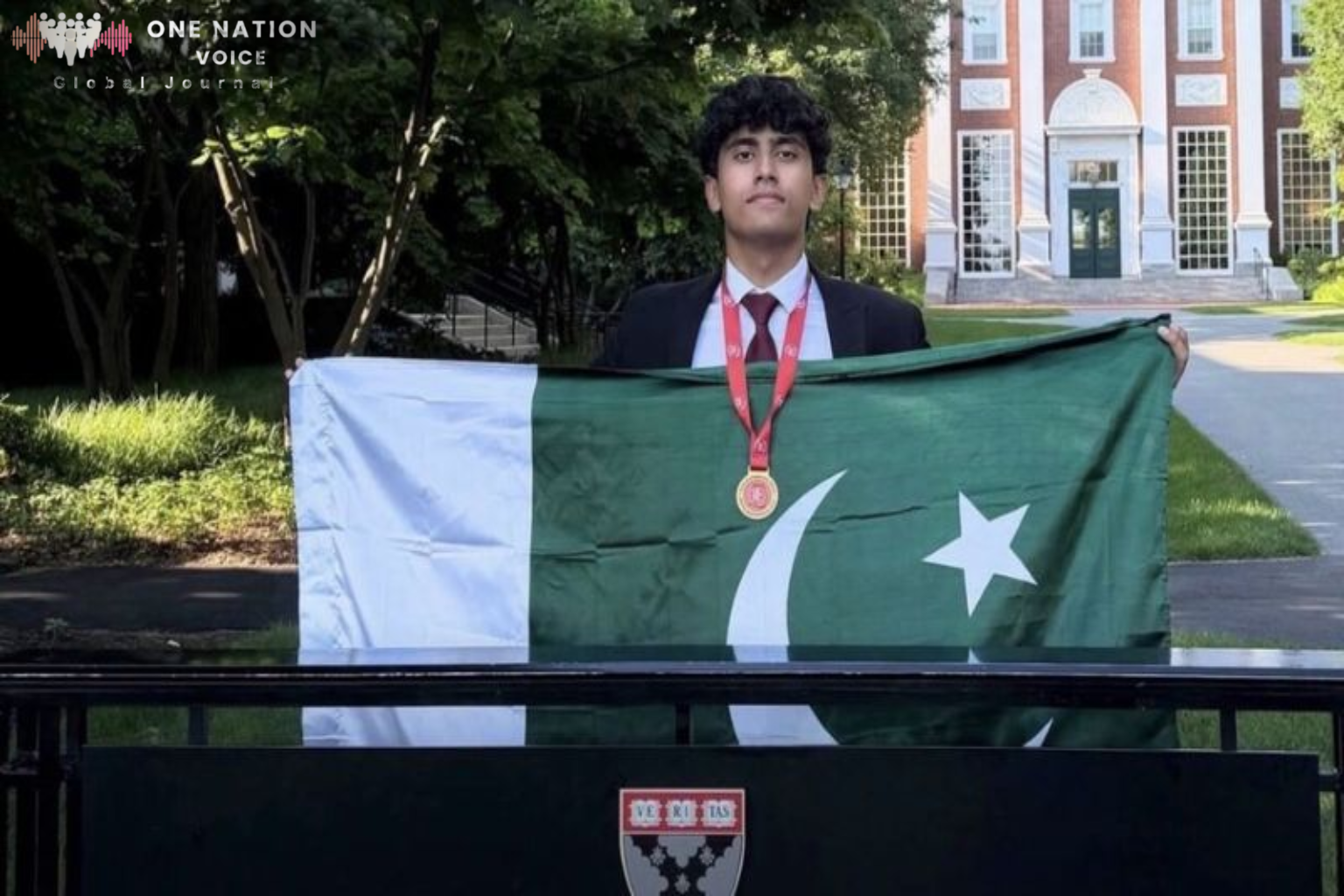
There are moments when a single name reminds an entire nation what its young people are capable of. This month, that name is Jayant Kumar.
A student of Karachi Grammar School has done something no Pakistani has ever done before: he has been crowned Global Champion of the Harvard Crimson Business Competition, one of the most prestigious pre college business contests in the world. He is the first Pakistani student to even reach the Global Final of this competition, let alone win it outright.
What makes the achievement remarkable is not only the title itself, but the manner in which it was won. Jayant competed entirely solo, going up against more than a thousand teams from across the globe, many fielding groups of up to four members each. He was judged not by classroom teachers or academic panels, but by C suite executives from Fortune 500 companies, the very people who make billion dollar decisions in the real world of business. To outlast entire teams of peers while working alone, under that level of scrutiny, speaks to a rare combination of strategic thinking, composure, and command of business fundamentals that few adults possess, let alone a high schooler.
The victory has, rightly, been celebrated far beyond Karachi’s school gates. First Lady Asifa Bhutto Zardari publicly congratulated Jayant, writing that he had “made Pakistan proud.” That such recognition came from the highest levels of the state underscores how starved Pakistan has been for headlines like this one stories that have nothing to do with crisis or controversy, and everything to do with merit, competence, and quiet excellence.
It is worth pausing on why this matters beyond the trophy itself.
First, it is a rebuttal to a tired narrative. Pakistan’s youth are too often discussed only in terms of what the country lacks resources, opportunity, infrastructure. Jayant’s win is proof that talent does not wait for ideal conditions. Given even a fraction of the exposure and support that students elsewhere take for granted, Pakistani students can, and do, outperform on the world’s toughest stages.
Second, it reflects well on the ecosystem that produced him. Karachi Grammar School has long had a reputation for academic rigor, but this win adds a new, distinctly global dimension to that legacy, proof that Pakistani institutions can prepare students to compete not just nationally, but against the best in the world, on the world’s terms.
Third, and perhaps most importantly, it is an invitation. One student’s success should not remain a solitary data point celebrated for a news cycle and then forgotten. It should be treated as evidence of an underlying pool of potential that deserves deliberate cultivation through greater investment in entrepreneurship education, more access to international competitions, and mentorship that helps ambitious students turn raw ability into world class execution. Pakistan does not lack talent. It lacks enough on ramps for that talent to be discovered and tested against the world.
Soft power is not built through slogans or state messaging alone. It is built, one story at a time, by individuals who show the world an unfamiliar and better version of a country than the one it thought it knew. A Pakistani teenager, competing alone, out thinking teams of four from across the globe, and being judged worthy by Fortune 500 executives at Harvard that is soft power in its purest form. It requires no spin.
Jayant Kumar’s victory belongs to him first.
But it also belongs, in a smaller way, to every Pakistani student who now has one more reason to believe that a global stage is not out of reach. The task now is to make sure his story is not the last of its kind but the first of many.
Disclaimer:
The views and opinions expressed in this article are exclusively those of the author and do not reflect the official stance, policies, or perspectives of the Platform.

