

KP’s Martyrs Deserve More Than Just Words
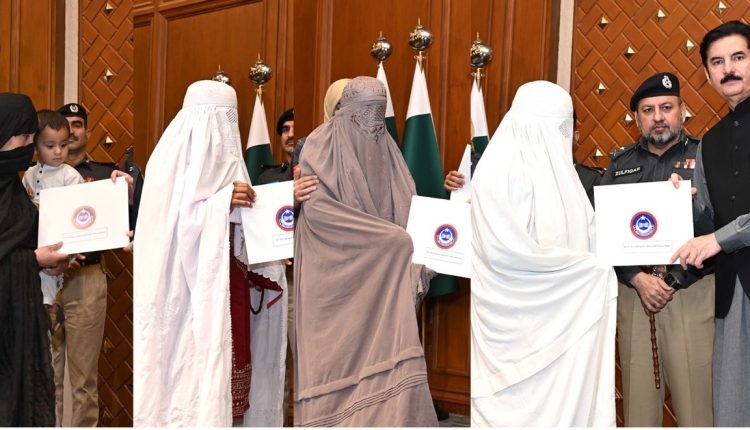
There is something deeply telling about a government’s first acts when it assumes power. Promises are easy to make on a podium, but what a new administration does in its earliest days reveals the true nature of its priorities. In Khyber Pakhtunkhwa, the recently installed Governor’s administration did not wait long to send a clear message, and it sent it to the families of those who gave everything.
Governor Faisal Karim Kundi distributed allotment letters for residential plots among the families of 54 KP Police martyrs, ranging in rank from constables to deputy superintendents of police, during a ceremony held at the Governor House in Peshawar. This was not a symbolic gesture buried in a press release. It was a deliberate, public act of acknowledgment, that those who fell defending this province deserve the dignity of having their families housed and cared for.
For a province that has bled more than perhaps any other in Pakistan’s long war against the Khawarij and their terrorist networks, such action carries immense weight. KP Police has rendered unparalleled sacrifices in combating terrorism, with 2,386 police officials from constables to additional inspectors general having laid down their lives in the line of duty to maintain peace and stability in the province. These are not statistics. These are fathers, sons, brothers, and husbands who went to work one morning and never came home.
And yet, for years, the families they left behind were caught in a bureaucratic limbo, waiting for plot allotments, fighting for compensation, and watching the political class hold rallies and press conferences while their children’s futures remained uncertain.
Among the recommendations reviewed at the Governor House were proposals to provide financial support for the marriages of daughters of police martyrs and to establish an endowment fund to meet the educational expenses of their children. These are not lavish demands. These are the basic building blocks of a dignified life, a daughter’s wedding, a child’s schooling. That these needed to be formally announced as policy goals in 2026 speaks volumes about how long these families have been waiting.
The salary disparity issue is equally sobering. KP Police’s compensation package has been the lowest among all provinces despite the fact that the police force here faces greater challenges and threats than anywhere else in the country. Think about that for a moment. The men and women most likely to face a terrorist’s bullet are the least compensated. They patrol the most dangerous districts, man the most exposed check posts, and respond to the most brutal attacks, all while earning less than their counterparts in safer provinces. The KP government has now decided to bring the salaries of KP Police in line with those of their counterparts in Punjab, a move that should have happened years ago but is welcome nonetheless.
Governor Kundi also announced that compensation for police personnel who were martyred or injured in the line of duty would be increased, and that financial assistance would help children of police martyrs purchase houses instead of receiving plots, a more practical and flexible arrangement for many families. This shift from land to cash assistance reflects an understanding of ground realities. A plot in a far flung area does little for a widow trying to feed her children in a city. Cash gives families the autonomy to make decisions that actually work for them.
The Governor also stressed that measures would be taken to resume stalled projects relating to police lines, stations, check posts and Safe City initiatives, all essential infrastructure that had been neglected. Morale in a security force is not built through speeches alone. It is built when officers see that the state has invested in their workplaces, their equipment, and their families’ futures.
The timing and pace of these announcements also matter politically. When the Khawarij attacked the Kohat Police Lines, the response from the then provincial leadership was conspicuously delayed. Political activity continued uninterrupted. Long marches were not paused. Apex Committee meetings, the critical security coordination forums, took over a hundred days to convene under the previous setup. In contrast, the new administration convened its first Apex Committee meeting on day one. The signal is clear: security governance cannot be a secondary concern subordinated to political calculation.
Pakistan’s frontline defenders, especially in KP, have for too long been used as rhetorical props. Their photographs appear on banners, their names are recited at ceremonies, and “we salute the martyrs” has become a phrase emptied of meaning through repetition. What their families need is not applause. They need a plot that is actually transferred. They need a salary that actually matches the risk. They need a daughter’s wedding funded and a child’s school fees paid.
The governor directed authorities to establish an effective mechanism for providing free education to children of police martyrs through Sweet Homes and in collaboration with banks’ Corporate Social Responsibility programmes, a practical, multi stakeholder approach that, if implemented properly, could create a lasting support structure rather than one off handouts.
None of this means the work is done. Announcements must be followed by implementation, and KP’s bureaucratic history gives reason for cautious optimism rather than uncritical celebration. But the direction is right, the priorities are right, and critically, the pace is right.
Honoring martyrs is not just about what you say at their funerals. It is about what you do for their children on an ordinary Tuesday morning. That lesson, it seems, is finally being learned in Peshawar.

