

Examining Recruitment of Terrorist Networks in Balochistan
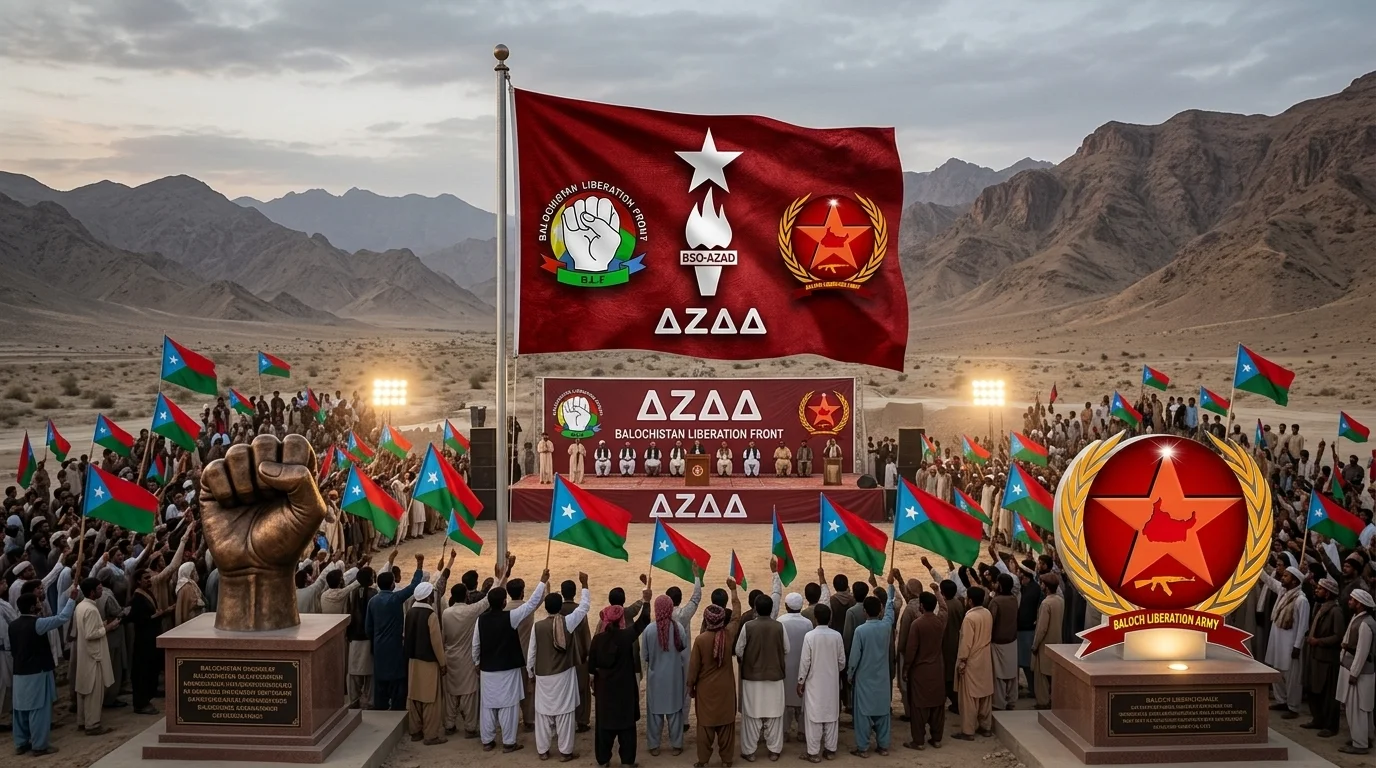
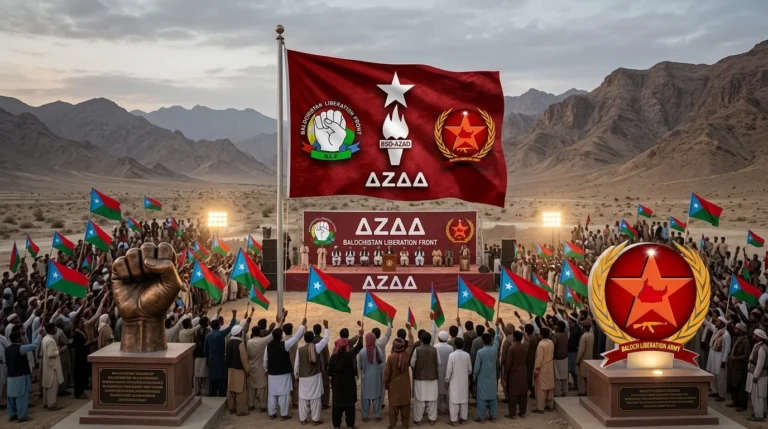
Education, aspirations, and involvement of the youth of Balochistan are crucial determinants of its future. However, several former student activists have joined terrorist groups, which is a cause for concern and poses questions regarding radicalization, recruitment mechanisms, and political grievances exploited by terrorist groups. There is a need to delve deeper into the routes of the individuals who joined the Baloch Students Organization (BSO Azad) and later became the leaders/members of the Balochistan Liberation Front (BLF) and Balochistan Liberation Army (BLA). The core question is how political mobilisation can overlap with the recruitment of terrorists, and how this process can be impeded without jeopardizing the work of legitimate students.
Allah Nazar Baloch and Bashir Zaib’s cases highlight the need to look at these trajectories. Allah Nazar had been involved with BSO Azad prior to becoming a leader of the BLF, and Bashir Zaib, who was a BSO Azad chairman, took the helm in the BLA. The reported instances of Sufiyan Kurd, Adnan Faqir and Haroon Rasheed Buzdar come to mind as well, as they raise questions relating to a link between student activism and ideological circles that later leads to affiliation with terrorist groups. Buzdar is believed to have been with BSO Azad for three years and the Baloch National Movement (BNM) for another three years prior to joining BLA.
These experiences highlight the necessity of exploring in detail recruitment trajectories, organizational networks, and processes of ideological activation.
The recruitment of educated youth is especially alarming because not all recruitment starts with an outright order to commit violence. Recruiters can use personal grievances, political alienation, peer relationships, and selective interpretations of the past to foster mistrust of state institutions. Online propaganda can exacerbate these perceptions, showing the terrorist organisation as a legitimate voice from a community and hiding the human impact of violence from the community. Such exposure to messaging, over time, can normalise even more extreme positions and provide opportunities for recruiters to motivate people to engage in terrorist activity through social networks. It is important to understand the process and differentiate between peaceful political opposition and wilful promotion, facilitation, and commission of acts of terrorism.
The use of educational institutions and professional networks is also possible. The incident of Dr Usman Qazi, a lecturer of Grade 18 Pakistan Studies at Balochistan University of Information Technology Engineering and Management Sciences (BUITEMS), Quetta, points to the possibility of abuse of authority and academic relationships. Qazi admitted to running BLA operations, radicalising students, and supporting terrorist activities. His involvement was also connected to attacks, such as the bombing at the Quetta Railway Station in November 2024 that claimed 26 lives. This development reflects a grave problem: the professional credibility and a child’s access to young people are being exploited in the recruitment process, along with logistics and operational activities. It is therefore necessary for universities to encourage critical thinking and to identify reliable indicators of terrorism without equating political dissent with terrorism or associational activity with terrorism.
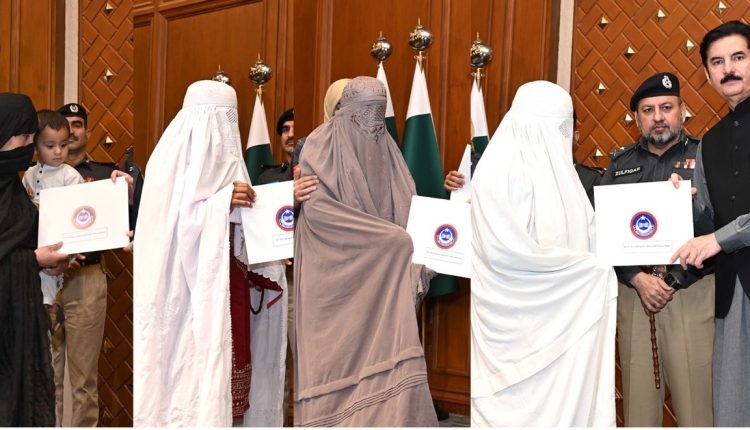
Talal Aziz, a student at the political science department of Punjab University, who was awarded a scholarship by the government of Balochistan, also brings up similar questions as to peer groups, advocacy rallies, and digital messaging. The account says that among the interactions that influenced his views were attending a training camp by the BLA, during which he saw civilians targeted for attacks before he fled. These examples illustrate the need to consider the role that online narratives and interpersonal relationships play in nudging individuals from political participation to direct exposure to terrorist networks. They also explain the importance of a prevention approach grounded in actual student behaviour, and recruitment processes.
This is made more difficult by the information environment. The use of misleading imagery, fabricated claims, selective reporting and emotionally charged narratives is a distortion of the public perception of Balochistan and may irritate and fuel existing grievances. These narratives can be amplified via advocacy platforms, diaspora networks and international forums. But the dissemination of criticism and advocacy by itself does not provide a connection with terrorism. Investigations should differentiate between legitimate political expression and clear evidence of recruitment, providing material support, and coordination with terrorist groups and deliberate production of terrorist propaganda.
Evidence based scrutiny is vital not only for public protection, but to ensure that the integrity and effectiveness of counter terrorism activity is maintained.
Another angle to the issue is the recruitment of women in the Baloch community by various terrorist groups. Women can be subjected to ideological conditioning, influence in the online environment, and personal pressure, leading to a realisation of legitimate issues of rights and representation that could be coerced and manipulated. Female involvement can also be used by terrorist organizations to shape public opinion, expand their recruitment, and create security challenges. However, the inclusion of women’s political participation and their demands for equality cannot be mixed with terrorism. Real empowerment increases the freedoms of women, their education, their employment potential, and their capacity to make their own decisions, not be used as a justification for the use of violence against civilians.
Overall, the recruitment of educated Baloch youth into the ranks of the terrorists has a heavy social price. Each youth recruited into any terrorist network is a lost family member, school, economy, and future leader for the province. Terrorist violence also hurts public safety, investor confidence, education, and opportunities for the communities that the organisations represent. Balochistan needs educated youth as teachers, researchers, entrepreneurs, public servants and community leaders, not as a tool of violence.
This challenge needs to be addressed through a comprehensive approach, integrating intelligence led counter terrorism and prevention, accountability and reintegration. However, educational institutions need to enhance digital literacy, critical thinking, and awareness of recruitment tactics. There must be reputable resources and anonymous support systems that are available to families, teachers, and community leaders. Government responses to the conditions that recruiters exploit, such as responsive governance and fair access to education and vocational training and employment opportunities, can help to mitigate them. Those who are credibly suspected of being involved in terrorist activities should be investigated through lawful means, and for those who have broken ties with these terrorist groups, there should be enabling avenues for rehabilitation and reintegration.
The true concerns about the threat of terrorism cannot be ignored. The path to take is to uphold freedom of political expression while also investigating, with a high degree of realism, any connection between people, recruitment organizations, and proscribed terrorist groups. Youth in the province need to be able to question disinformation, oppose violence, and create their own destiny. Their education and aspirations are a valuable asset that can be lost to the terrorist forces in Balochistan, and the responsibility to protect them is a security measure and a duty to the next generation.

