


Pakistan Can Turn Its $8 Trillion Mineral Wealth Into Prosperity
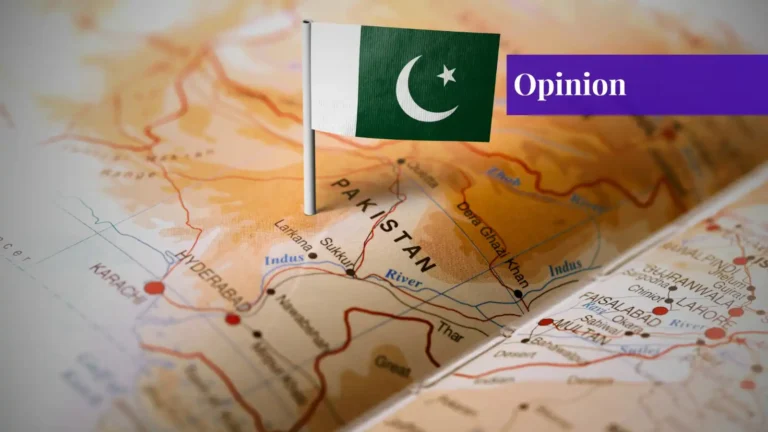
There is a quiet revolution unfolding beneath the mountains of Balochistan, one measured not in gunfire but in geological surveys, investment frameworks and billion dollar financing deals. Pakistan, long perceived through the lens of its challenges, is now being viewed through an entirely different prism by the world’s most powerful economies: as a country sitting atop one of the most consequential mineral treasuries on earth.
The timing could not be more significant. The world has entered what analysts are calling a critical minerals race, a competition as fierce and strategically vital as any in modern history. Lithium, graphite and rare earth elements have become essential inputs for electric vehicles, semiconductors, smartphones, satellites, missile systems and artificial intelligence infrastructure. Nations that control these resources will shape the technological and military balance of the coming century.
Pakistan, it turns out, holds an extraordinary hand in this game.
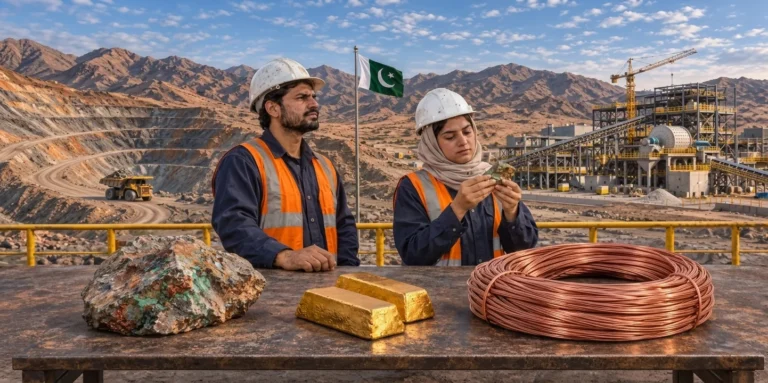
Pakistan bristles with minerals containing lithium, copper, rare earth elements and others critical for electric vehicles, semiconductors, aerospace and defence industries. With estimated reserves conservatively placed at $6 to $8 trillion, the country’s geological endowment is not a distant promise, it is a present day strategic asset. Intensifying global competition for critical minerals is opening a strategic opportunity for Pakistan to move beyond raw mineral extraction and develop domestic processing and refining capacity, as countries worldwide race to secure diversified supply chains for resources vital to clean energy technologies, electric vehicles, semiconductors and advanced manufacturing.
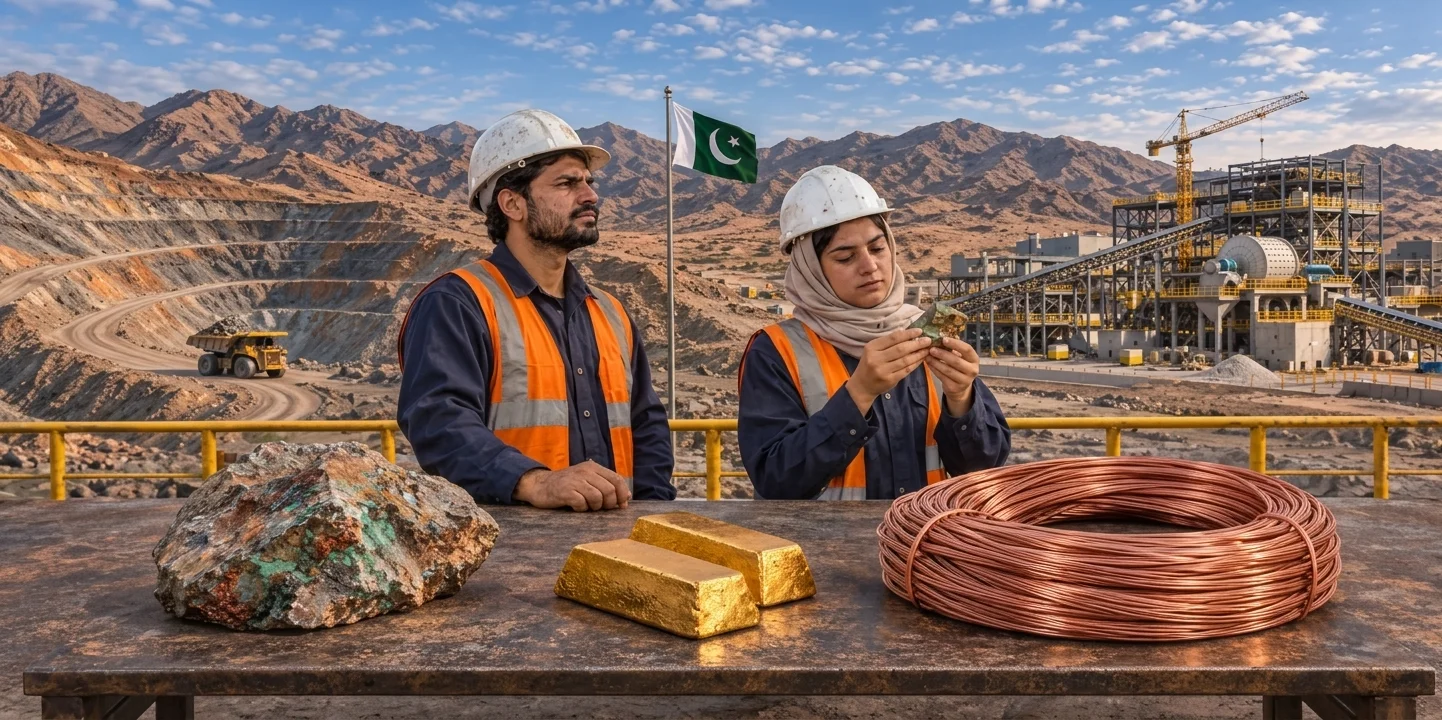
Nothing illustrates this shift more powerfully than what is happening at Reko Diq. For decades, this copper gold deposit in Chagai, Balochistan, was trapped in legal limbo, a symbol of lost opportunity and failed governance. Today, it has become the centrepiece of a remarkable international convergence of capital and strategic interest. Reko Diq has secured $3.5 billion in debt financing from the IFC, the Asian Development Bank, US EXIM and other international lenders for its $7.7 billion first phase. The numbers are staggering but the strategic signal is even more important: the world’s most rigorous financial institutions are placing their confidence in Pakistan’s ability to deliver.
The American commitment deserves particular attention. The US Export Import Bank approved $1.25 billion in financing for Pakistan’s Reko Diq copper gold mining project in Balochistan, marking one of the largest American economic engagements in Pakistan’s mineral sector. The US Chargé d’Affaires Natalie Baker explicitly stated that forging such deals has become “central to American diplomacy” under the Trump administration, emphasising the strategic importance of critical minerals for American security and prosperity. This is not aid, charity or geopolitical goodwill, this is hard nosed American commercial and strategic interest finding a natural home in Pakistan.
A US diplomat stated that Reko Diq could generate more than $75 billion in profits for Pakistan over its lifetime and nearly $1 billion in US exports of equipment and services.
The commercial momentum extends beyond a single project. Pakistan signed a $500 million framework agreement with US Strategic Metals in September 2025. Pakistan’s first shipment of enriched rare earth elements and critical minerals to US Strategic Metals symbolises not just a trade milestone but also a new chapter in economic diplomacy. These are concrete steps, not aspirational documents. The relationship between Washington and Islamabad is quietly being rewired around economic substance rather than purely security dependence.
What makes Pakistan’s position genuinely unique is the convergence of geology and geography. Pakistan’s minerals hold comparatively greater strategic importance for the US than they do for China, given Washington’s search for secure, diversified access to critical minerals outside China dominated systems. The US needs what Pakistan has. And Pakistan needs exactly what the US can offer: technology, capital, market access and international credibility. This is a rare alignment of mutual interest that Pakistan must exploit with clarity and urgency.
The policy architecture to support this is taking shape. Pakistan’s mining sector is undergoing a significant transformation in 2025, driven by new government policies, foreign investments and infrastructural improvements. The introduction of the National Minerals Harmonization Framework 2025 has standardized licensing procedures, offered tax incentives, and cracked down on illegal mining. In May 2026, the Quad countries announced plans to mobilise up to $20 billion to strengthen critical minerals supply chains, underscoring the growing geopolitical and economic significance of mineral processing, refining and value added production. Pakistan must ensure it is positioned at the table, not watching from the margins.
The challenge, as always, lies in execution. Security in mineral rich areas remains a concern that cannot be wished away. Terrorist disruptions in Balochistan have historically deterred investors and complicated project timelines. The state must provide unwavering protection to foreign capital and infrastructure. No amount of diplomatic momentum can survive repeated attacks on mining convoys or project sites. Pakistan’s credibility as an investment destination depends as much on its security guarantee as on its geological promise.
Regional cooperation holds additional untapped potential. Afghanistan’s mineral reserves, estimated in the trillions, remain locked beneath the surface, a consequence of prolonged conflict. A more stable regional environment could unlock cooperative frameworks that benefit both nations and the broader region. This remains a long horizon, but it is worth keeping within sight.
The real measure of success will be whether these investments translate into lasting economic benefits for Pakistan and, most importantly, for the communities living above the mineral wealth of Balochistan. That is the ultimate accountability. Pakistan’s mineral wealth is not the government’s asset alone, it belongs to the people of this land, particularly those who live beside it and have historically seen precious little of its rewards.
The world is watching Pakistan with fresh eyes. The question is whether Pakistan is ready to meet that gaze with the institutional seriousness, security commitment and long term vision that this historic moment demands. The mountains have always held the treasure. The challenge now is proving we can govern it wisely.