Fahad Hameed’s Resignation Raises Questions for Fazlur Rahman
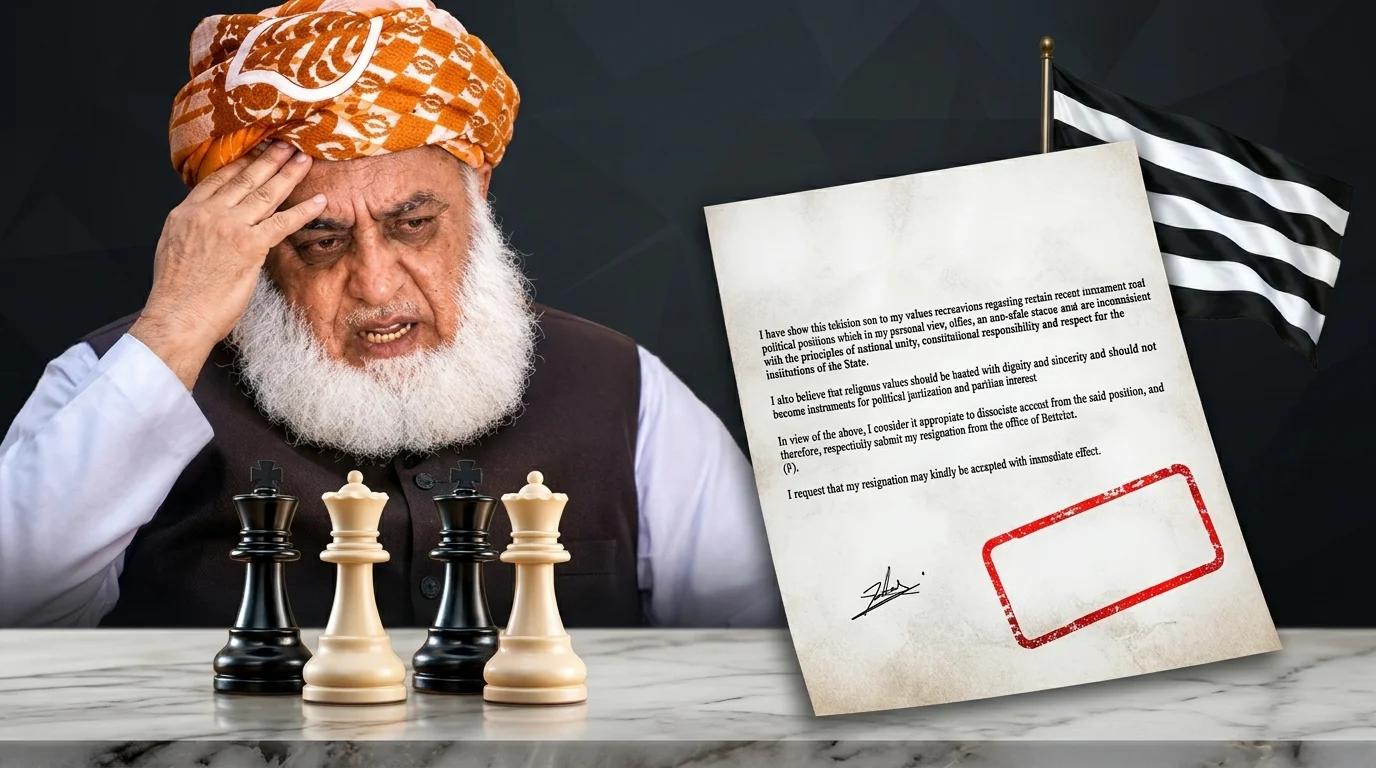
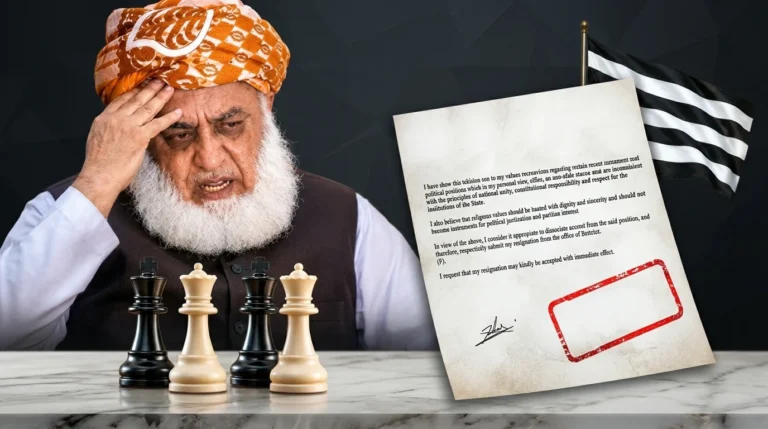
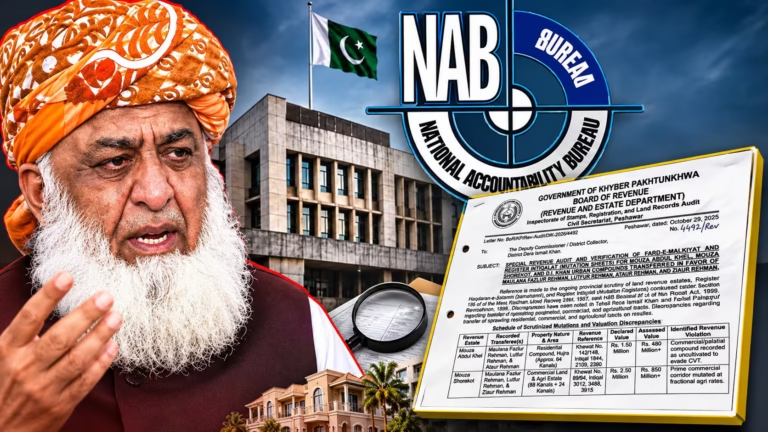
A single resignation letter dated 9 November 2026 has done what months of political pressure could not: exposed the deep fault lines running through Maulana Fazlur Rahman’s Jamiat Ulema e Islam (F). Muhammad Fahad Hameed, the JUI F District General Secretary in Sargodha, resigned from his party position with immediate effect. But what makes this departure remarkable is not the act itself, resignations happen in politics all the time, it is the language used. In his written resignation, Fahad Hameed described recent party statements and political positions by JUI F leadership as reflecting an “anti state stance,” inconsistent with national unity, constitutional responsibility, and respect for state institutions.
This is not a junior foot soldier quietly slipping out of the ranks. This is a district level office bearer openly putting on record that his own party’s direction has become incompatible with the basic principles that define a responsible Pakistani political party. That carries weight. That should force reflection.
For months, Maulana Fazlur Rahman’s political rhetoric has been generating controversy far beyond the usual cut and thrust of opposition politics. As far back as July 2026, a court summoned Fazlur Rahman over his remarks against state institutions. The Punjab Assembly adopted a resolution supporting the armed forces in direct response, with senior government officials publicly condemning the remarks. Interior Minister Mohsin Naqvi was more blunt. He said he had previously held Fazlur Rahman in high regard but changed his view after the JUI F chief’s remarks against state institutions, calling them “filthy.”
One could argue that opposition politicians are always criticised by those in power. That is the nature of democratic contest. But what is different here is that the criticism is now coming from within. Even ordinary citizens and commentators have begun questioning Fazlur Rahman’s motives, with critics arguing that a leader of his stature should focus on consolidating his party’s position and dealing with internal challenges rather than resorting to confrontational language against state institutions.
The resignation from Sargodha must be read in this broader context. Just days before, the JUI F was staging protests across Sindh and Balochistan, decrying what it called a “coordinated character assassination campaign” against Maulana Fazlur Rahman. The irony is sharp: while the party cried foul at external criticism, one of its own officeholders was quietly drafting a resignation that amounted to the most damaging internal critique yet.
Fahad Hameed’s resignation letter, as shown in the images doing rounds on social media, invokes values that resonate deeply with the Pakistani public: national unity, constitutional responsibility, and the dignity of the state. He also specifically noted that religious values must not be used as instruments for political justification and partisan interest.
This last point carries particular significance given JUI F’s traditional reliance on its religious identity and clerical base as political capital.
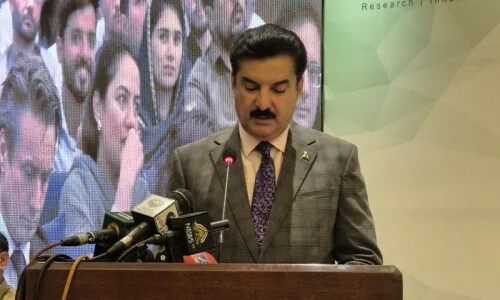
Maulana Fazlur Rahman himself, speaking at a national education conference in Islamabad just days ago, insisted that pressure and allegations would not force him to change his political narrative and that he would continue to stand by his position. That is his right. But political stubbornness, when it begins driving away your own office bearers, stops being conviction and starts becoming a liability.
The JUI F had recently announced ambitious Punjab expansion plans, including a major Sargodha rally scheduled for November 26, where the party expressed confidence about growing public support. The Sargodha resignation, coming right before that planned rally, could not have landed at a worse time. The very city where the party intended to show strength has now produced its most embarrassing internal defection of recent months.
Residents of Khyber Pakhtunkhwa and across Pakistan have already been urging Fazlur Rahman to prioritise national interests over personal and political grievances, stressing that political leaders should avoid statements that could mislead the public, fuel unnecessary controversy, or deepen divisions at a time when Pakistan needs solidarity. This is not an anti opposition sentiment: it is a plea for responsible leadership.
There is a legitimate and honourable space for opposition politics in Pakistan. Questioning government policies, demanding accountability, raising concerns about electoral processes: all of this is not just acceptable but necessary. Fazlur Rahman himself has spoken about constitutional supremacy and dialogue based resolution of political disputes. Those are sound principles. The question is whether his actual conduct on the ground matches the constitutional high ground he claims to occupy.
Political criticism must remain within the bounds of national interest and constitutional norms. When statements begin crossing into territory that even your own party leaders describe as anti state, then it is not critics or media campaigns causing the damage: it is the words themselves. When religious frameworks are invoked to justify confrontational politics rather than to guide ethical conduct, the result is a loss of credibility that no protest rally can fully restore.
The Sargodha resignation is, as the circulating social media graphics put it, the first wicket. In cricket, one wicket rarely decides the match. But the manner in which it falls, a bowled dismissal, stumps scattering, sets the tone. If Maulana Fazlur Rahman and the JUI F leadership are serious about remaining a relevant, durable political force, they owe it to their remaining office bearers, their voter base, and to Pakistan to reflect seriously on the direction they are heading. The time for genuine introspection is now, before more wickets fall.