

India’s Honey Trap Scandal Exposes Deep Defence Security Flaws
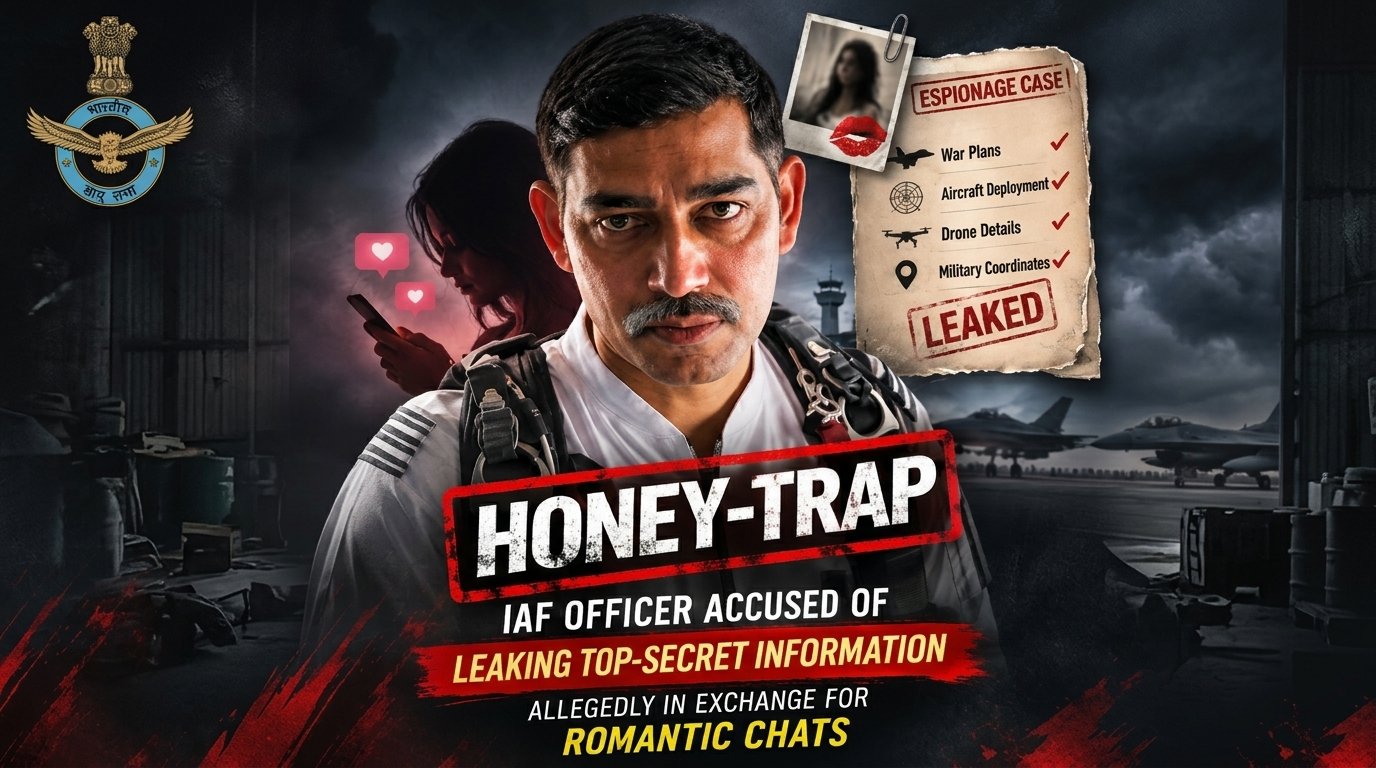
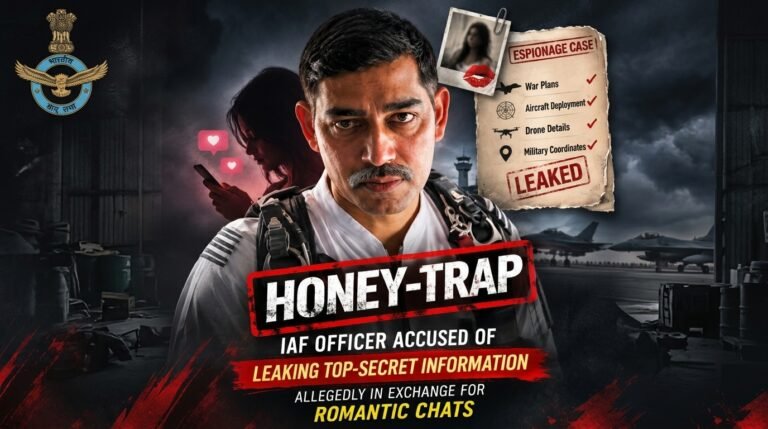
There is something deeply troubling about reading a police chargesheet and finding the sentence: “for each nude pic he will provide a new page of the war plan.” That is not the language of geopolitical drama or cold war thriller fiction. That is the documented, clinical record of how an Indian Air Force Wing Commander allegedly traded pages from a classified war plan one page at a time in exchange for explicit photographs from a suspected Pakistani intelligence operative. The Delhi Police chargesheet, now before Patiala House Court, has forced a conversation that India’s defence establishment would rather not have and arguably should have had years ago.
The bare facts of this case are staggering. The alleged operation began with a WhatsApp message from a person posing as a woman who was seeking help from a therapist, a simple, calculated emotional hook designed to find a vulnerable entry point. What followed was not some elaborate James Bond operation. Over the course of their communication, the pair reportedly exchanged more than 3,000 text messages and upwards of 60 images, gradually transitioning from personal conversations to the extraction of military secrets. No physical meetings. No dead drops. No cloak and dagger tradecraft. Just a WhatsApp account and a patient operative who understood that the greatest vulnerabilities in any defence system are human.
The damage, according to investigators, was substantial. The chargesheet states that the officer disclosed the strength and organisational structure of a secret drone unit, details of drone trials, the endurance of the weapon system and its targeting mechanisms. The officer also shared critical details regarding the Leh airbase in Ladakh, specifically outlining its flight operational capabilities and strategic usage. In a region where India and China have faced sustained military tensions, the significance of Leh airbase intelligence being potentially compromised cannot be overstated. The breach goes beyond embarrassment. It touches on operational readiness.
What makes this case particularly alarming is what happened next. The arrested officer allegedly installed data stealing software on the mobile phone of a colleague, meaning the breach did not stop at his own access. He became an active instrument in widening the exposure, spreading the operative’s reach into the devices of people around him, people who had no idea they were being surveilled by their own senior officer. This is not simply a failure of one man’s judgment. It is a systemic failure of monitoring, internal counterintelligence discipline, and psychological support for serving personnel.
The question Palki Sharma and others have rightly raised is not just how this happened, but why it keeps happening. The alleged use of online relationships in espionage cases has continued to surface repeatedly, with defence personnel approached through social media, messaging applications or online relationships across multiple services and years. In one earlier case, an IAF officer was honey trapped using two fake Facebook profiles and allegedly photographed documents at the Air Force Headquarters, where mobile phones are not allowed, and passed them on via WhatsApp in exchange for obscene photos. That case alone should have triggered a thorough overhaul of how serving personnel are monitored for digital vulnerability. It apparently did not.
The pattern is now too consistent to dismiss as isolated incidents. Senior officers with top secret clearances, going through personal difficulties, separation, loneliness, emotional instability, are being identified and targeted with precision. The operative reportedly developed a personal relationship with the officer before transitioning to extraction of classified information. The initial “therapy SOS” framing is not accidental; it is a methodology. Intelligence services that employ honey traps look for emotional entry points first, and the digital age has made those entry points more accessible than at any point in history.
India’s defence establishment has the hardware. It has invested in Rafale jets, advanced radar, modern drones and strategic military installations. What it appears to have consistently underinvested in is the human dimension of security: regular psychological evaluations, mandatory digital hygiene training, real time monitoring of communication patterns for serving officers with classified access, and a culture where struggling personnel can seek help without fear of career consequences. An officer going through separation should not be isolated in his vulnerability. He should be supported and monitored.
The irony is painful. IAF officials stated that the officer was under active surveillance and had been handed over to law enforcement, with the force reaffirming zero tolerance for such offences under the Official Secrets Act. The surveillance worked, eventually. But the chargesheet covers months of alleged information transfer between January and April. The question is not whether India caught this officer; it is how much of the barn had already burned before anyone called the fire department.
Palki Sharma framed this correctly when she asked why the story always comes after the arrest and never before it. Prevention, not prosecution, is what national security demands. A single fake WhatsApp profile named “Isha Sharma” should not be capable of unravelling years of training, clearance vetting, and institutional trust. The woman involved in the honey trap is suspected to be part of a broader espionage network collecting intelligence related to the Indian defence system, which means this was not a spontaneous operation. It was targeted, planned, and executed with professional patience.
India spent decades and billions building a credible military machine. That machine’s weakest link, it turns out, was never the hardware. It was always the loneliness of a man sitting alone with his phone at two in the morning, and nobody in the system thinking to ask if he was alright.

