

India Faces Diplomatic Isolation at the United Nations
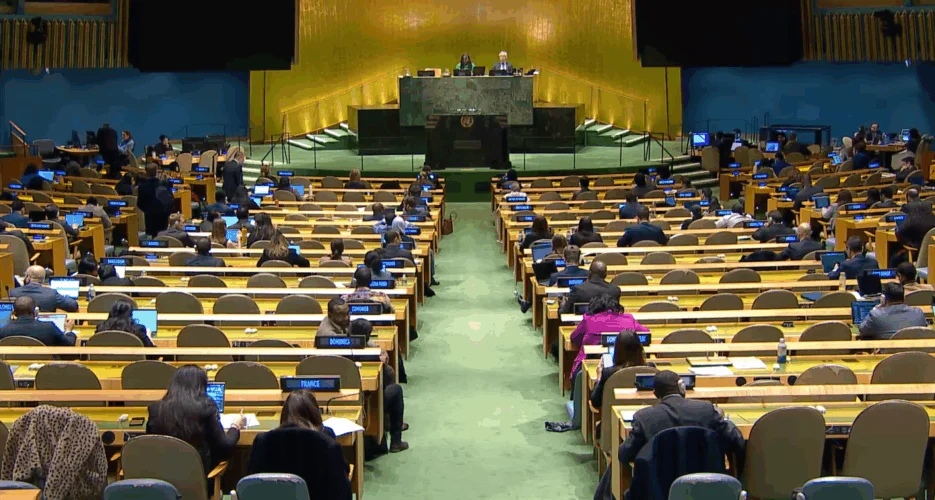
There is something painfully revealing about a nation that stands before the world community at the United Nations, votes against 112 countries alongside just five others, and in the same breath refuses any outside scrutiny of conditions within its own borders. This week, two stories from India tell us something far deeper than politics. They tell us about a country increasingly at odds with both the world around it and the world within it.
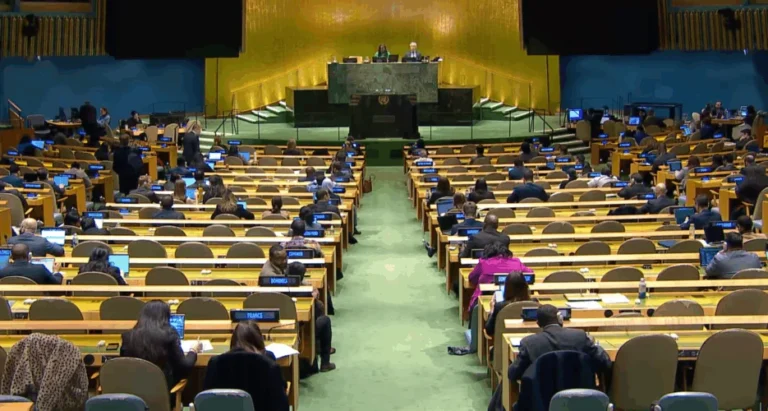
The resolution titled
“Cooperation between the United Nations and the Organisation of Islamic Cooperation,”
introduced by Iraq, was adopted by the UN General Assembly with 112 nations voting in favour, six against, and 39 countries abstaining. India, Armenia, Cyprus, Greece, Israel, and the United States voted against it. Let that sink in for a moment. In a chamber of 193 nations, India found itself in a club of six. The resolution was not about Kashmir alone. It was not a declaration of war. It was a routine cooperation framework between the UN and a 57 member bloc representing over 1.8 billion Muslims across the globe.
India’s objections were layered. New Delhi raised concerns over references in the resolution relating to the ninth session of the OIC Ministerial Conference on Women held in Islamabad, calling them “factually incorrect” and accusing the OIC platform of being misused for narrow political ends. That is a fair concern to raise in diplomatic corridors. But there is a vast difference between raising a concern and casting a vote that plants you firmly in the same column as Israel on a Muslim world resolution, especially when you govern the world’s largest Muslim minority population.
India’s Deputy Permanent Representative, Ambassador Yojna Patel, said that the OIC’s Permanent Observer Mission had excluded her delegation and several other countries while circulating drafts of the resolution. The accusation of procedural exclusion deserves to be taken seriously. Transparency in multilateral negotiations matters. Cyprus, delivering its explanation of vote, also voiced deep regret over the lack of transparency and inclusivity by Türkiye as the facilitator of this resolution. Even the European Union, through Ireland, expressed similar concerns. So the procedural complaint was not unique to India.
But here is the problem: India did not stop at a procedural objection. It voted against. And in doing so, it transformed a complaint about process into a statement about substance. When you vote against a resolution backed by 112 countries, the world does not remember your procedural grievance. It remembers which side you chose. The optics of sharing a “no” column with Israel, while 57 Muslim majority nations and dozens of others stand on the other side, is not a diplomatic accident. It is a diplomatic wound, self inflicted.
The Kashmir question looms behind all of this. India has long and firmly maintained that Jammu and Kashmir is an internal matter and that no external body, least of all the OIC, has any standing to comment on it. That position is consistent, and sovereignty arguments deserve respect. But the question the world is now asking is whether India’s strategy of persistent opposition is achieving anything. As recently as October, the OIC adopted a resolution at its Council of Foreign Ministers in Baghdad demanding the settlement of the Kashmir dispute and reiterating calls for the implementation of UN resolutions on Jammu and Kashmir. India’s opposition does not silence these resolutions. It simply leaves New Delhi more isolated each time one passes.
The irony is sharp. India presents itself as a rising global power, a voice of the Global South, a nation deserving a permanent seat on the UN Security Council. Yet on issues that matter deeply to the Muslim world, the bloc that constitutes a significant portion of that same Global South, India finds itself outvoted, outnumbered, and increasingly alone.
Now shift the lens inward, to the Yamuna River in New Delhi.
Thick layers of white foam were seen floating on the river’s surface at Kalindi Kunj, with formation of toxic foam attributed to high levels of pollutants, including detergents and untreated sewage entering the river. The pungent foam contains high levels of ammonia and phosphates, posing serious health risks including respiratory and skin problems, according to environmental experts.
The 22 kilometre stretch of the Yamuna in Delhi is one of the most polluted stretches in the river’s entire trajectory, causing 80 per cent of its total pollution. At some locations, the biological oxygen demand rose from 8 mg/L in September 2025 to 30 mg/L in September 2026, a dramatic deterioration. Days before Chhath Puja, visuals of large numbers of dead fish floating in the Yamuna near Sonia Vihar surfaced on social media on November 12, raising concerns about water pollution and possible toxic discharges into the river.
While the Centre launched Yamuna cleaning projects worth approximately Rs 8,941 crore in October, environmental activists argue that temporary cleaning exercises cannot restore the river. Spraying anti surfactant solutions may disperse the foam on the river’s surface, but it does not address the underlying pollution or improve water quality. It makes the foam disappear from public view, but the pollution remains in the river.
This is not a new story. The Yamuna has been dying slowly for decades, and every government has promised to revive it. But promises made during election seasons dissolve as quickly as the foam, except the foam always comes back.
There is a thread connecting these two stories. A government that votes against international accountability at the UN and a government that sprays chemicals on a river’s surface to hide its pollution from the cameras are, in essence, doing the same thing: managing appearances rather than confronting realities. The foam on the Yamuna and the isolation in the UN chamber are both symptoms of the same illness: an aversion to honest reckoning.
A truly confident, rising power does not fear scrutiny. It engages, negotiates, and builds coalitions. And a truly responsible government does not spray foam away for festivals. It fixes the drains that poison the river in the first place.
India is a great civilisation. The Yamuna is its sacred river. The Muslim world is its neighbour, its history, and in many ways, part of its own soul. Both deserve better than what this week delivered.