


CPEC 2.0 in 2026
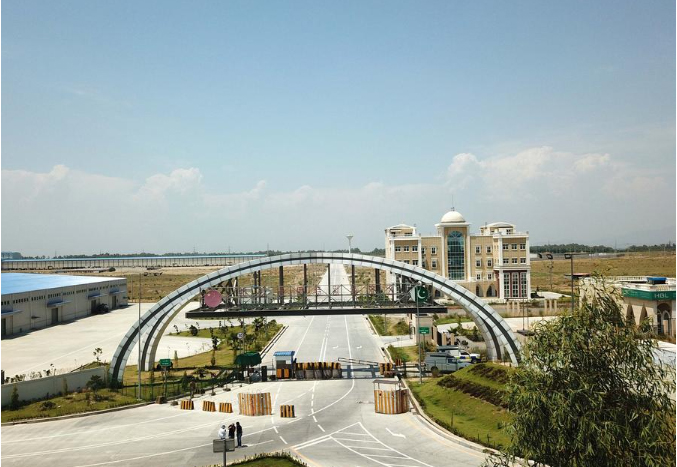
The first decade of CPEC was about concrete, steel, and urgency. Pakistan needed roads, power plants, transmission lines, and a basic reset of economic confidence. On that test, the corridor delivered more than many critics admit. The wider program has long been framed as a Chinese investment push of more than $60 billion, and official Pakistani statements have credited CPEC with about $25.4 billion in direct investment and roughly 236,000 jobs. Most visibly, completed CPEC energy projects have added 9,504 megawatts to the grid, easing the load shedding that once crippled households and industry alike.
But 2026 should be the year Pakistan stops treating CPEC as a construction catalogue and starts treating it as an economic strategy. That is the real meaning of CPEC 2.0. Islamabad and Beijing have both signalled that the corridor is moving into a new phase built around industrial cooperation, innovation, green development, and better quality growth rather than sheer project volume. The official joint statements of 2024 and 2026 make that shift plain, with both sides backing an upgraded CPEC built around growth, innovation, green development, and openness.
That shift also fits the opening of China’s 15th Five Year Plan, which puts high quality development, digital economy expansion, and technology upgrading at the centre of policy
If there is one area where this new phase can move from slogan to substance, it is energy. Pakistan’s solar boom has changed the conversation. Reuters, citing Ember data, reported that solar supplied 25.3 percent of Pakistan’s utility electricity in the first four months of 2025, making it the country’s largest electricity source. Pakistan’s imports of Chinese solar modules jumped to 16.6 gigawatts in 2024, then crossed another 10 gigawatts in just the first four months of 2025. By that point, Pakistan accounted for about 12 percent of China’s solar exports, up sharply from 2 percent in 2022. This is not a minor trend. It is proof that Pakistan’s green transition is already under way from the bottom up, driven by prices, demand, and necessity.
That is why Green CPEC matters. Pakistan should not remain a massive buyer of imported panels while the value added, the skilled jobs, and the export capacity stay elsewhere. The March 2026 conference hosted by the Pakistan China Institute under the Green CPEC Alliance got the diagnosis right. Pakistan needs bankable industrial policy, credible investor protection, ready Special Economic Zones, and predictable execution if it wants to attract solar manufacturing rather than just solar shipments. Chinese firms are already watching. Hebei Juhang Energy Technology Group has publicly expressed interest in building a large scale solar panel manufacturing facility in Pakistan aimed at both domestic demand and export markets.
That is the sort of move that would turn the corridor from a route into a value chain
The same logic applies to industry more broadly. Pakistan has spent years talking about Special Economic Zones, industrial relocation, and export led growth. Talking is no longer enough. Industrial zones only matter if they offer reliable power, customs efficiency, legal certainty, skilled labor, and fast logistics. Otherwise they become fenced land with big signboards. CPEC 2.0 should therefore be judged by a harder standard: not how many zones are announced, but how many export contracts are signed, how many local suppliers are integrated, and how much technology actually moves into Pakistan. Even Pakistani officials are now framing Phase II around industrial parks, industrial relocation, mining, agriculture, and human resource development rather than headline making ribbon cuttings.
The digital side of the story is just as important, and also more fragile. Pakistan’s announcement of a $1 billion national AI push by 2030, including AI curricula in schools, 1,000 fully funded PhD scholarships, and training for one million non IT professionals, is ambitious and welcome. But a digital corridor is not built by speeches, expos, or a few urban pilot labs. It will only matter if it improves customs, logistics, industrial planning, farm productivity, tax administration, and the competitiveness of small and medium firms. In other words, the digital agenda must serve the industrial agenda.
If CPEC 2.0 links Chinese capital and technology with Pakistani talent and practical reform, then the digital pillar can become real. If not, it will remain decorative
None of this means traditional infrastructure has become irrelevant. It means infrastructure must now justify itself in economic terms. The long delayed ML 1 railway upgrade still matters because freight efficiency matters. Officials say Phase 1, the Karachi to Rohri section, is expected to break ground in July 2026 with financing support from the Asian Development Bank, while market engagement has already begun. Gwadar still matters too. The October 2024 Pakistan and China joint statement noted the completion of the New Gwadar International Airport and reaffirmed the push to improve port infrastructure, water, power, and the industrial zone. But Gwadar will succeed only when it functions as a living logistics and processing ecosystem, not merely as a geopolitical symbol.
That is why CPEC 2.0 is bigger than a bilateral project list. In 2026, as Pakistan and China mark 75 years of diplomatic ties, the corridor is entering its most serious test. The first phase proved that the partnership could build assets. The second phase must prove that it can build competitiveness. Pakistan does not need more ceremony. It needs solar factories, smarter farms, export ready industrial clusters, faster freight, cleaner power, and a generation of workers who can operate in a digital economy. If Islamabad pushes for policy discipline and local capability, and if Beijing treats Pakistan as a production partner rather than just a destination for projects, CPEC 2.0 can become what it has long promised to be: not only a corridor of movement, but a corridor of transformation.

