
The Reassertion of Pakistan as Middle Power
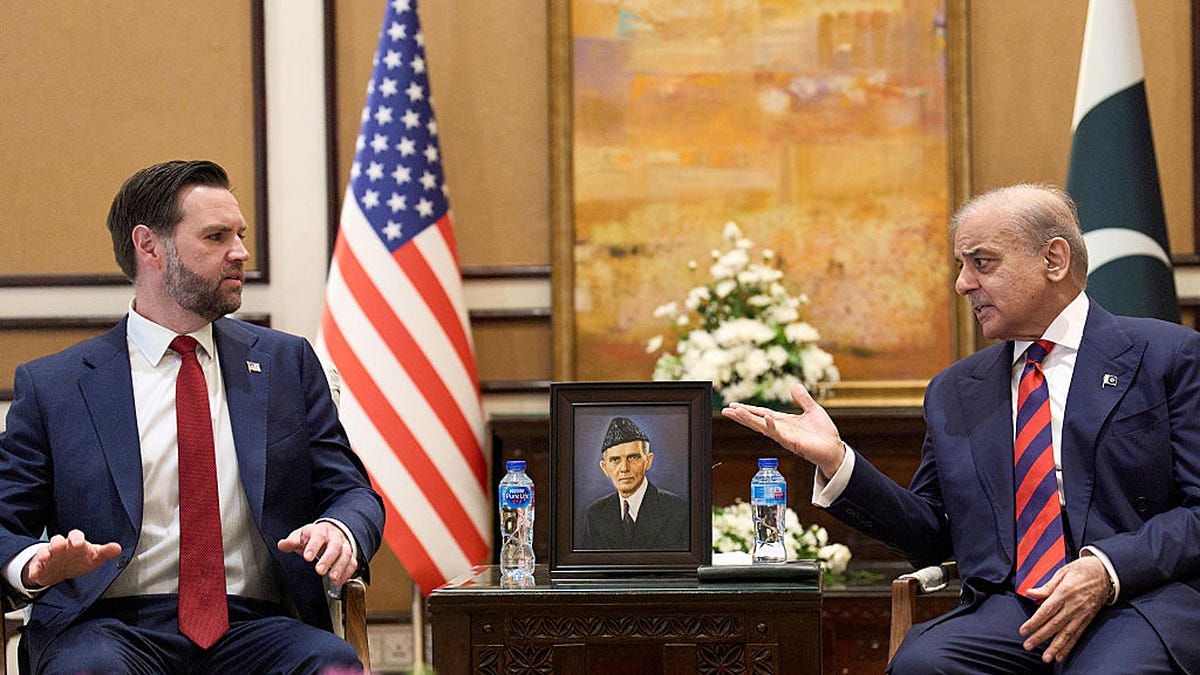
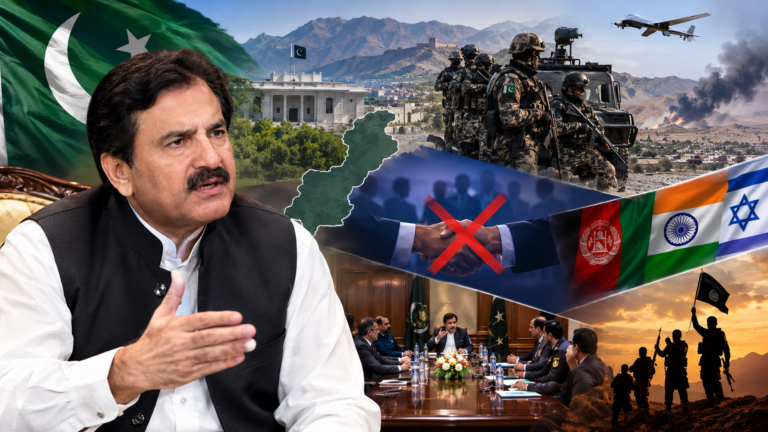
Pakistan’s recent diplomatic activism marks an important moment in its re-emergence as a credible middle power. Despite deep differences in worldview and strategy between the United States and Iran, Pakistan was able to help bring both sides toward dialogue during a period of intense regional tension. More importantly, it secured broad international support for its mediatory role, showing that its relevance is no longer confined to geography or military capability alone. It demonstrated influence, credibility and a capacity to shape outcomes, qualities that sit at the heart of middle-power behavior.
Traditionally, a country’s power is measured through visible indicators: GDP, military expenditure, territory, population, strategic location and technological strength. By these standards, Pakistan has often been viewed through the lens of limitations rather than potential. However, Joseph Nye’s idea of soft power reminds us that influence also comes from intangible sources, including diplomatic style, credibility, relationships and the ability to persuade. Similarly, Robert A. Dahl defines power as the ability to influence or alter the behavior of others. Pakistan’s recent actions fit this understanding.
It has shown that power is not only about material capacity but also about the ability to engage adversaries, manage crises and create diplomatic space
For years, Pakistan was portrayed internationally as unstable, terrorism-affected and diplomatically constrained. That image has begun to shift. A brief but intense military clash challenged the long-standing assumption of India’s overwhelming superiority and restored a degree of strategic balance in South Asia. This development strengthened Pakistan’s image as a security actor and helped pave the way for deeper defense cooperation, including its Strategic Mutual Defense Agreement with Saudi Arabia. Such moves reflect a broader recognition that Pakistan can contribute to regional security rather than merely consume international attention.
Pakistan has long possessed many qualities associated with middle powers: a large population, a professional military, nuclear capability, strategic geography and deep connections across Asia, the Middle East and the West. Yet indecisive policies and the absence of a broader strategic vision often limited its role. This has begun to change with stronger civil-military coordination and a more purposeful use of diplomatic and military tools.
Pakistan is now attempting to convert its strategic assets into influence, moving from diplomatic marginalization toward a more active and credible middle-power posture
The concept of a middle power is not fixed. Its boundaries are fluid and open to interpretation. A middle power is not necessarily a great power in waiting, nor is it merely a smaller state with modest ambitions. It is a state that can influence regional and sometimes global outcomes through diplomacy, coalition-building, strategic autonomy and principled engagement. Pakistan’s condemnation of attacks on Iran and the Gulf under Article 2(4) of the UN Charter reflects this behavior. It showed support for international law, peace and stability, even where such positions carried political costs.
Material strength alone does not determine middle-power status. India may possess greater economic size and global visibility, yet its influence on certain major global dynamics has remained limited by strategic rigidity and competing alignments. Pakistan, by contrast, benefits from “friends with leverage.” Its relationships with China, the United States, Iran, Saudi Arabia, Türkiye and the Gulf states allow it to communicate across divides.
This ability to engage key actors gives Pakistan diplomatic utility beyond what its economy might suggest
A major pillar of Pakistan’s reassertion is multi-alignment. Unlike states trapped in rigid alliance systems, Pakistan maintains working relationships with mutually adversarial actors. It has ties with the United States through decades of security and intelligence cooperation, a strategic partnership with China, cultural and religious proximity with Iran, and deep economic and defense links with the Gulf. This flexibility allows Pakistan to act as a credible moderator in a polarized international order. For Iran, Pakistan is acceptable because both countries share historical, religious and cultural connections, reinforced by societal-level sympathy within Pakistan’s sizable Shia population. For Washington, Pakistan remains useful because it can communicate with Tehran without ideological hostility while retaining military and intelligence channels trusted by the United States.
Economically, Pakistan remains inconsistent, but middle-power potential also depends on future capacity. Pakistan’s location places it at the intersection of South Asia, Central Asia, the Middle East and the Indian Ocean. Karachi Port and Gwadar Port give it long-term importance in regional trade and connectivity. Goldman Sachs has projected Pakistan’s potential to become one of the world’s largest economies in the long run, but potential alone is not enough.
Pakistan must build a business-friendly environment, ensure policy continuity and invest seriously in human capital, especially in artificial intelligence, robotics, quantum computing, semiconductors and green technology
The greatest threats to this rise are internal. Political instability, terrorism and weak governance continue to limit Pakistan’s ability to convert strategic gains into economic growth. Constant political infighting creates uncertainty and discourages investment. Terrorism, especially linked to Afghanistan and instability in Balochistan, has damaged Pakistan’s image and slowed development. If Pakistan wants to be seen as a stable middle power, it must treat internal security and political consensus as strategic priorities.
Pakistan must also widen its diplomatic horizons. Europe is likely to emerge as a more independent center of global influence, and India has already built strong ties with European capitals. Pakistan cannot ignore this shift. It may not match India’s economic weight immediately, but it can strengthen its European engagement through security dialogue, climate diplomacy, education, technology cooperation and diaspora networks. In the Middle East, shifting dynamics, Israel’s assertiveness, changes in Iran’s influence and the United States’ focus on China, create space for Pakistan, but Islamabad must avoid openly aligning with any camp.
Pakistan stands at a critical juncture. Its recent diplomacy shows that it can perform beyond the limits suggested by its economy. Through strategic positioning, military credibility and balanced foreign policy, it has regained relevance as a middle power. Yet this progress will fade without discipline. Pakistan must reduce political instability, defeat terrorism, pursue long-term economic reform and turn personal diplomatic relationships into institutional partnerships. Its reassertion as a middle power is real, but its durability will depend on whether Pakistan can transform momentary relevance into sustained national strength.