





The Hague Speaks, New Delhi Refuses to Listen
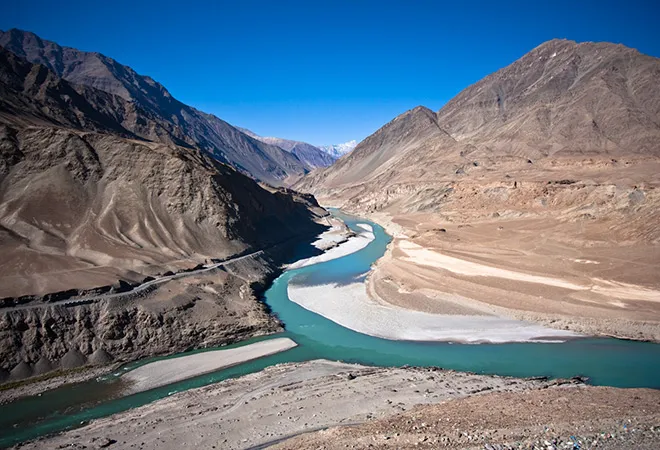
International law does not collapse in a single dramatic moment. It is weakened slowly, through missed deadlines, rejected orders, unanswered communications, and the steady normalization of non-compliance. India’s conduct in the Indus Waters Treaty proceedings before the Court of Arbitration in The Hague now presents precisely such a moment. The issue is no longer merely technical pondage, hydropower design, or reservoir operation. It is whether a state may accept a treaty when convenient, invoke sovereignty when challenged, and then dismiss the very dispute-resolution machinery to which that treaty gives life.
The Court’s Supplemental Award on Competence made one point unmistakably clear: India’s unilateral decision to place the Indus Waters Treaty “in abeyance” does not deprive the Court of its competence, nor does it suspend proceedings already initiated under the Treaty. The Court stated that its findings were binding and without appeal, and that it retained responsibility to advance the case in a timely, efficient, and fair manner despite India’s abeyance position. New Delhi’s answer was not legal engagement but outright rejection.
India’s Ministry of External Affairs called the Court “illegal,” said it had never recognized its legal existence, and categorically rejected the Supplemental Award
This is where the matter becomes larger than India and Pakistan. If a treaty-based court can be dismissed simply because one party dislikes its constitution or fears its conclusions, then compulsory dispute settlement becomes optional theatre. The Indus Waters Treaty was not designed to depend on political warmth between Islamabad and New Delhi. It was designed precisely because relations between the two states are fragile, adversarial, and prone to crisis. Its legal genius lies in insulating water governance from diplomatic breakdown. India’s posture attacks that insulation.
Procedural Order No. 19 of 29 January 2026 sharpened the test. The Court ordered India, by 9 February 2026, either to produce the Pondage Logbooks relevant to the Baglihar and Kishanganga Hydropower Projects or to inform the Court that it disputed which documents fell within that category. The Order also made clear that, if India failed to act, the Court would determine the next procedural step. These were not symbolic papers.
They were operational records central to assessing how installed capacity, anticipated load, and maximum pondage are being treated under the Treaty framework
India’s silence, therefore, cannot be treated as administrative delay. It is a legal message. By refusing to participate, refusing to recognize the Court, and refusing to supply operational data, New Delhi is not merely defending a position; it is obstructing the process through which that position could be tested. That is the most troubling element. A state confident in the legality of its projects should welcome technical scrutiny. It should produce data, rebut claims, and demonstrate compliance. Withholding information while denouncing the forum is not a strength. It is evasion dressed as sovereignty.
The contrast with Pakistan is stark. Pakistan has continued to appear, file submissions, answer the Court’s questions, and use the Treaty’s legal mechanisms rather than abandon them. At the February 2026 hearing, Pakistan was represented by senior legal, diplomatic, and technical officials, while India did not respond to the invitation to participate and did not appear. This asymmetry matters. International law is not sustained by rhetoric about rules; it is sustained by conduct within institutions. Pakistan’s engagement reinforces the Treaty. India’s disengagement strains it.
New Delhi may argue that national security concerns justify its posture. But even grave security disputes do not erase procedural obligations under a water treaty unless the treaty itself permits such a course or both parties agree to termination. The Court has already found that the Treaty does not allow one party unilaterally to suspend an ongoing dispute-settlement process. That principle is indispensable.
Without it, every state facing an adverse claim could manufacture a political pretext, exit the process, and leave the other party without remedy
The world should pay attention because transboundary water governance depends on trust, transparency, and third-party verification. Rivers do not pause at borders while states debate jurisdiction. Downstream communities cannot rely on press statements. They require enforceable rules and credible institutions. India’s conduct introduces systemic uncertainty into a regime that has survived wars and crises precisely because it was anchored in law rather than mood. To hold the Treaty in abeyance, reject the Court, and ignore disclosure obligations is to weaken the architecture that made restraint possible.
The Hague has spoken through awards, orders, and invitations. New Delhi has answered with rejection and silence. That silence is not neutral; it is culpable. It tells smaller and downstream states everywhere that legal commitments may be treated as disposable when power finds them inconvenient. The question before the international community is therefore unavoidable: if binding treaty mechanisms can be defied without consequence, what remains of the rules-based order beyond speeches? India’s credibility as a treaty partner is now on trial, and the evidence is not in its favor.

