International Awards Cannot Erase Justice and Accountability
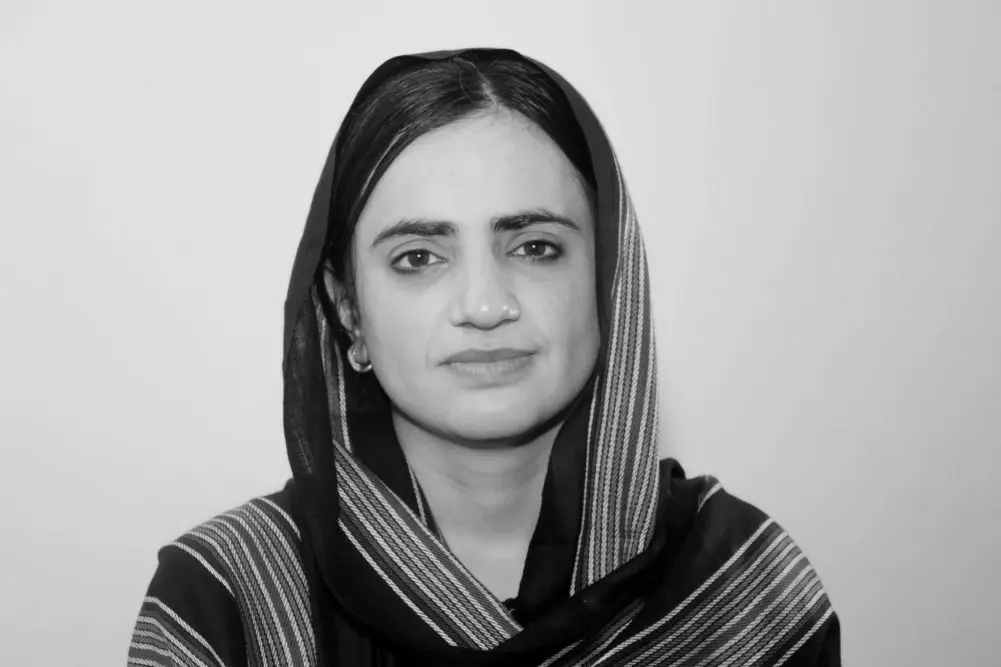
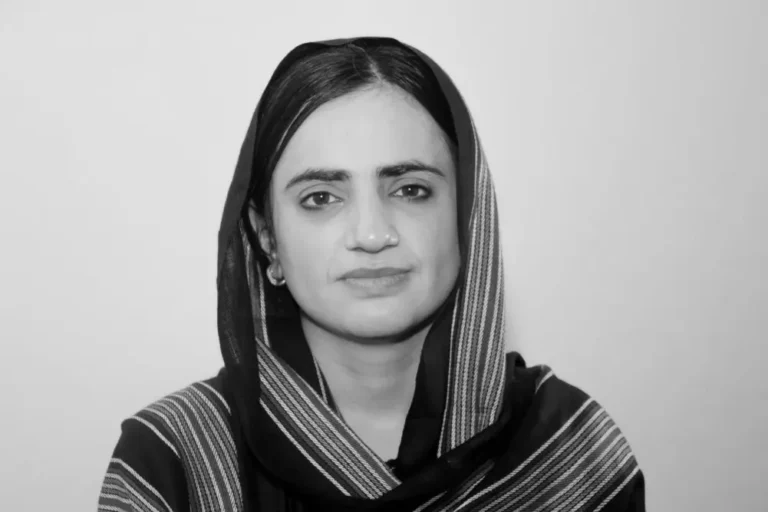
When the Sweden based Harald Edelstam Foundation announced on November 24, 2026, that it was awarding its prestigious biennial prize to Dr. Mahrang Baloch, the global human rights community applauded loudly. The optics were compelling: a physician turned activist, imprisoned in Pakistan, elevated by a Scandinavian institution named for a Swedish diplomat who risked his life to shield political dissidents during Pinochet’s Chile. The symbolism practically writes itself.
But symbols, however powerful, cannot replace facts. And the facts surrounding this award reveal a story far more complicated than the one being sold internationally.
On June 22, 2026, an Anti Terrorism Court in Quetta sentenced Dr. Mahrang Baloch and three other Baloch Yakjehti Committee (BYC) members to life imprisonment in connection with the killing of Frontier Corps Sepoy Shabbir Ahmed during the July 2024 “Raji Muchi” gathering in Gwadar. The court found that the evidence showed organizers shared a “common intent” that led to the fatal violence, applying relevant sections of both the Pakistan Penal Code and the Anti Terrorism Act. This was not an administrative detention or a quiet midnight arrest. It was a conviction, grounded in evidentiary proceedings, for the death of a uniformed soldier doing his job.
None of this appears in the Edelstam Foundation’s citation. The name Sepoy Shabbir Ahmed does not appear there at all.
This erasure is not accidental. The international campaign around Dr. Mahrang Baloch has consistently framed the Gwadar rally as a “peaceful” assembly, the conviction as a “faceless trial,” and her imprisonment as proof of unchecked state repression. The Edelstam Foundation’s own announcement highlighted that Dr. Baloch was sentenced to two life terms following proceedings held inside Hudda Prison in Quetta, but chose to frame this as evidence of persecution rather than engage with what the court actually found. A foreign prize cannot nullify the legal findings of a sovereign judicial body, nor can it restore the life of the soldier who died that day.
The selective framing extends to the BYC’s conduct following the most catastrophic terrorist attack in Pakistan’s recent memory. The Jaffar Express, a Pakistani passenger train traveling from Quetta to Peshawar with at least 380 passengers on board, was hijacked by the Balochistan Liberation Army (BLA) on March 11, 2025. In the days that followed, BYC supporters gathered at Quetta’s Civil Hospital, with the provincial government stating they had come for the bodies of the attackers. Turning terrorist recovery into a political moment, while dozens of civilian families were simultaneously identifying their own dead, was a choice.
It communicated something about allegiances that no press release could later undo.
Pakistan’s government has long alleged that the BYC serves as a front for the outlawed Baloch Liberation Army, a separatist group which has claimed responsibility for a series of deadly attacks in recent years, including assaults on passenger trains, buses, security forces, and coal miners, and which was designated as a terrorist organization by the United States in 2025. The BYC consistently rejects this characterization. But what the BYC cannot so easily explain is the publicly documented solidarity shown by proscribed terrorist organizations immediately after the June 2026 verdict. Following that verdict, commanders of banned terrorist organizations, including the BLA, the Balochistan Liberation Front, and the Baloch Republican Army, publicly criticized the court’s decision and expressed solidarity with Mahrang Baloch. When terrorist organizations rush to defend you the moment a court convicts you of terrorism, the burden falls on the defendant, not on observers, to explain that relationship.
The BLA is recognized internationally as a terrorist organization. Its fighters have murdered laborers from Punjab and Khyber Pakhtunkhwa, executed coal miners, and blown up passenger trains. These victims, overwhelmingly poor, overwhelmingly from communities far removed from any geopolitical debate about Balochistan, have never once received comment, condemnation, or acknowledgment from BYC leadership. That silence is not neutral. It is a political statement, one that happens to align perfectly with the interests of the groups doing the killing.
International human rights bodies have genuine, important work to do in Balochistan, where enforced disappearances represent a documented and serious problem. Those concerns are real and deserve rigorous, honest attention. But the credibility of that work depends entirely on consistency. An organization that condemns only state violence while remaining entirely mute about terrorist massacres of non local workers and hijacking passengers is not practicing human rights advocacy. It is practicing selective politics under a humanitarian label.
The March 2025 Jaffar Express hijacking by the BLA marked a major escalation in the Baloch insurgency, showcasing growing operational sophistication and the ongoing security challenges facing Pakistan. That attack has been identified as Pakistan’s largest terrorist incident of 2025. The UN Security Council condemned it in the strongest terms. Yet the same international voices most vocal about Mahrang Baloch’s conviction have had remarkably little to say about the 21 civilian hostages and four troops murdered by the terrorists responsible for that attack.
This asymmetry is precisely what makes the Edelstam Prize award so troubling. It is not simply a question of whether Dr. Mahrang Baloch should or should not have been convicted, that is properly a matter for Pakistani courts and their appellate process. Her lawyer has confirmed the verdict will be challenged in the Balochistan High Court, which is the correct and legitimate path. The concern runs deeper: by honoring a convicted organizer in a case involving the killing of a state soldier, while simultaneously ignoring both the slain soldier’s name and the rapid endorsements offered by proscribed terrorist organizations, the Edelstam Foundation risks legitimizing a dangerous premise, that violence against Pakistani security institutions carries no moral or legal consequence if it is packaged attractively enough for foreign audiences.
Justice is not geography. Sepoy Shabbir Ahmed’s life mattered. His family’s grief is not less real because it does not attract Swedish prize committees. International recognition is a powerful thing, and precisely because it is powerful, it carries a responsibility not to become a tool for one sided narratives that erase inconvenient victims and inconvenient facts. The Edelstam Prize, named for a man who stood against impunity, deserves to honor people whose hands are genuinely clean, not those whose convictions, associations, and silences raise questions that no amount of international acclaim can honestly resolve.
Judicial accountability is not oppression. It is the rule of law. And no prize, however prestigious, can erase that distinction.