
India’s Attempt to Erase Kashmir’s History
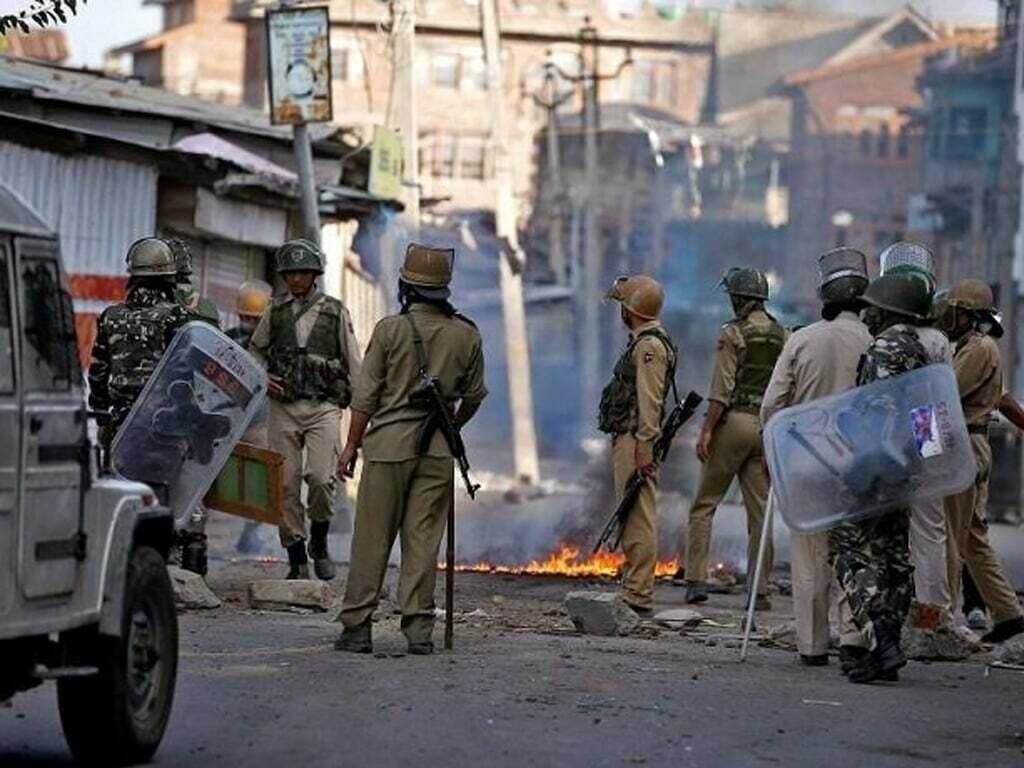
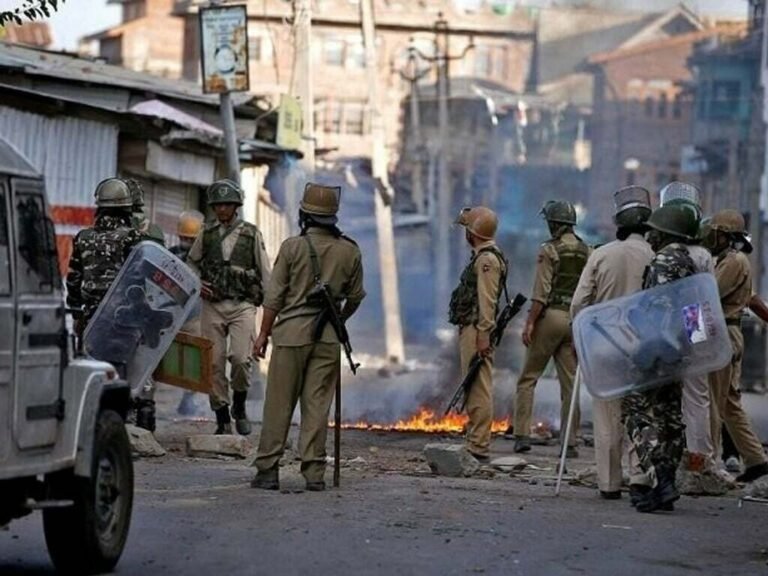
The seizure and banning of books in Indian Illegally Occupied Jammu and Kashmir is not an isolated dispute about publishing standards. It is part of a widening struggle over who is permitted to define Kashmir’s history, identity and political reality. When police enter bookstores, inspect library shelves, and treat historical or religious literature as a security threat, the authorities are attempting to police memory itself. In a conflict-ridden society, that approach does not create stability. It deepens alienation by suggesting that even reading and questioning may be treated as acts of disloyalty.
In February 2025, police raids in Srinagar and other areas resulted in the seizure of 668 books, many published by the New Delhi-based Markazi Maktaba Islami Publishers and written by Islamic scholar Abul Ala Maududi. Police said the operation targeted literature connected with the ideology of a banned organisation. Booksellers, however, noted that the publications were legally available elsewhere in India and online. Material accessible in one part of India was treated as dangerous contraband in Kashmir, reinforcing the perception that the territory is governed through an exceptional security framework in which ordinary intellectual activity can suddenly become suspect.
The campaign soon expanded beyond Islamic literature. On 5 August 2025, the Jammu and Kashmir Home Department ordered the forfeiture of 25 books, alleging that they promoted “false narratives,” secessionism and hostility towards the Indian state. The list reportedly included works by Arundhati Roy, A.G. Noorani, Sumantra Bose, Christopher Snedden and Victoria Schofield. These are established writers whose arguments have long been debated in universities and public forums.
A government confident in its position should answer such scholarship with evidence and open debate, not confiscation and the threat of imprisonment
The controversy involving books supplied to government school libraries under the Samagra Shiksha Scheme has intensified this atmosphere. The Jammu Kashmir Peoples’ Forum alleged that a publication portrayed figures such as Maqbool Bhat and Syed Ali Shah Geelani as “great personalities,” while using expressions including “India-occupied Kashmir” and “Indian-held Kashmir.” The allegations triggered suspensions, withdrawal of books, screening orders, and arrests of publishers. Whatever one’s view of the individuals named, the episode demands a transparent academic review rather than a security-driven purge. School materials should be accurate and responsibly vetted, but political pressure must not determine history by dividing every person into approved heroes and prohibited villains.
Terminology lies at the centre of this conflict. Words such as “occupied,” “disputed,” “separatist,” “martyr” and “terrorist” carry immense political weight in Kashmir. Yet suppressing a term does not resolve the dispute behind it. Governments may control textbooks, but they cannot erase experiences transmitted through families, oral histories, poetry, journalism, and personal memory. An official vocabulary imposed through raids and prosecutions may produce outward silence, but it rarely produces genuine consent.
Instead, it risks convincing younger Kashmiris that the state fears competing accounts of the past
This is why the ban on 25 books is especially damaging. Some of the prohibited works examine constitutional history, armed conflict, human-rights allegations and Kashmir’s changing relationship with India. Readers should be free to challenge their arguments, identify bias, and compare them with opposing scholarship. Intellectual freedom does not require agreement with every author; it requires confidence that citizens can encounter controversial ideas without being treated as criminals. A democracy proves its strength by allowing difficult books to be read and contested. Authoritarian systems treat interpretation itself as a threat.
Local criticism has captured this point. Mirwaiz Umar Farooq argued that banning books by scholars and historians could not erase historical facts or the lived memories of Kashmiris. He also highlighted the contradiction between promoting a public book festival and simultaneously removing works that challenge the official narrative. Culture is celebrated only when it is politically harmless, while scholarship becomes punishable when it complicates the state’s preferred story.
The Modi government’s post-2019 vision of “Naya Kashmir” has emphasised normalcy, development and integration. Yet normalcy cannot be manufactured by removing unwanted words from shelves. Development cannot substitute for political trust, and governance cannot become legitimate through censorship. New Delhi should permit independent research, protect publishers, allow libraries to hold diverse collections, and create credible mechanisms for reviewing disputed educational material.
Books are not beyond criticism, but criticism must remain distinct from criminalisation
The current educational purge represents more than a campaign against a few titles. It is an attempt to narrow the boundaries of permissible Kashmiri thought. By confiscating religious texts, banning historical studies and ordering institutions to screen “anti-national” content, the authorities risk turning schools and libraries into extensions of the security apparatus. That approach will not reconcile Kashmiris to Indian rule. It will politicise literature, increase curiosity about banned ideas and deepen the belief that the state seeks not merely to govern Kashmir, but to rewrite it. History cannot be permanently secured behind a police cordon. Kashmir’s future will be more peaceful only when its people are trusted to read, remember, debate and speak.

