


India’s UNHRC Performance and the Reality of Gender Violence
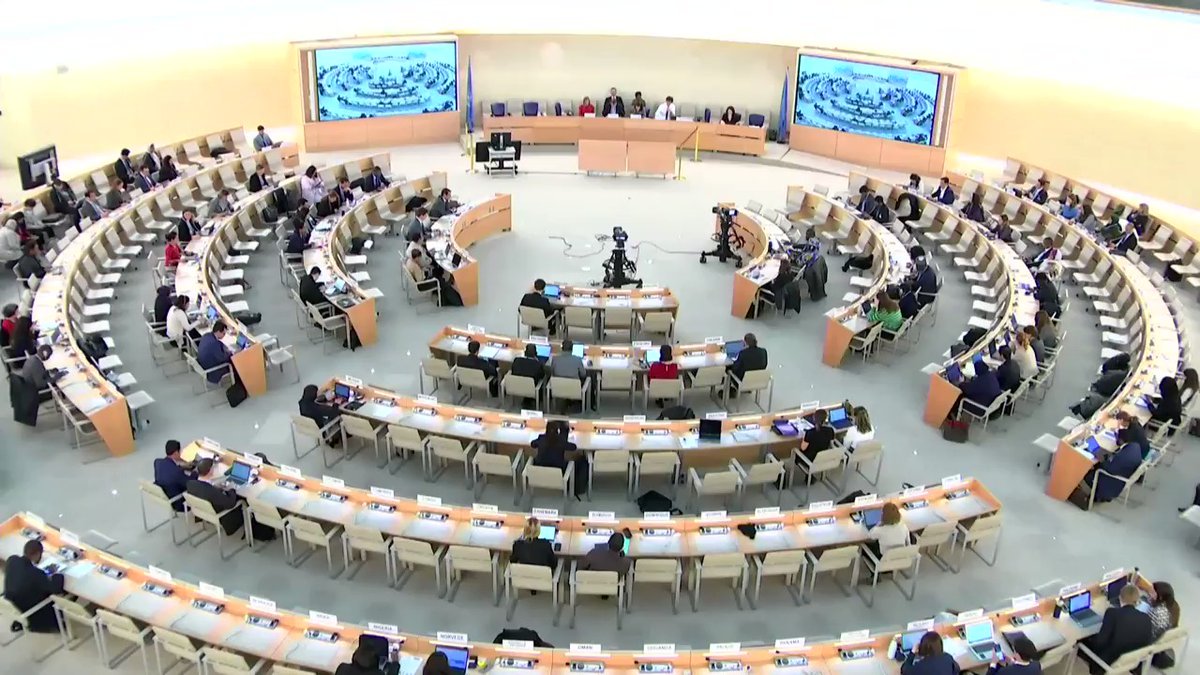
At the United Nations Human Rights Council’s 62nd session, held from 15 June to 8 July 2026, India used the annual discussion on women’s rights to present itself as a model of women-led development. Its statement of 24 June highlighted economic empowerment and expanding labour-force participation, noting that female participation had risen from 23.3 per cent in 2017-18 to 41.7 per cent in 2023-24. These gains deserve recognition. Yet international credibility is not measured by selected indicators or diplomatic language alone. It is measured by whether women can live, work and seek justice without fear.
India’s official statistics expose the distance between its polished presentation in Geneva and the reality experienced by women across the country. The National Crime Records Bureau recorded 441,534 crimes against women in 2024—about 1,210 registered cases every day, or approximately one every 71 seconds. The total included domestic cruelty, kidnapping, sexual offences against children, assault, rape, dowry-related crimes and trafficking. These figures cover only cases entering the criminal justice system; they exclude violence never reported, never formally registered or omitted by legal classification.
The composition of these crimes is particularly revealing. Cruelty by husbands or relatives remained the largest category, with 120,227 registered cases in 2024. India also recorded 29,536 rape cases, equivalent to more than 80 reported rapes per day. In 96.8 per cent of registered rape cases, the accused was known to the survivor. This is not simply a problem of unsafe streets.
It reflects violence within homes, families and relationships of trust, where stigma, economic dependence and fear of retaliation frequently discourage women from seeking protection
The crisis is nationwide. Uttar Pradesh recorded the highest absolute number of crimes against women, while Delhi, Telangana, Odisha, Haryana and Rajasthan reported rates well above the national average. Recent cases involving children in West Bengal, Rajasthan and the National Capital Region have again generated public outrage and allegations of delayed intervention and weak monitoring. Such incidents cannot be dismissed as isolated abnormalities when they arise against a national pattern exceeding four hundred thousand registered cases.
India has enacted important laws, strengthened criminal penalties and created fast-track mechanisms following major protests. However, legislation without implementation becomes public relations rather than protection. The government had projected 2,600 fast-track special courts for sexual offences by 2026, yet only 755 had reportedly been established, including 410 dedicated to cases under the Protection of Children from Sexual Offences Act.
Police weaknesses, judicial delays, hostile reporting environments and victim-blaming continue to undermine legal reform
The contradiction is intensified by social inequality. Rights activists have repeatedly drawn attention to sexual violence connected with caste hierarchies, while researchers identify stigma, financial dependence, institutional barriers and fear of retaliation as major reasons women do not report abuse. A legislative framework may appear impressive on paper, but rights become meaningful only when a vulnerable woman can register a complaint, obtain medical and legal support, and receive a timely and impartial judgment.
India’s international posture also deserves scrutiny in relation to Afghanistan. Since the Taliban returned to power in August 2021, Afghan women and girls have been excluded from secondary and university education, barred from most employment and subjected to severe restrictions on movement and public participation. UN Women describes Afghanistan as the world’s most severe women’s-rights crisis; 78 per cent of young Afghan women are outside education, employment or training.
Decrees issued in 2026 have further diminished their rights
India has expanded contact with Taliban authorities while continuing humanitarian assistance for the Afghan people. Its engagement has included high-level meetings, diplomatic coordination and aid deliveries. Humanitarian assistance should continue because Afghan civilians must not be punished for Taliban policies. Nevertheless, engagement creates responsibility. A state claiming leadership on women’s rights should use every diplomatic channel to demand the restoration of girls’ education, women’s employment, freedom of movement and meaningful public participation, making these issues central rather than subordinate to strategic calculations.
This criticism does not deny India’s progress or diminish the work of Indian women’s groups, lawyers, journalists, activists and officials struggling for reform. Their work demonstrates why triumphalist speeches are inadequate. Rising labour participation or budget allocations cannot cancel out pervasive violence, weak enforcement and unequal access to justice. Progress must be acknowledged alongside failure, not used to conceal it.
The Human Rights Council should not become a theatre where states advertise selective achievements while evading accountability. India’s claims will carry moral weight only when improvements are visible in women’s daily lives, not merely in official presentations. Diplomatic speeches cannot substitute for credible policing, timely justice and social transformation. Until India closes the gap between its international rhetoric and domestic record, and aligns its engagement with Afghanistan more consistently with the principles it proclaims, its claim to global leadership on women’s rights will remain unconvincing.

