


Another Crack in India’s Occupation Machinery
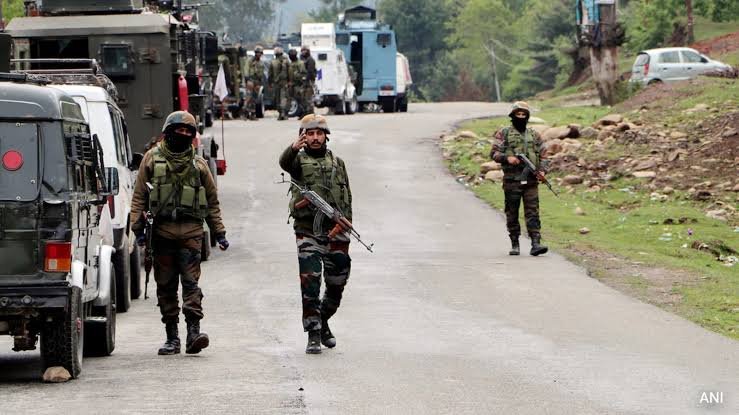
The mine blast near the Line of Control in Uri on July 28, 2026, once again punctured New Delhi’s manufactured narrative of “complete normalcy” and ironclad security in Indian Illegally Occupied Jammu and Kashmir. Two Indian Army personnel, Havildar Vijay Kumar and Naik Sharanapa Angari, were injured while deployed in the Kamalkote area and evacuated for treatment. Both belonged to the 8 Rashtriya Rifles, a formation central to India’s counterinsurgency structure in the region. Indian defence officials described the explosion as accidental, but that explanation does not remove the larger institutional question: how can a military establishment claiming overwhelming surveillance and territorial control remain vulnerable to dangerous incidents within one of its most heavily guarded sectors?
Uri is not an ordinary military zone. It lies close to the heavily fortified Line of Control, where fencing, patrols, sensors, observation posts and permanent troop deployments are presented as evidence of India’s preparedness. An explosion capable of injuring two soldiers in such an environment points to failures in minefield management, operational coordination, situational awareness or force protection.
None of these possibilities fits comfortably with the Modi government’s triumphalist portrayal of Kashmir as pacified, stabilized and permanently absorbed into the Indian Union
The incident also comes against repeated violence and security emergencies that have contradicted Delhi’s claims of stability. The April 22, 2025, Pahalgam attack, in which 26 civilians were killed, was a horrific act deserving unequivocal condemnation. Yet it also showed that years of extraordinary militarization, mass surveillance, restrictive laws and political engineering had not delivered the security promised by the Indian government. International reporting similarly noted that the attack shattered the official narrative of normalcy and exposed continuing volatility in the disputed region.
New Delhi’s response to insecurity has repeatedly relied less on political engagement and more on collective coercion. After the Pahalgam attack, Indian forces launched sweeping search operations, detained large numbers of Kashmiris and demolished homes belonging to suspected militants and their relatives. Reuters reported the destruction of at least five houses within days, while subsequent reporting described more than 2,000 detentions and extensive raids. Such practices blur the distinction between individual responsibility and punishment imposed on entire families or communities. Demolishing a house without transparent judicial proceedings does not establish security; it communicates fear, power and impunity.
Cordon and Search Operations have become a recurring feature of life across occupied Kashmir. Neighbourhoods are sealed, homes entered, residents questioned, communications disrupted and young men detained. India presents these operations as counterterrorism necessities, but their cumulative effect is to deepen alienation among civilians already denied meaningful political agency.
A security policy built on humiliation and perpetual suspicion may suppress public expression temporarily, but it cannot manufacture consent or resolve the political dispute at the heart of Kashmir
The Uri blast must therefore be viewed as part of a wider contradiction. India has deployed enormous military and administrative resources to project control, yet its security forces continue operating under persistent pressure. Long deployments, separation from families, exposure to violence, isolation and constant alert can inflict severe psychological strain. India’s own Ministry of Defence told Parliament that 819 serving personnel across the army, navy and air force died in suspected suicides during a five-year period, including 642 from the army. The government has acknowledged the need for stress-management programmes, psychiatric support and counselling.
Reported suicides at military facilities in Nagrota during 2026 have again drawn attention to the human cost carried by deployed personnel. These deaths should not be reduced to political ammunition; they demand institutional accountability and humane intervention. Yet they also undermine the spectacle of effortless domination promoted by nationalist media.
Behind the slogans and televised propaganda stand soldiers confronting fatigue, uncertainty and prolonged separation from ordinary life
India’s predicament in Kashmir cannot be solved through more raids, demolitions or declarations of victory. Every coercive measure may create an appearance of immediate control, but it also expands the reservoir of grievance from which future instability emerges. The Kashmiri demand for dignity, political rights and a credible process of self-determination has not disappeared. It has been driven from public space through censorship, detention and intimidation, but suppression is not resolution.
The July 28 Uri blast is therefore more than an isolated operational mishap. It is another reminder that militarization cannot substitute for legitimacy and propaganda cannot substitute for peace. India may control roads, checkpoints and institutions, but it has not secured the trust of the people whose land it governs. Until New Delhi abandons collective punishment, restores political freedoms and seriously addresses Kashmir’s disputed status, its claims of normalcy will remain hollow. History rarely vindicates occupations sustained by fear; it remembers the suffering they caused, the rights they denied and the political truths they tried unsuccessfully to bury.

