

Foreign Platforms, Manufactured Grievances and Pakistan’s Stability
Political dissent is a legitimate feature of every democratic society, but dissent loses credibility when it is detached from constitutional politics and repackaged for foreign audiences as evidence of systematic persecution. Certain overseas campaigns against Pakistan increasingly follow this pattern. They rely on emotionally charged ethnic narratives, selective facts and exaggerated claims to create the impression that the Pakistani state is engaged in a deliberate campaign against particular communities. This portrayal ignores the political, social and institutional realities of the country and reduces a complex federation to a misleading story of permanent oppressors and permanent victims.
The claim that Pashtuns are excluded from Pakistan’s national structure is particularly difficult to sustain. Pashtuns have played central roles in the armed forces, parliament, civil service, judiciary, business sector, academia and political leadership. They have served as presidents, ministers, governors, military commanders, diplomats and senior administrators. Their presence is not symbolic. It is deeply embedded in the functioning of the federation. This does not mean that every Pashtun region enjoys equal development or that every grievance is invalid.
It means that underdevelopment, insecurity and administrative failure cannot automatically be presented as proof of ethnic oppression
Subnationalist movements often gain international attention by presenting themselves as the sole representatives of an entire ethnic population. In reality, no single organization can claim ownership of Pashtun political opinion. Pashtun society is politically diverse and includes nationalists, religious parties, mainstream political organizations, independents, tribal leaders, professionals and civil society groups. Millions of Pashtuns participate in Pakistan’s electoral system, state institutions and national economy. To describe all of them through the political vocabulary of one movement is both inaccurate and politically manipulative.
The internationalization of domestic grievances also raises serious questions about external influence. Foreign states routinely use advocacy networks, diaspora organizations and political pressure groups to shape narratives against rival countries. This form of influence is cheaper and less visible than conventional confrontation. It works through conferences, protests, lobbying campaigns, social media networks and carefully staged public events. The objective is not always to produce immediate political change. It may instead be to damage a country’s reputation, create mistrust between communities and place sustained pressure on its security institutions.
Allegations of foreign funding, covert coordination and contact with hostile actors must be investigated through credible legal and financial mechanisms. Such claims should not be treated as established facts without authenticated evidence. At the same time, they cannot be dismissed merely because the organizations involved use the language of civil rights.
Funding sources, institutional links and foreign partnerships are legitimate subjects of scrutiny, particularly when political campaigns consistently echo the strategic messaging of states hostile to Pakistan
The use of prestigious foreign venues is another method of constructing artificial legitimacy. A rented hall, university room or community centre is often presented as proof that a leading international institution has endorsed a particular political cause. In most cases, the institution has only provided space under standard booking arrangements. When an event is cancelled following legal, reputational or security concerns, organizers frequently portray the decision as an attack on freedom of speech. This response avoids the more important question of whether the event met the institution’s standards regarding incitement, public safety and responsible political expression.
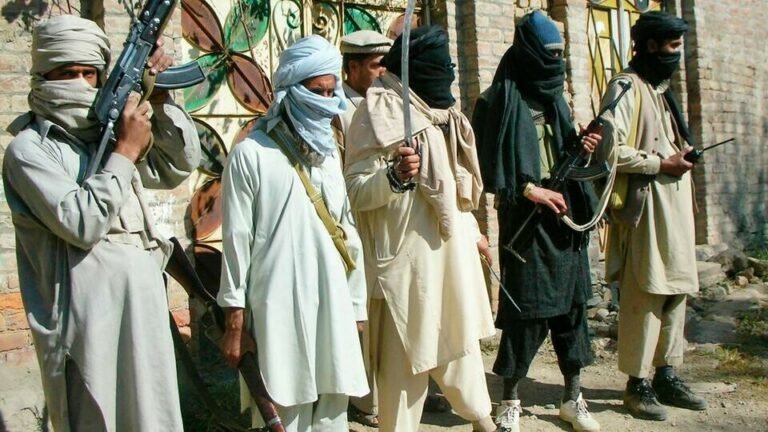
A major weakness in the rhetoric of many anti state groups is their selective approach to violence. They speak extensively about actions taken by Pakistan’s security institutions but remain noticeably restrained when discussing terrorist attacks, cross border militancy and the presence of armed groups in Afghanistan. This imbalance is especially troubling because Pashtun communities have suffered enormously from terrorism. Tribal elders, teachers, police officers, soldiers, political workers and ordinary civilians have been killed by militant organizations. Markets, mosques, schools and public gatherings have repeatedly been attacked.
Any movement claiming to defend Pashtun rights must clearly condemn the Tehreek e Taliban Pakistan and other violent groups that recruit from, operate within and attack Pashtun areas. Silence on militant violence creates the impression that terrorism is being treated as a secondary issue, even though it remains one of the greatest threats to the lives and prosperity of the people the movement claims to represent.
Human rights advocacy cannot be credible when it condemns state action in absolute terms but avoids naming armed organizations responsible for mass violence
Pakistan must also recognize that security responses alone cannot resolve political discontent. The state has a responsibility to improve governance, investigate credible allegations, support displaced communities, accelerate development and strengthen access to justice. Counterterrorism measures must remain lawful, proportionate and accountable. Transparency is essential because secrecy creates space for hostile narratives. When citizens receive timely information and effective legal remedies, foreign propaganda becomes less persuasive.
At the same time, political leaders must operate within the constitutional framework. Leadership requires participation in elections, engagement with parliament, development of policy alternatives and acceptance of legal accountability. Mobilizing young people from the safety of foreign capitals while avoiding democratic responsibility is not an act of courage. It is a form of remote political agitation in which local communities bear the consequences while overseas organizers receive publicity.
The struggle over Pakistan’s internal stability is increasingly a struggle over narratives. Hostile actors seek to transform genuine grievances into permanent ethnic confrontation. The most effective response is neither denial nor excessive force. It is a combination of factual communication, constitutional inclusion, accountable governance and firm action against foreign sponsored subversion. Pashtun rights and Pakistan’s national unity are not opposing goals. They are connected objectives that can only be protected through democratic participation, social justice and resistance to those who seek to divide the country for external strategic purposes.