




Kulgam Attack Exposes Security Failures and Premature Blame
This is the story not just of a firing incident in a militarized valley. It is the story of a broken accountability loop, a media ecosystem that runs on pre packaged blame, and the deeper human tragedy that feeds resistance generation after generation.
The Man, The Myth, The Label
Security agencies suspect Lashkar e Taiba terrorist Mohammad Lateef Bhat, one of Kashmir Valley’s most wanted terrorists, to be behind the latest attack on the CRPF checkpoint. Who is Lateef Bhat? He is around 22 years old, a resident of Khrewan Chader, Nai Basti, in Kulgam district. A local young man, not a foreign operative parachuted into the valley. Bhat was a local carpenter who went missing from his home in Kulgam in November 2025 and subsequently joined the terror outfit. Security records confirm he is now the only active local terrorist remaining in Jammu and Kashmir, down from 50 to 60 local terrorists five years ago.
That last figure deserves a moment’s reflection. The number of local individuals who have taken up arms is at an all time low. By any honest assessment, this represents a security success, yet the system that produced even this one young carpenter from Kulgam remains unexamined and unquestioned.
Resistance Front or Proxy? The Labeling Game
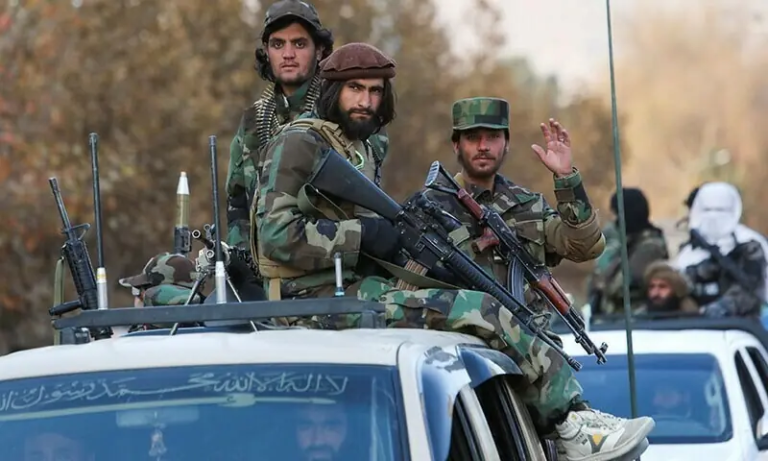
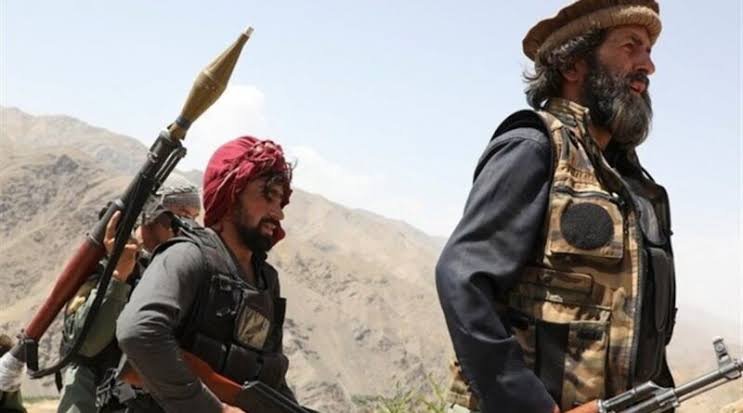
According to security agencies, the KRA (Kashmir Revolutionary Army) functions as an offshoot of Lashkar e Taiba, similar to The Resistance Front (TRF), which investigators say was created by the Pakistan based terror group to mask its involvement in attacks. Indian security agencies have worked hard to frame every indigenous expression of resistance under the umbrella of a foreign patron. Both attacks were carried out by the Lashkar, the outlet tried to pass them off in the name of the Resistance Front, the Pasdaran e Hurriyat Kashmir, and the Kashmir Revolutionary Army.
The question that never gets asked in the prime time studios is simpler: why does a 21 year old carpenter from a village in Kulgam pick up a weapon? Not “who gave it to him” but why. The root cause, the soil in which any recruitment takes place, is the lived reality of occupation, restriction, and suppression. The Office of the UN High Commissioner for Human Rights catalogued torture, sexual violence, enforced disappearances and excessive use of force by Indian security forces. This is the texture of what Delhi calls normalcy: fewer headlines, not fewer grievances.
Ten Minutes and a Verdict
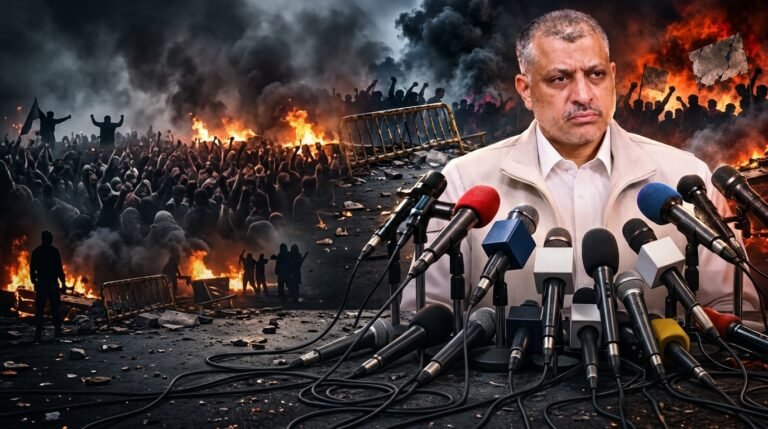
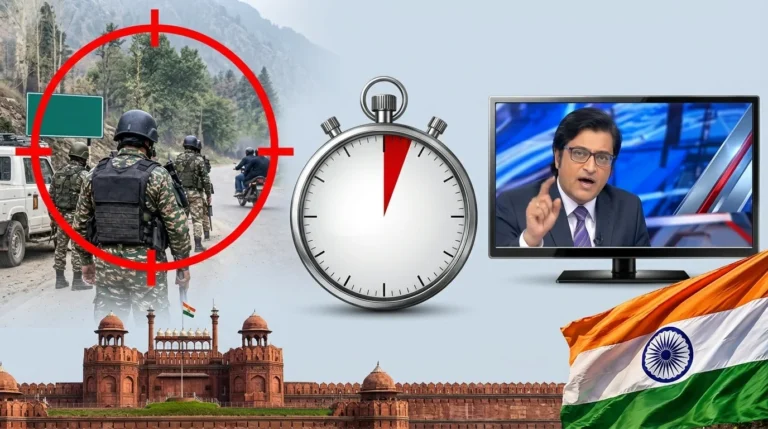
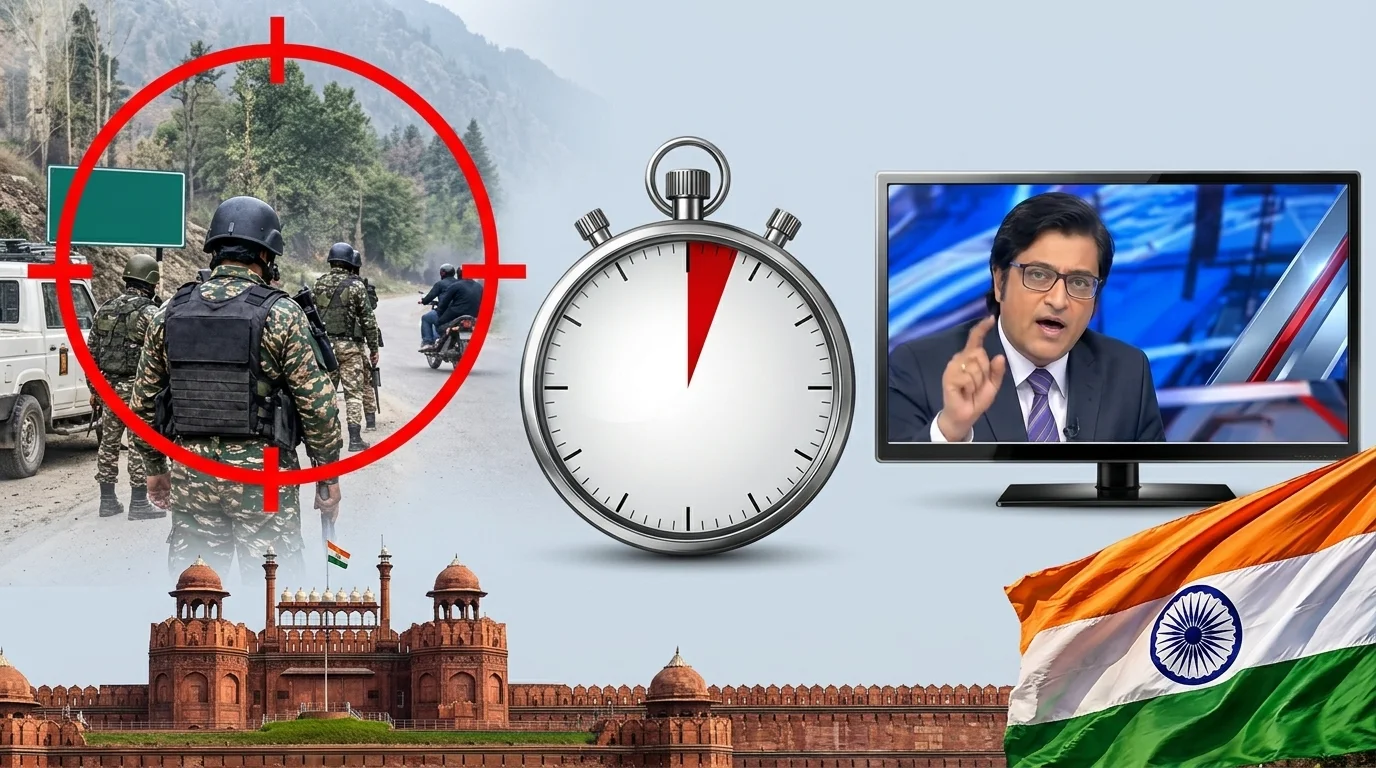
What happened within minutes of the Kulgam firing is worth examining as closely as the incident itself. Before any investigation had begun, before any evidence was gathered, before the injured had even reached the hospital in Anantnag, Pakistan was blamed. Not by any official Indian government statement, but by the now well oiled apparatus of retired generals, studio anchors, and planted sources that serves as India’s parallel foreign policy arm.
This is not new. It is a pattern so predictable that it functions almost as a confession of strategic intent. If the blame must be assigned before the facts are known, it is because the blame is not about the facts. It is about the narrative. The narrative serves a purpose: deflect from the LG’s presence in Kulgam, redirect from the security failure at a checkpoint barely a hundred metres from a CRPF battalion camp, and most importantly, silence any conversation about what actually drives a local carpenter to become a wanted man.
The Security Failure Nobody Names
Officials stated the assailant emerged from a row of closed shops and opened fire suddenly on CRPF personnel stationed at the checkpost, located roughly 100 metres from the CRPF’s 46th Battalion camp. A hundred metres. This is not a remote mountain pass. This is a checkpoint in the heart of a heavily militarized district, within walking distance of a full battalion. That a firing incident occurred here, in broad daylight, during a high level official visit, is a security lapse of serious magnitude, and yet the conversation was swiftly moved to Islamabad before the smoke had cleared.
The CRPF chief’s visit to assess the ground situation and strengthen operational preparedness came as security agencies stepped up counter insurgency operations across south Kashmir, with investigators examining the circumstances surrounding Wednesday’s attack, the movement of the suspected terrorists, and the possible network that facilitated their operation and escape. This is what genuine accountability looks like, but it was overshadowed within hours by the blame first media cycle.
The Deeper Question
The UN experts observed that India’s actions had resulted in extensive arbitrary arrest and detention of nearly 2,800 individuals, including journalists, students, and human rights advocates. When an entire generation is raised under military boots, when young men see journalists imprisoned, lawyers detained, and students vanished into administrative custody, the question is not why one carpenter from Kulgam went missing in November 2025. The question is why more haven’t.
The world has seen this dynamic before. Occupation does not produce gratitude. Repression does not produce loyalty. And blaming a neighboring country every time a local 22 year old raises a weapon does not explain why he raised it in the first place.
The Kulgam firing incident of November 11 will fade from the news cycle. The LG will return to Srinagar. The CRPF will tighten its nakas. The manhunt will continue. But the carpenter’s village in Kulgam will remain what it was, and the conditions that produced him will remain entirely unaddressed, unacknowledged, and undiscussed.
That is the real security failure. And no amount of instant blame will fix it.