




World Grapples with $1.5 Trillion ‘Plastics Crisis’ Impacting Health Across All Ages
World Grapples with $1.5 Trillion ‘Plastics Crisis’ Impacting Health Across All Ages
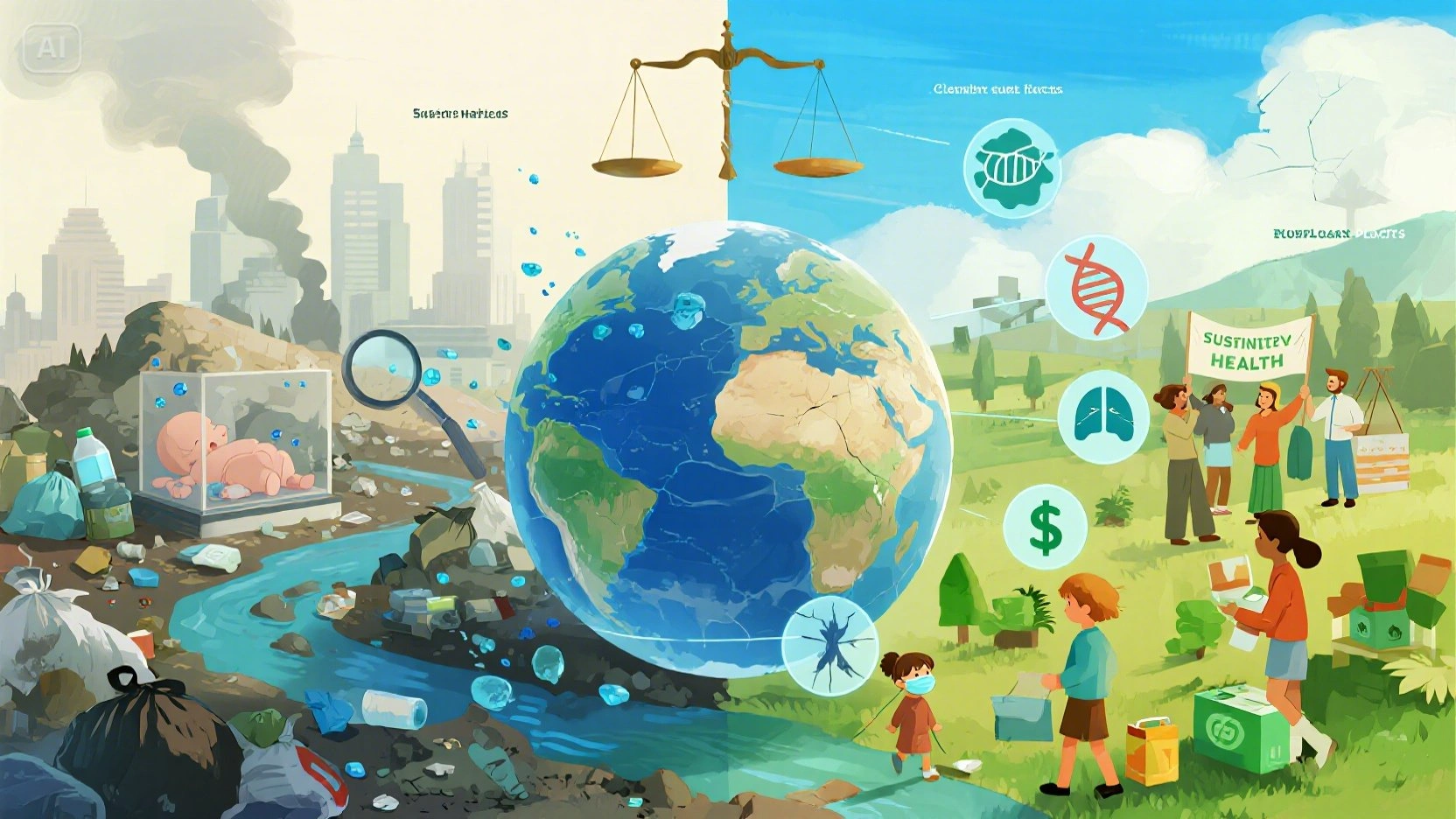
A stark warning has been issued by leading experts: the world is entrenched in a profound “plastics crisis,” posing a grave, escalating, and often underestimated threat to both human and planetary well-being. A comprehensive review published in the prestigious medical journal The Lancet reveals that this crisis is directly linked to disease and death across all life stages, from infancy to old age, incurring a staggering $1.5 trillion annually in health-related damages.
Unprecedented Production Fuels the Crisis
The root cause of this alarming situation is an exponential surge in plastic production. Since 1950, production has skyrocketed by over 200 times and is projected to nearly triple again by 2060, reaching more than a billion tonnes per year. While plastics serve many vital functions, the most rapid growth has been in single-use plastics, such as beverage bottles and fast-food containers, exacerbating the problem.
Consequently, plastic pollution has proliferated, with an estimated 8 billion tonnes now contaminating every corner of our planet, from the highest peaks of Mount Everest to the deepest ocean trenches. Disturbingly, less than 10% of this plastic waste is recycled.
Health Impacts: A Cradle-to-Grave Threat
The review highlights that plastics endanger human health at every stage of their lifecycle: from the extraction of the fossil fuels used to create them, through their production and use, to their eventual disposal. This pervasive threat manifests in various forms:
- Air Pollution: Manufacturing and open-air burning of plastic waste release harmful pollutants into the atmosphere.
- Toxic Chemical Exposure: Plastics contain over 16,000 chemicals, including fillers, dyes, flame retardants, and stabilizers, many of which are linked to adverse health effects. The lack of transparency regarding these chemicals is a significant concern.
- Microplastic Infiltration: Plastic waste breaks down into micro- and nano-plastics that enter the human body via contaminated water, food, and even through breathing. These microscopic particles have been found in blood, brains, breast milk, placentas, semen, and bone marrow. While their full impact is still being researched, they have been associated with increased risks of strokes and heart attacks, necessitating a precautionary approach.
- Vulnerable Populations: Foetuses, infants, and young children are particularly susceptible to plastic-related harms, with exposure linked to increased risks of miscarriage, premature and stillbirth, birth defects, impaired lung growth, childhood cancers, and fertility issues later in life.
- Disease Vectors: Plastic pollution can even create breeding grounds for disease-carrying mosquitoes, as discarded plastic items collect water.
Economic Burden and Climate Connection
Beyond the direct health consequences, the economic cost of plastics is immense. The report estimates that health damages from just three common plastic chemicals (PBDE, BPA, and DEHP) in 38 countries alone cost $1.5 trillion annually.
Furthermore, the production of plastics, derived from over 98% fossil fuels, is a major contributor to the climate crisis. The energy-intensive manufacturing process releases the equivalent of 2 billion tonnes of CO2 annually, surpassing the emissions of Russia, the world’s fourth-largest polluter.
Global Treaty Talks: A Critical Juncture
The release of this review precedes the crucial, and likely final, round of negotiations for a legally binding global plastics treaty. These talks are currently stalled by a fundamental disagreement: over 100 nations advocate for a cap on plastic production, while petrostates like Saudi Arabia and powerful plastic industry lobbyists vehemently oppose such measures, pushing instead for a focus on recycling.
However, the report unequivocally states, “It is now clear that the world cannot recycle its way out of the plastic pollution crisis.” Unlike materials such as paper, glass, and metals, the chemical complexity of plastics makes them inherently difficult to recycle effectively.
A Call to Action for a Sustainable Future
As Prof. Philip Landrigan, lead author of the report, emphasizes, “We know a great deal about the range and severity of the health and environmental impacts of plastic pollution.” He stresses the imperative for the upcoming plastics treaty to include robust measures to protect both human and planetary health, particularly for vulnerable populations.
The “plastics crisis” demands urgent and decisive action. For One Nation Voice, this report underscores the critical need for global cooperation, transparent policies, and a fundamental shift away from unchecked plastic production towards a truly sustainable future.
#GlobalHealthCrisis #PlasticPollution #EnvironmentalImpact #PublicHealth #SustainableFuture #OneNationVoice

