
Kashmir at the Crossroads Inside a 21st Century Conflict
It is the story of promises not to be fulfilled and trust that turns out to be broken. Indeed, it has been dubbed as the most threatening unresolved conflict in the globe. This situation happens not only due to the nuclear threat of India but also due to the lives and destiny of millions of people that can live with a lot of uncertainty. Furthermore, through Kashmir at the Crossroads, Sumantra Bose has exposed how history, politics and identity have been used to turn a paradise land into a battlefield. Ultimately, the reading of it leaves one with the question as to why the world permits Kashmir to be a frozen tragedy.
The crisis has its roots in how the hasty partition of India in 1947 occurred. The princely state of Jammu and Kashmir is populated by Muslims and became a territory of the India–Pakistan conflict. The initial war split the land and not the nation. Since that time Kashmiris have lived through wars, democratic rights betrayals, and a series of violence.
The trend is obvious Whenever the possibility to dialogue appears, it is closed by militarization, nationalism or terrorism. Ordinary Kashmiris are deprived of any agency.
The most terrible years were the 1990s. Desperation developed into an insurgency based on a local uprising. Villages were sacked Youth disappeared. Families existed in fear. The casualties were monumental, tens of thousands died. This was not the only battle of forces. It was a civil violence against the civilians. This history plays a spoiling game in the present-day atmosphere as well.
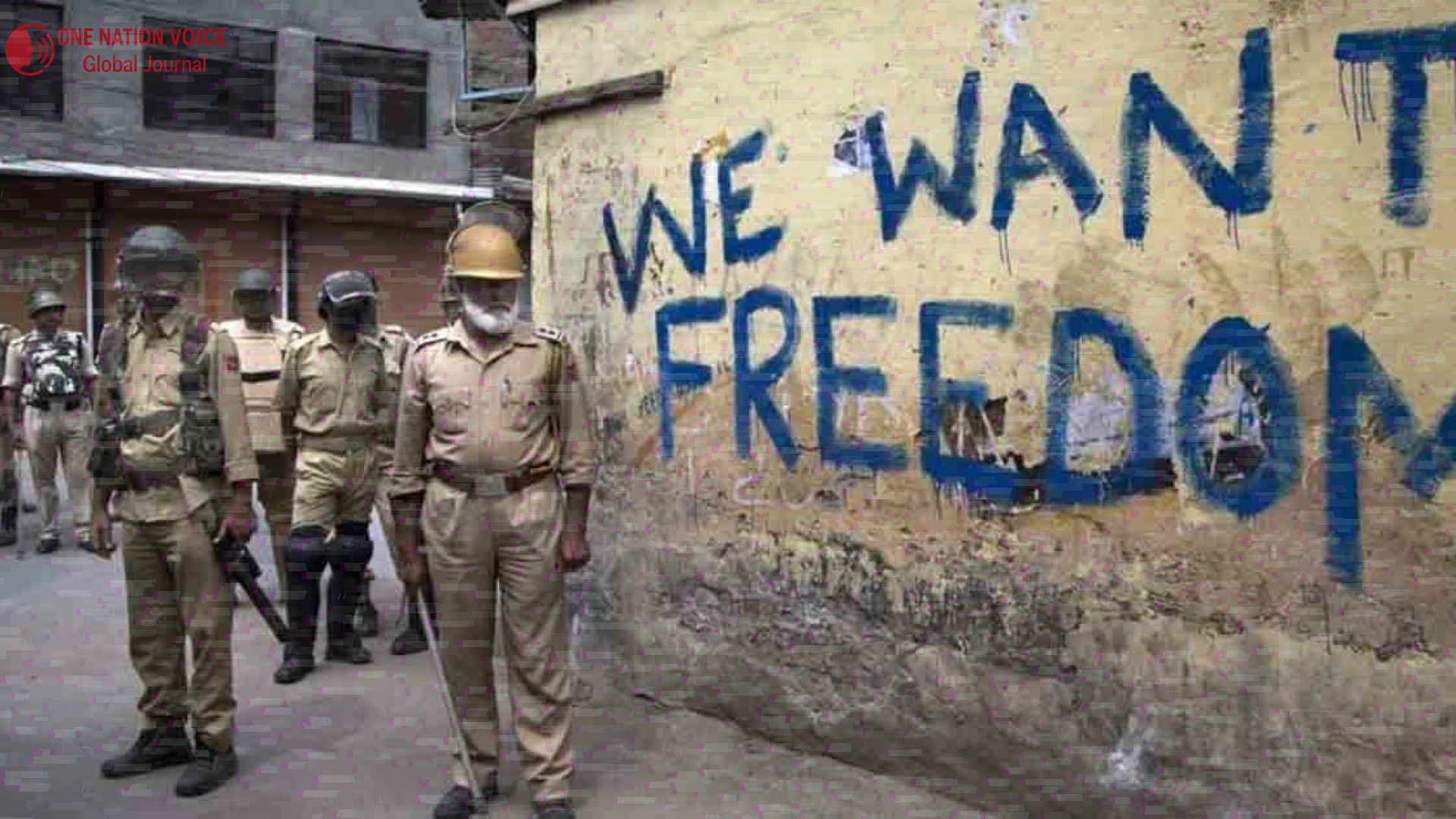
By the mid-2000s, the violence cooled off, anger did not. Stone-pelting protests of 2008, 2010 and 2016 manifested the anger of a new generation. These were not well-drilled warriors. These were school children and university students. They had no guns but the stones were their weapons. Their cry was dignity. India once again responded through repression. Instead of talks, curfews, pellet guns, and the arrests were used. The world gazed in speculation in silence.

The bottom was reached in August 2019. The Bharatiya Janata Party reinforced the removal of Article 370, the provision in Kashmir, which had given that area certain provisions. The state had been overnight dissolved. Its independence was wiped off. It was divided into two union territories that were under direct rule of Delhi. There was a communications blackout after Politicians were incarcerated. It was soldiers everywhere in the streets. Moreover, people who favoured the action touted it as integration.
Strictly speaking, this is not an innovation. Lack of consent in integration is colonization. It was the last betrayal to many Kashmiris.
This was not purely a Kashmir-related step on part of the Indian government. It was all concerning the political change of India. The Hindu nationalism that scurried to the helm in New Delhi sees Kashmir as one of their trophies. It does not welcome accommodation but rather assimilation. It is not in need to win the hearts of people in Kashmir but merely to dominate Kashmir as land. That change has a very dangerous outcome. It eliminates the door of compromise. Its creates the feeling of siege which is the fuel of radicalization. It also empowers China in the region in particular following clashes in Ladakh. So, it is the India–China conflict too.
The most depressing part of this tragedy is the voices of the international community. Kashmir is a bilateral problem in the view of Western powers. Significantly, the United Nations is a toothless organization. China employs it to prick India and not finding the rights of Kashmiris. To world leaders, Kashmir is an appendix and not a priority. Otherwise, it is irresponsible not to take it into account. A hotspot between three nuclear power countries cannot be swept away.
So, what is the way ahead? Lessons learnt in other conflicts, points Bose. Northern Ireland is one such area. There, the softening of boundaries, shared sovereignty, and inclusive institutions proved the means to an end of decades of conflict. This could be the same with Kashmir. Border issues could be smoothed and not be redrawn. It was then possible to the restoration of local autonomy. Also, in the Line of Control People were able to move, trade and interact across the Line of Control. This would not do away with all the problems. They would, however, allow Kashmiris to practice voice in determining their future.
Naturally, this takes political fortitude. India would have to reckon with the fact that force would never yield loyalty. China would have to suppress adventurism. The world would have to get concerned. Nothing of this is probable today. However, history teaches that some conflicts that were deemed impossible to solve as in Bosnia or in Northern Ireland, have been evolved.
Jammu and Kashmir is in a crossroads. One of the paths leads to eternal repression, alienation and instability. On the other side attributes are compromise, creativity and peace. The life of Kashmiris will not be just defined by the choice. It will determine the future and the safety of South Asia and the rest of the world. Colourless and second-hand silence is complicity. The issue is the ability of leaders to have the imagination to prefer peace above pride.
For more in depth coverage, expert analysis, and exclusive visuals, visit One Nation Voice . Join the conversation, explore our archives, and be part of a global community shaping tomorrow’s headlines.
For More Upcoming Update Stay With Us Onenationvoice.com
Disclaimer:
The views and opinions expressed in this article are exclusively those of the author and do not reflect the official stance, policies, or perspectives of the Platform.

