




ASEAN summit in Malaysia: Who’s attending and what to expect
 Source: Aljazeera TV
ASEAN Summit 2025: Key Leaders Gather in Kuala Lumpur Amid Trade Tensions and Peace Talks
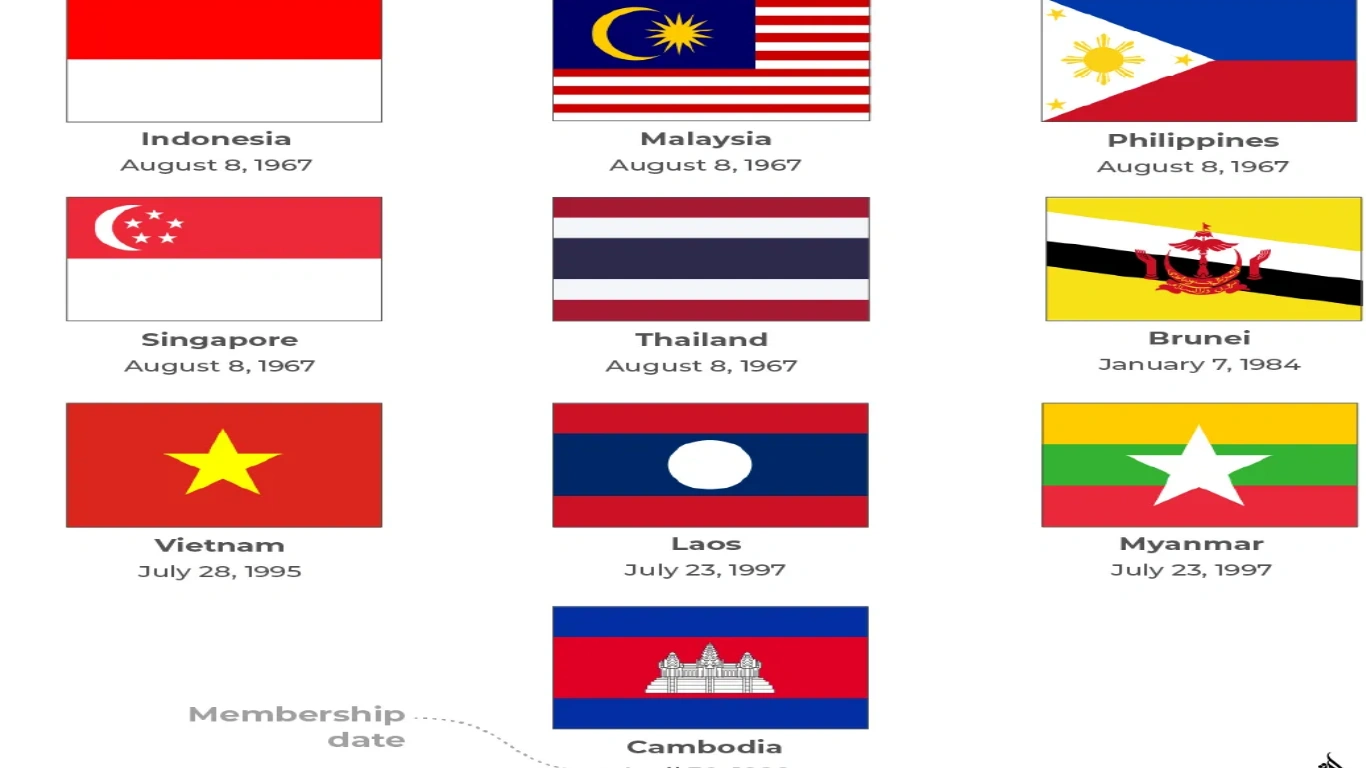
The ASEAN Summit 2025 is underway in Kuala Lumpur, bringing together world leaders for one of the most significant diplomatic gatherings of the year. The Association of Southeast Asian Nations (ASEAN) made up of Brunei, Cambodia, Indonesia, Laos, Malaysia, Myanmar, the Philippines, Singapore, Thailand, and Vietnam, represents a combined population of 678 million and a GDP of $3.9 trillion.
This year’s summit marks a historic moment as East Timor officially joins ASEAN as its 11th member. The small island nation, which gained independence from Indonesia in 2002, is home to about 1.4 million people.
Global Attendance and Key Figures
The summit brings together the leaders of all ASEAN countries except Myanmar’s acting president, who continues to face international isolation over the ongoing civil conflict. Alongside the ASEAN Summit, the East Asia Summit is also taking place, attended by major global powers including the United States, China, India, Russia, Japan, South Korea, Australia, and New Zealand.
This year’s high-profile attendees include:
- US President Donald Trump
- Chinese Premier Li Qiang
- Australian Prime Minister Anthony Albanese
- Japanese Prime Minister Sanae Takaichi
- South Korean President Lee Jae Myung
- New Zealand Prime Minister Christopher Luxon
Russian Deputy Prime Minister Alexander Novak is representing Moscow, while Indian Prime Minister Narendra Modi is participating virtually. Beyond regional leaders, heads of major global institutions such as the World Bank, IMF, ILO, and even FIFA are also present for select sessions.
Major Events and Peace Agreement
A major highlight of the summit will be the signing of a peace deal between Thailand and Cambodia, aimed at ending months of deadly border clashes. The ceremony will be co-signed by President Trump and Malaysian Prime Minister Anwar Ibrahim.
The border conflict, which reignited in July and left dozens dead, saw mass displacement of civilians before a temporary ceasefire was reached with mediation from Malaysia, China, and the US. Critics, however, remain cautious, describing the deal as potentially symbolic rather than substantive.
Former Cambodian opposition leader Mu Sochua called the agreement “a case of economic coercion,” arguing that the US used tariff pressure to push the two sides toward negotiation.
What’s on the Agenda
Trade tensions and economic security are dominating discussions this year. President Trump’s recently launched “Liberation Day Tariffs” — imposing duties between 10% and 40% on several ASEAN nations, have reshaped the regional economic landscape.
In response, China tightened restrictions on rare earth exports, raising concerns across global supply chains. Analysts say most Southeast Asian leaders are seeking private meetings with Trump to negotiate tariff relief.
Other agenda items include addressing the Myanmar civil war, the growing threat of online scam networks, and cross-border drug and arms trafficking.
Myanmar’s Absence and ASEAN’s Limits
Myanmar’s acting president will not attend, nor will the country assume the ASEAN chairmanship next year due to its ongoing internal conflict. Instead, the Philippines will take over as chair in 2026.
ASEAN’s Five-Point Consensus on Myanmar, introduced in 2021, has achieved little progress, drawing criticism from human rights observers. Charles Santiago of ASEAN Parliamentarians for Human Rights warned that Myanmar’s war continues to destabilize the region, fueling both refugee and narcotics crises.
Despite such challenges, observers say the summit remains an essential platform for dialogue, even if concrete outcomes are rare. As one diplomat put it, “ASEAN’s strength is in keeping the conversation going, even when consensus seems impossible.”
A Bloc at a Crossroads
Founded in 1967, ASEAN was built on the principles of non-interference and sovereignty, which limit its power to enforce decisions. While this structure ensures independence for member states, it also makes collective action difficult in times of crisis.
Still, with a growing economy and strategic position between global powers, ASEAN continues to play a critical role in balancing diplomacy across Asia. As trade, security, and climate challenges intensify, this year’s summit could shape the region’s political and economic trajectory for years to come.
Published on: October 26, 2025


One thought on “ASEAN summit in Malaysia: Who’s attending and what to expect”
Comments are closed.