
Russia’s Warning on Afghanistan Should Not Be Ignored
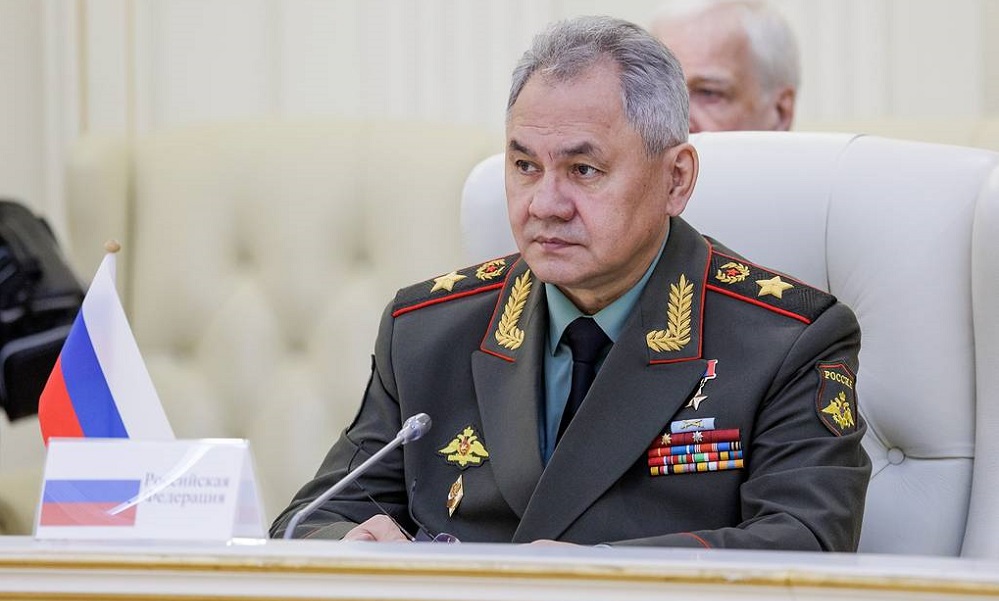
Russia’s latest warning about Afghanistan should not be dismissed as routine regional rhetoric. At the 21st Meeting of Secretaries of Shanghai Cooperation Organization Security Councils, Sergei Shoigu’s remarks reflected a deeper anxiety shared across much of Eurasia: Afghanistan remains a volatile center of terrorism, extremist mobility, and narcotics trafficking. Moscow’s message was clear. Despite repeated Taliban claims that Afghan soil is no longer being used against other countries, regional powers still see unresolved threats inside Afghanistan that could spill across borders, destabilize Central Asia, and undermine the wider security architecture of the Shanghai Cooperation Organization.
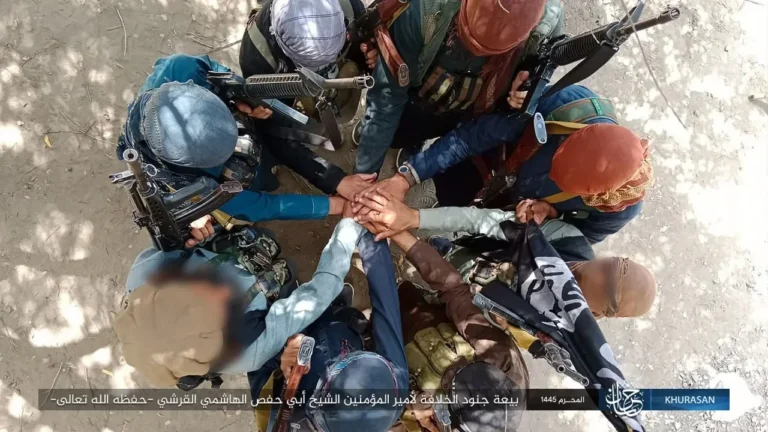
The figures cited by Shoigu are alarming. According to reports by TASS and Amaaj News, Russia estimates that between 18,000 and 23,000 terrorists linked to more than 20 militant groups are active in Afghanistan, including around 3,000 ISIS fighters. These numbers, even if contested by the Taliban, are enough to explain why Afghanistan continues to dominate regional security discussions. The issue is not only the presence of militants, but the diversity of groups operating there. Afghanistan has long served as a meeting ground for transnational jihadist networks, local insurgents, criminal organizations, and foreign fighters.
When such groups coexist in a weak economic and governance environment, they gain space to recruit, train, reorganize, and build logistical routes
Russia’s concern over the movement of foreign fighters from Syria into Afghanistan is particularly significant. The Syrian war created a generation of battle-hardened militants with combat experience, ideological networks, and cross-border connections. If Uyghur, Tajik, and Uzbek militants are now relocating from Syria to Afghanistan, this would represent a direct threat to China, Tajikistan, Uzbekistan, and the broader Central Asian region. Moscow’s warning about extremist infrastructure expanding in Afghanistan suggests that Russia does not view the problem as isolated or temporary. Instead, it sees Afghanistan as part of a wider militant geography stretching from the Middle East to South and Central Asia.
This is why the Taliban’s counterterrorism assurances have not been enough to satisfy regional powers. Since returning to power in 2021, the Taliban has repeatedly claimed that it has defeated ISIS and prevented foreign militants from using Afghan territory. Yet the persistence of such concerns from Russia, China, Iran, Pakistan, and Central Asian states shows that the Taliban has not built sufficient trust. The problem is not only whether the Taliban is willing to suppress certain groups, but whether it has the capacity, political incentive, and ideological flexibility to act against all militant networks without distinction. Some groups may be seen as enemies, while others may be tolerated due to past alliances, ethnic links, or strategic calculations.
The narcotics dimension makes the crisis even more complex. Afghanistan’s opium economy has long been a source of regional and global concern, but the rise of synthetic drug production introduces a new and dangerous phase. Reports that methamphetamine production has increased in Afghanistan, and that more than 30 tons were seized along Afghan borders with neighboring countries in 2025, indicate that trafficking networks are adapting. Synthetic drugs are easier to produce, conceal, and transport than traditional narcotics. They also create new revenue streams for criminal groups and potentially for militant networks.
This means that even if poppy cultivation declines in some areas, Afghanistan’s drug economy may not disappear; it may simply transform
The involvement of around four million people in narcotics cultivation due to severe economic hardship is perhaps the most important underlying factor. Afghanistan’s security crisis cannot be separated from its economic collapse. When millions of people lack legal livelihoods, drug cultivation and trafficking become survival mechanisms. Farmers, transporters, smugglers, local power brokers, and armed groups become tied into the same economy. Any counter-narcotics policy that ignores poverty will fail. Harsh bans may reduce production temporarily, but without alternative income, they risk deepening hunger, displacement, and resentment. That instability can then be exploited by extremist groups.
For Russia and the SCO, Afghanistan is not a distant problem. It borders the region’s vulnerable security perimeter. Central Asian states have limited capacity to absorb major shocks from militant infiltration, refugee flows, or narcotics trafficking. Russia, despite being preoccupied with other strategic fronts, still views Central Asia as a core security zone. China, too, is deeply concerned about Uyghur militants and any instability that could affect Xinjiang or regional connectivity projects.
These shared concerns explain why Afghanistan remains a central issue for SCO security coordination
However, warnings alone will not solve the problem. Regional actors need a more coherent Afghanistan policy that combines pressure, intelligence coordination, border security, counter-narcotics cooperation, and economic engagement. Isolating Afghanistan completely could worsen the very threats regional states fear. At the same time, granting the Taliban political legitimacy without measurable counterterrorism and counter-narcotics commitments would be reckless. The region needs conditional engagement: practical cooperation where necessary, but tied to verifiable action against transnational militant groups and drug networks.
Afghanistan remains unsettled, and the consequences are not confined within its borders. The Taliban may control Kabul, but control of territory does not automatically mean control of all armed actors, trafficking networks, or extremist movements. Russia’s warning reflects a broader regional judgment that Afghanistan’s terrorism and narcotics threats remain active, adaptive, and dangerous. Unless Afghanistan’s economic collapse, militant ecosystem, and drug economy are addressed together, the country will continue to be viewed not as a stabilized postwar state, but as a persistent hub of insecurity for the wider region.

