






Climate Challenges Amid IWT Suspension
Climate Challenges Amid IWT Suspension
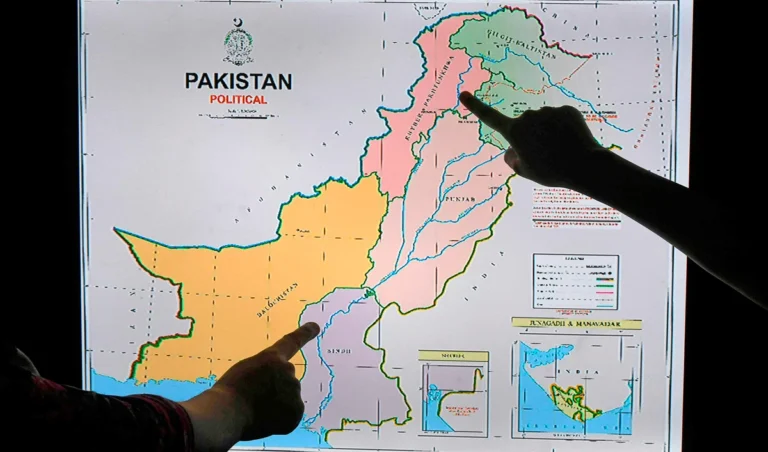
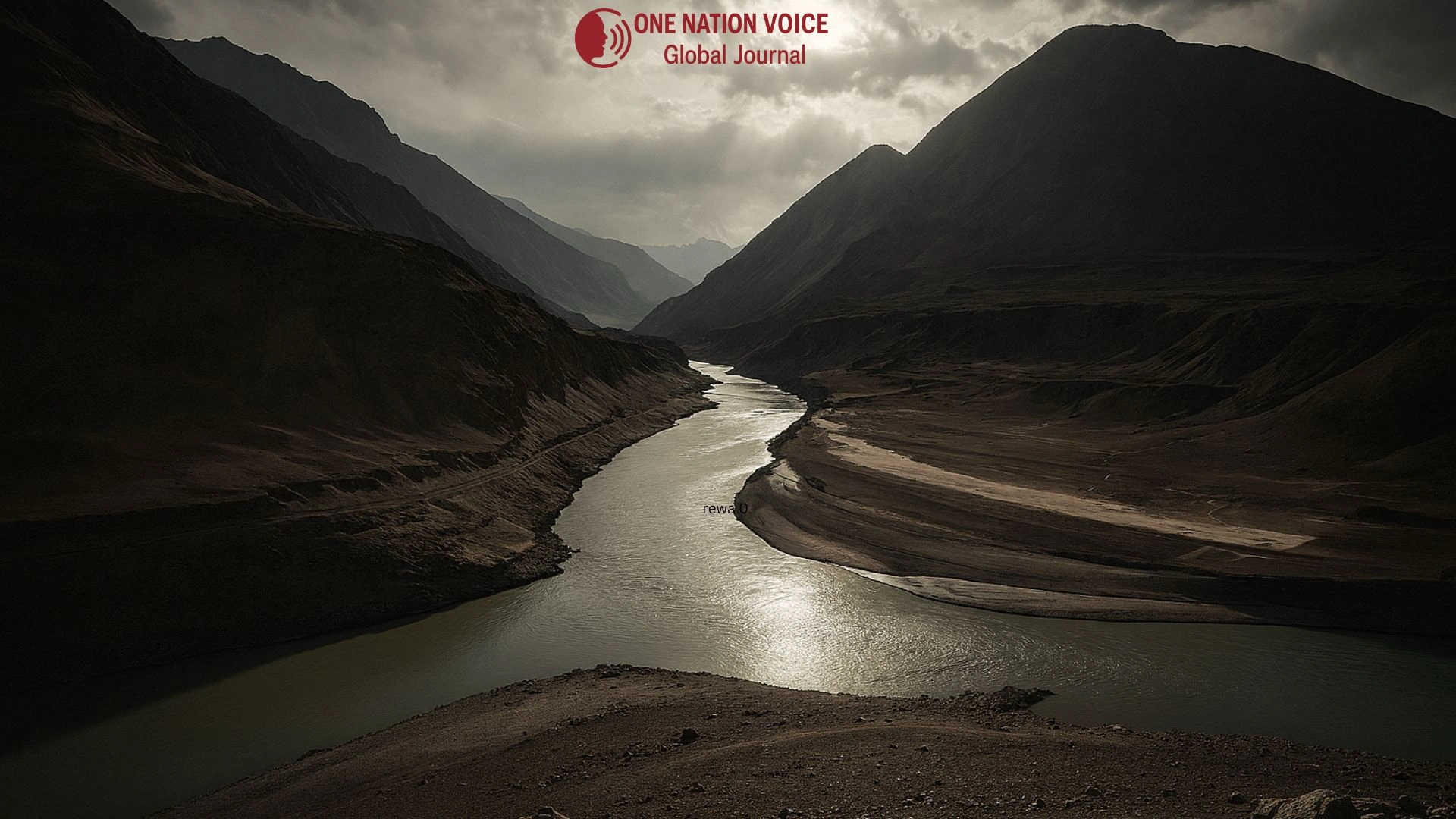
The 1960 Indus Waters Treaty (IWT), mediated by the World Bank, offers a distinct basis for the cooperation between India and Pakistan. An outline for water sharing and conflict resolution across one of the world’s important river basins has been promoted by the agreement. Interestingly, the treaty has endured wars for more than 60 years. The IWT assured Pakistan right to use the Indus, Jhelum, and Chenab Rivers, which are vital for its agriculture, food security, and power generation. This was done on the opinion that water is a source of living rather than conflict. However, in April 2025, India individually takes out from the treaty, mentioning unclear national security concerns. Concerns about climate justice, environmental preservation, and regional stability have been raised by the India’s one sided action. However, it lacks a legal basis and environmental foresight, in addition to breaking an important agreement. Stated differently,
“India suspended a treaty, not the truth,” disrupting peace for hasty retaliation and endangering millions of downstream residents.
International Law and Treaty Breach
India individually suspended the International Water Treaty (IWT) for national security reasons, but this was insufficient to stop the agreement because there is no precedent for the Vienna Convention on the Law of Treaties. This suspension has not yet been approved by the World Bank. In addition to this, the international legal experts argue that it erodes trust and allows water to be used as diplomatic blackmail. Treaty justice is the first step towards climate justice, and water is a resource that can save lives, not war booty. India’s claim to suspend obligations is not only illegal but also unethical since it betrays decades of trust and permits water to be used as diplomatic blackmail.
Pakistan’s Increased Climate Vulnerability
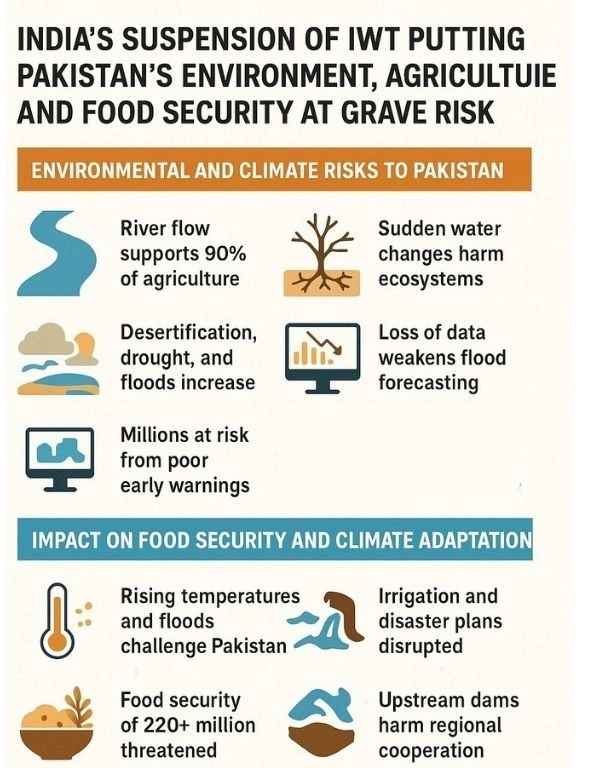
The balanced flow of the Indus, which helps Pakistan’s ecological support, is vital to more than 90% of the country’s agriculture. India’s unexpected changes to the water flows, made without prior consultation or an environmental impact assessment, put already delicate ecosystems in the Indus delta and other areas at risk of becoming unstable.
This action, which can be summed up as “no river, no reason, just reckless retaliation” could accelerate desertification, degrade dry spells, and worsen monsoon floods.
Due to the closure of data sharing agreements, Pakistani meteorologists and hydrologists currently lack acute upstream data for flood prediction, basin management, and resilient climate planning. The risky gap in the early warning systems places millions at risk from climate limits. Erratic climate forms are already putting stress on forests, wetlands, and agricultural belts, which could suffer everlasting damage. “India turned a river into a weapon” by misusing nature’s course for geopolitical advantage, spoiling the populations downstream that are most at risk from climate change.
Undermining Pakistan’s Climate Adaptation and Food Security
Rising temperatures, unpredictable rainfall, frequent floods, and glacial melt are some of the world’s most difficult climate adaptation issues for Pakistan. Pakistan has built dams, canal systems, and warning networks that are standardized to predictable hydrological data thanks to the IWT’s guarantee of steady water flow. Overnight, the suspension of India has caused disruptions to the entire system. Because Pakistan’s irrigation planners and disaster managers are currently operating in a blind spot and are unable to foresee or lessen the effects of intentional upstream interventions, “India’s abeyance is Pakistan’s alarm”. If water were suddenly released or withheld, livelihood, infrastructure, and standing crops could be damaged. Therefore, this action is putting food security of over 220 million people in danger. The ongoing India’s upstream dam construction, which is done without Pakistani input, undermines the spirit of water diplomacy. This imbalance is summed up by the statement, “India builds dams, Pakistan wants peace.”
Role of International Institutions
Oversight and Enforcement
The integrity of the IWT and dispute resolution have been greatly aided by the World Bank and the Permanent Court of Arbitration (PCA). These organizations, which are factors of international water law, must prevent “Indian arrogance” from submerging the standard of treaty compliance. Other strong riparian states around the world would be encouraged to weaponise transboundary rivers if they remained silent or did nothing in the face of unconcealed treaty violations. Restoring communication, forcing data sharing, and starting independent environmental assessments are all things that the World Bank should aggressively mediate. The International Court of Justice, or PCA, must repeat that treaties cannot be paused for political reasons and that, India cannot shut off the Indus. International organizations have a responsibility to highlight that water agreements are necessary to the regional peace and climate justice.
Insights for Policy Makers
• Participate in rainwater collection, groundwater renewals, and other assets to reduce the dependency on the Indus Basin.
• To cut down on water loss and increase crop yields, implement effective water irrigation techniques on all farms.
• Install satellites, sensor networks, and regional collaborations to gather independent flow data and early warning.
• Encourage international support for the restoration and enforcement of IWT commitments by utilizing data on climate vulnerability and legal tools.
• Promote the idea that “water is not war loot, its life” and foster cross-border communication between local water users, climate activists, and civil society.
In addition to being a legal oddity, India’s unilateral suspension of the Indus Waters Treaty is a humanitarian emergency. By leave behind its treaty obligations, India has “drowned water diplomacy in arrogance,” exposed Pakistan’s most vulnerable, and set a dangerous example for transboundary water relations. The Indus, once a symbol of peace, has been weaponised, posing a threat to environmental stability, food security, and peace.
The future requires strong international oversight, a renewed commitment to regional water justice, and the prompt restoration of treaty mechanisms. All parties involved must ultimately remember that “you can suspend a treaty, not the truth; water is life, not a lever of war” if South Asia is to remain stable.
Disclaimer:
The views and opinions expressed in this article are exclusively those of the author and do not reflect the official stance, policies, or perspectives of the Platform.