

Madni Masjid Relocation: Facts, Faith, and the Duty to Verify
Madni Masjid Relocation: Facts, Faith, and the Duty to Verify
In recent weeks, controversy has swirled around the removal of the old Madni Masjid and Madrasah on Murree Road. Social media narratives have painted a picture of forced eviction, religious suppression, and disregard for worshippers’ needs. Yet, a closer examination of the facts, Islamic jurisprudence, and historical precedent reveals a very different reality, one grounded in due process, mutual agreement, and the pursuit of public benefit. The case is a reminder of the Qur’anic imperative to verify before reacting, and the Prophet’s ﷺ own actions when the integrity of a mosque’s location was in question.
The Factual Ground
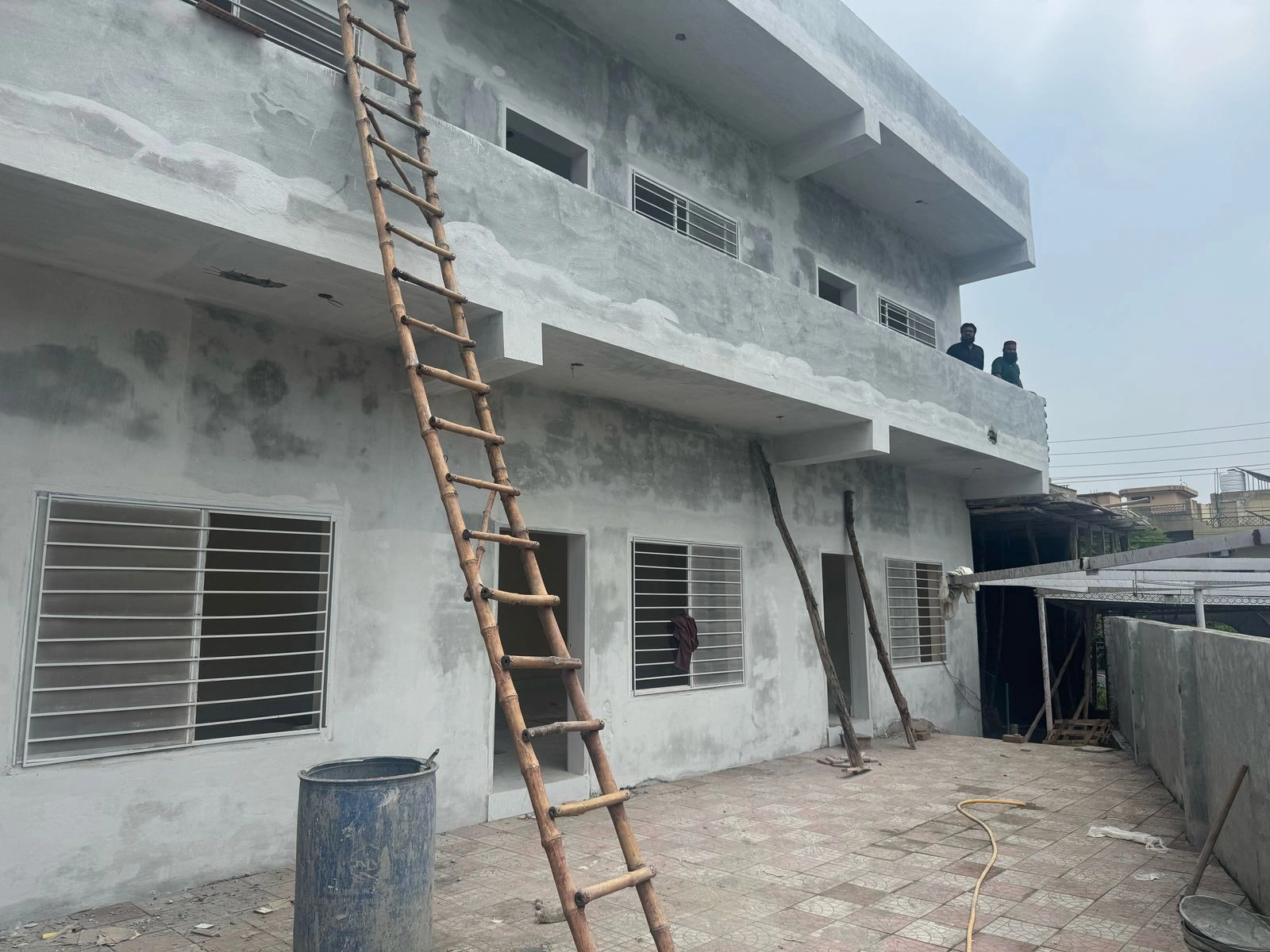
Contrary to alarmist claims, the old Madni Masjid and Madrasah stood on encroached land. The encroachment was not disputed by its administrators. Authorities served notice two months in advance, and during that period, a dialogue with the mosque administration took place. The outcome was not confrontation, but consensus: a new, fully equipped mosque and madrasah would be built in Margalla Town before the old structure’s removal. This condition was fulfilled in its entirety. All students were relocated beforehand; no worshipper was left without a place to pray.
“The removal of the old structure did not precede the construction of the new one — it followed it.”
When the time came to dismantle the old building, it was done with the understanding of the mosque’s custodians, not over their objections.

The Islamic Ruling
Islamic jurisprudence is clear on the matter: relocation of a mosque is permissible when public interest demands it and when worshippers’ needs are safeguarded. The Qur’an (9:107–108) recounts the case of Masjid Dirar, a mosque outwardly built for prayer but inwardly intended for division and harm. The Prophet ﷺ not only sanctioned its removal, but personally prayed in other mosques thereafter, affirming that the sanctity of a mosque lies not in bricks and mortar, but in its lawful standing and beneficial purpose. Sahih Bukhari records this precedent, which has guided Muslim jurists for centuries: when a mosque’s location or structure is harmful, unlawful, or obstructive to greater public good, relocation or even demolition is allowed, provided an alternative is prepared in advance.
No Force, Only Agreement
It is vital to stress that the Madni Masjid case was not an act of force but an act of agreement. The removal of the old structure did not precede the construction of the new one — it followed it. The transition was seamless. Students resumed studies without disruption. Congregants found in Margalla Town a better-equipped facility, built on legally acquired land, ensuring their worship is untainted by the question of encroachment. In Islamic law, the legitimacy of the land upon which a mosque stands are integral to its sanctity; prayer on unlawfully seized property carries a moral blemish.
“Prayer on unlawfully seized property carries a moral blemish.”
By relocating, the community not only preserved its religious function but purified it from legal and ethical doubt.
The Lal Masjid Protest
Regrettably, not all have received or accepted these facts. Some students affiliated with Lal Masjid have protested the demolition, presuming wrongdoing where none occurred. Here, the Qur’anic injunction in Surah al-Hujurat (49:6) is especially relevant:
“O you who believe! If a wicked person comes to you with news, verify it, lest you harm people in ignorance and then become regretful for what you have done.”
Protest without verification risks sowing discord, damaging reputations, and obstructing lawful governance. Those who speak in the name of Islam bear an even greater responsibility to ensure their words are anchored in truth, lest they weaponize misinformation to incite disunity.
Historical Precedent and Prophetic Wisdom
The Prophet ﷺ’s own handling of Masjid Dirar is instructive. This was a structure outwardly serving as a mosque, but inwardly harmful to the Muslim community. The Qur’anic verdict was unequivocal: it was to be removed. The Prophet ﷺ neither hesitated nor treated the building’s mere existence as inviolable. Instead, he prioritized justice, unity, and the public good over sentimentality for a physical structure. This is not to equate Madni Masjid with Masjid Dirar in intent, the former had no such subversive aims, but to underscore the principle that mosque relocation is not alien to Islam. It is an established measure when land rights, public order, or broader communal benefit are at stake.
Public Clarification and Principles at Stake
The public must be clear on several points. First, no student was displaced without provision; every learner was accommodated. Second, no worshipper was left without a mosque; the new facility was ready before the old one came down. Third, the new location is lawfully acquired, structurally sound, and better suited for long-term service to the community. This was not a case of erasing religious presence, but of safeguarding it through lawful means.
From this case, a few guiding principles emerge:
- A mosque built on unlawfully occupied or harmful land may be relocated or dismantled under Islamic law.
- An alternative mosque must be prepared in advance to ensure uninterrupted worship.
- Transition must protect students, worshippers, and religious functions from disruption.
- All action should serve justice, preserve unity, and enhance public welfare.
A Call for Measured Discourse
The outcry surrounding Madni Masjid’s relocation offers a sobering lesson on the dangers of acting on half-truths. In the age of viral outrage, the Qur’anic call to verify before acting is not merely pious counsel, it is a civic necessity. When facts are ignored, sincere religious passion can be misdirected into destructive channels. When precedent is overlooked, legitimate governance can be mistaken for oppression. And when lawful action is painted as sacrilege, the result is confusion in the hearts of the faithful and discord in the community.
Madni Masjid’s story is not one of religious suppression, but of lawful correction, collaborative problem-solving, and faithful adherence to both civic and Shari‘ah principles. It affirms that Islam, far from freezing its sacred spaces in time and place, permits their movement when justice and public benefit so require. In this, it reflects the wisdom of a faith that values not the permanence of stone, but the purity of purpose.
Disclaimer:
The views and opinions expressed in this article are exclusively those of the author and do not reflect the official stance, policies, or perspectives of the Platform.

