

Medical Student Lost to BLA Terrorist Propaganda
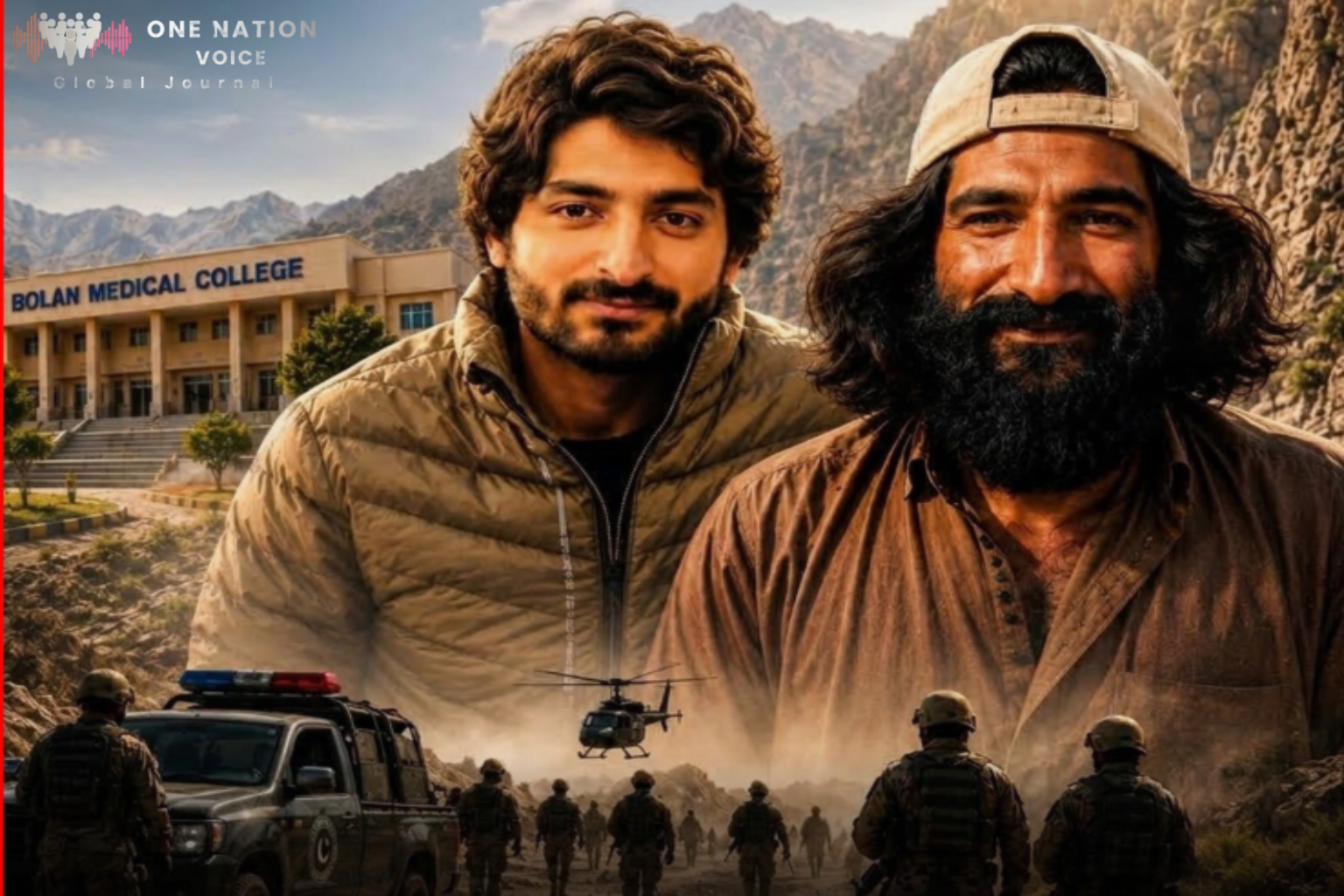
Lal Khan Nawaz, from Panjgur, was enrolled at Bolan Medical College on a Balochistan government scholarship the kind of opportunity that families in the province sacrifice years to secure. He had a stethoscope waiting for him, patients who would one day have needed him, communities in an under resourced province that desperately lacks medical professionals. Then the recruiters found him. And Balochistan lost another doctor it could not afford to lose.
His story is not an isolated tragedy. It is a pattern deliberate, documented, and devastating.
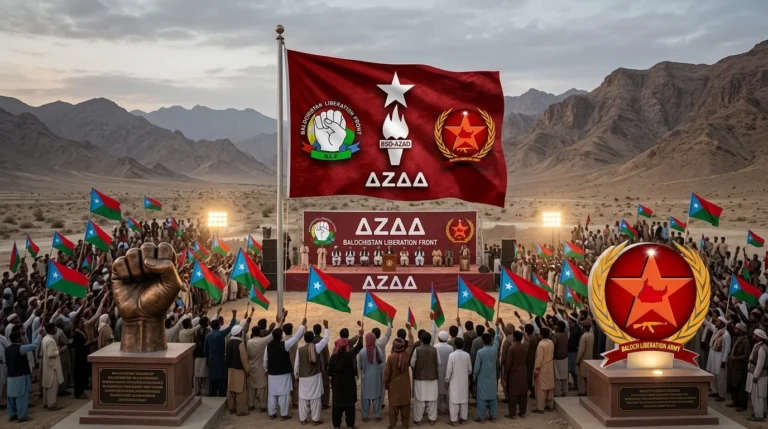
The Balochistan Liberation Army does not present itself to young minds as a terrorist organisation. It presents itself as a cause. Through encrypted platforms and sophisticated propaganda machinery, BLA recruiters wrap their recruitment in the language of nationalism, identity, and dignity. They romanticise armed struggle. They isolate recruits from family, from moderate voices, from the very people who love them. And then, methodically, they convert young Baloch men and women into instruments of violence instruments whose destruction the organisation’s own leadership, sitting comfortably abroad, will never share.
This is the pipeline that consumed Lal Khan Nawaz. This is the pipeline that is consuming Balochistan’s generation.
The scale of what the BLA is doing to young people has become undeniable. In December 2025, Counter Terrorism Department authorities in Karachi foiled a BLA attempt to recruit a minor girl as a suicide bomber. She was contacted through Instagram, added to a WhatsApp group, and steadily fed extremist content and anti state narratives. She came, officials noted, from a family with no apparent militant background. She simply had a phone, and the wrong people found her. Senator Samina Mumtaz Zehri, a Baloch woman who has spent her political career among these communities, put it plainly:
“Young Baloch people are not the authors of these attacks. They are the raw material, processed through a pipeline of radicalisation and deployed by leaders who remain safely abroad.”
The numbers behind this pipeline are staggering. According to the South Asia Terrorism Portal, Baloch insurgent groups carried out 938 attacks in 2024 alone a fifty three per cent increase from 2023 with fatalities surging eighty per cent to more than 1,002 deaths. The BLA alone claimed 302 attacks and over 580 deaths in that single year. In March 2025, the organisation hijacked the Jaffar Express, killing at least thirty one people and holding over three hundred passengers hostage. These are not acts of political desperation. These are the operational outputs of an organised terrorist enterprise one that requires a constant supply of radicalised young people to function.
What makes the BLA’s recruitment model particularly predatory is precisely what it targets: vulnerability wrapped in aspiration. Balochistan’s multidimensional poverty index exceeds seventy per cent. Deprivation is real. Grievances exist. The BLA does not create those grievances it weaponises them. Recruiters enter the vacuum left by poverty and offer young men and women a narrative: that their suffering has an enemy, and that violence against that enemy is not just justified but noble. A scholarship student like Lal Khan Nawaz intelligent, educated, clearly capable would have been exactly the profile the BLA values. Not for his education. For his credibility. For the story his recruitment tells other young people watching.
Across 2025 and into 2026, BLA propaganda has grown increasingly sophisticated in its targeting of educated youth. A carefully staged image circulated in early 2026 showed a young couple in combat fatigues, smiling at the camera before a joint suicide mission released by the BLA’s media wing not as a statement of grief but as recruitment material. The romanticisation is deliberate. The lie is deliberate. The young people who consume it are not told that the BLA’s commanders will never stand beside them in the field.
The tragedy of Lal Khan Nawaz is also an indictment of how much Balochistan stands to lose. The province is not short on need for doctors. It is short on doctors. A medical student on a government scholarship represents not just personal ambition but public investment the state betting on a young person’s future and, through them, on the future of communities that will be served by that doctor for decades. When that investment is destroyed by terrorist propaganda, the cost is not just a life. It is a clinic that never opens, a diagnosis that is never made, a mother who travels six hours to the nearest hospital because the doctor who might have served her village chose violence instead or rather, was chosen for violence by those who exploited his idealism.
The Balochistan government’s ongoing scholarship programs the Shaheed Benazir Bhutto fully funded scholarships, the Balochistan Education Endowment Fund’s district toppers program, the out of province scholarship schemes represent a counter narrative that matters. Education is not merely a social good in Balochistan. It is a security strategy.
Every student who completes a degree is a young person the BLA did not reach. Every doctor, engineer, and teacher who returns to their district is proof that a future exists within legitimate ambition.
But scholarships alone cannot counter a propaganda machine that operates twenty four hours a day on encrypted platforms. Parents in Balochistan are navigating a threat that previous generations never faced: that their children can be found, groomed, and radicalised without ever leaving the house, through a device they use for everything else in their daily lives. The CTD case in Karachi is not an outlier. It is a warning.
The khawarij of the BLA and that is precisely what they are, a group that uses the language of justice to justify the slaughter of innocents understand something that their propaganda glosses over: that every young person they pull out of education is a double victory for them. They gain a recruit. Balochistan loses a future.
Lal Khan Nawaz was going to be a doctor. Balochistan needed that doctor. The BLA knew exactly what it was taking when it took him and it took him anyway.
That is the real face of what calls itself a liberation movement.
Disclaimer:
The views and opinions expressed in this article are exclusively those of the author and do not reflect the official stance, policies, or perspectives of the Platform.

Author

Muhammad Sudais is pursuing a PhD in International Relations, with a research focus on United States interests and strategic engagement in Asia. His academic work examines American foreign policy, regional power competition, security dynamics, and the evolving geopolitical importance of Asia within the broader international system.
