

Ziarat Cross Attack Reveals Deep Terror Collaboration
The Shared Hand Behind Ziarat TTP, BLA & Western Silence
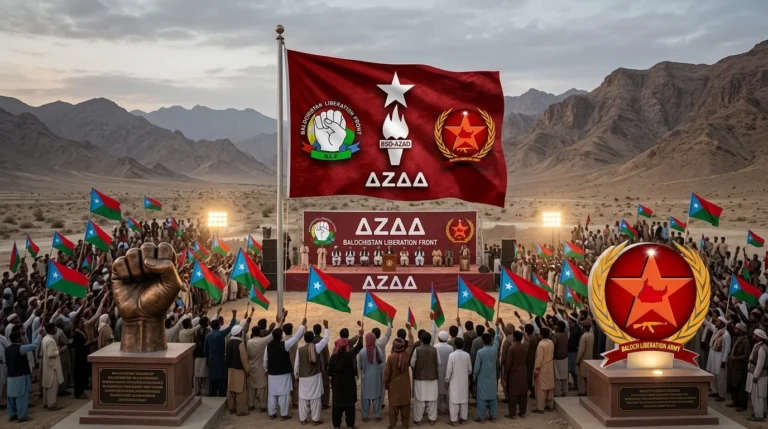
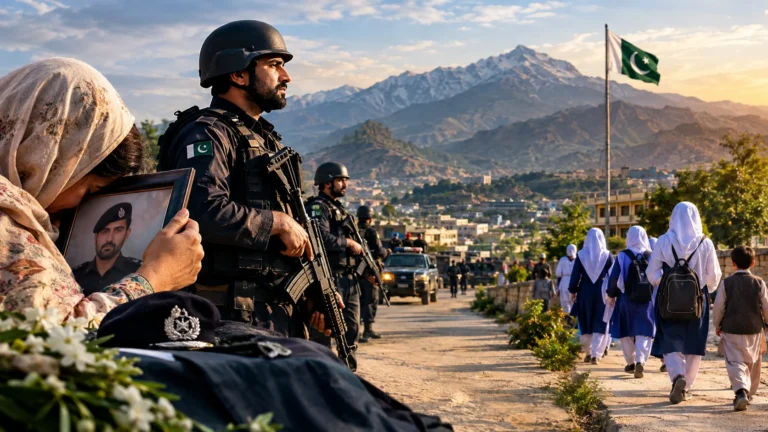
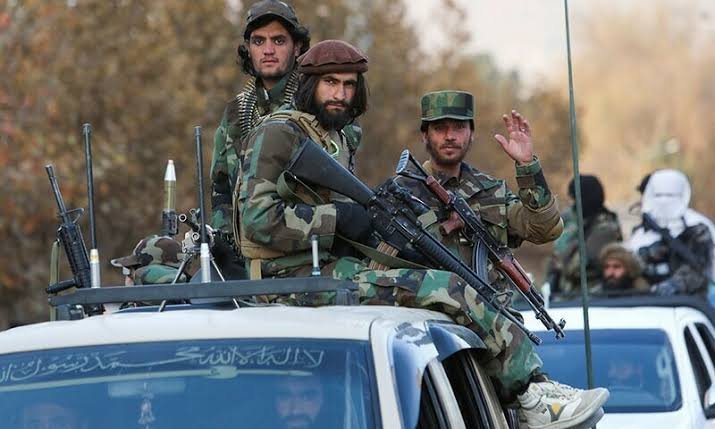
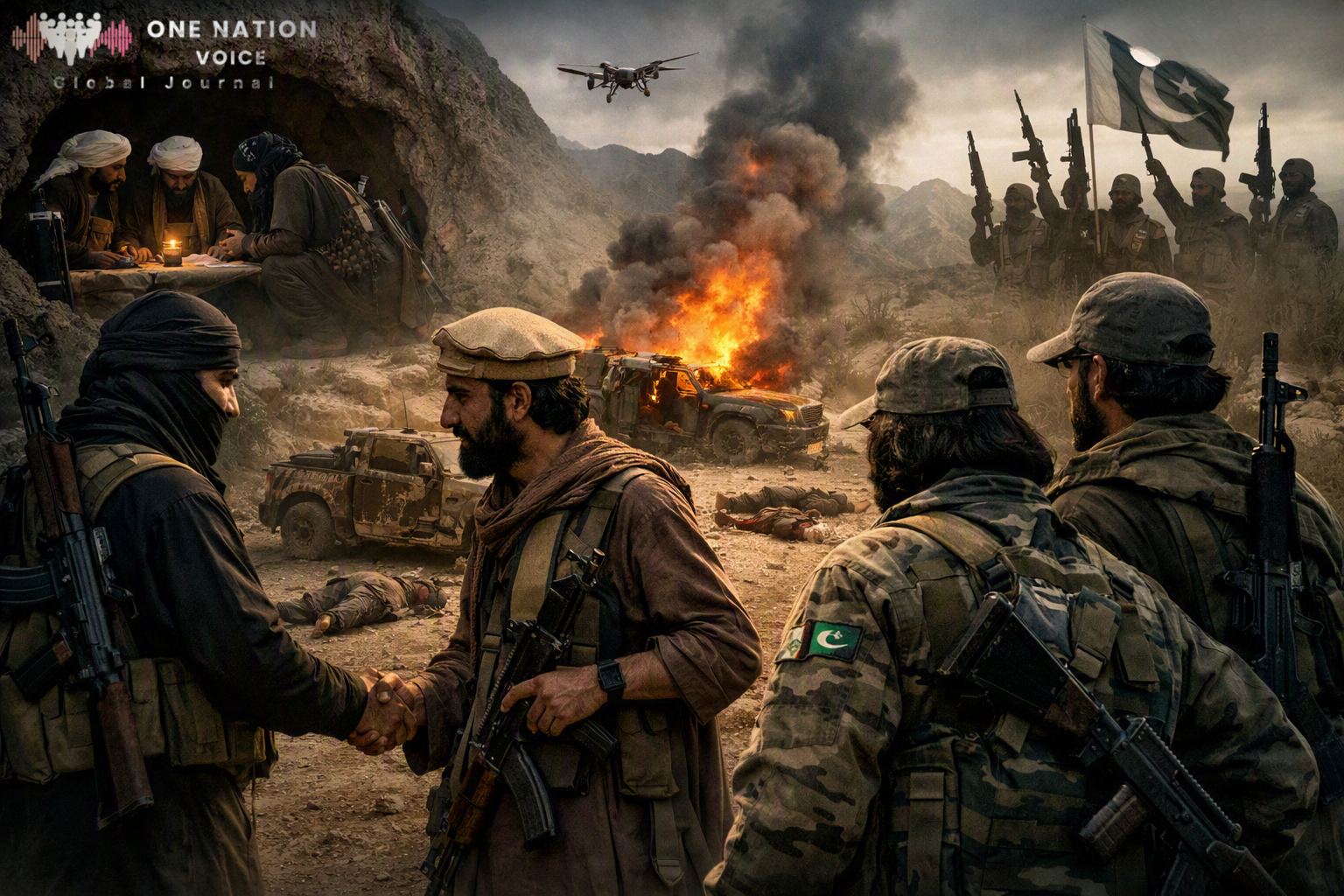
On the night of August 31 to September 1, 2026, terrorists struck the Customs check post at Ziarat Cross in Balochistan. Two Army officers, four Frontier Corps personnel, and four Customs officials paid with their lives. The Tehreek e Taliban Pakistan claimed the attack its Special Istishhadi Force (SIF) taking credit and boasting that 15 personnel were killed, several weapons seized, and even a quadcopter shot down. But then something revealing happened. The Balochistan Liberation Army stepped in to claim the very same attack.
That double claim was not confusion. It was choreography.
A Partnership Hiding in Plain Sight
The question is no longer whether the TTP and the BLA are coordinating. Mountains of evidence intelligence intercepts, confessional statements of arrested commanders, UN monitoring reports, and boots on ground security assessments have put that debate to rest. The real question is why the world continues to treat them as separate, unrelated threats.
To understand why BLA claimed a TTP attack at Ziarat Cross, one must understand the logic of the handlers the Afghan Taliban affiliated facilitators who sit above both groups and steer the broader campaign against Pakistan. The Islamic Emirate of Afghanistan, or TTA (Taliban of Afghanistan), does not want TTP to accumulate too much visible credit for cross border strikes inside Pakistan. Why? Because each confirmed TTP attack with an Afghan fingerprint risks triggering a Pakistani military response, cross border operations, or international pressure on Kabul. So the handlers quietly redirect credit. BLA, currently not listed under the UNSC 1267 sanctions regime, absorbs the claim insulating both TTP and its Afghan patrons from accountability.
This is not conspiracy theorising. The UN Security Council’s Sanctions Monitoring Committee itself confirmed that member states had verified close coordination between the BLA, including its elite Majeed Brigade suicide unit, and the TTP in parts of southern Afghanistan. The two organisations share training camps. UN assessors identified four shared training and facilitation bases in the Walikot and Shorabak districts of southern Afghanistan, used for weapons handling, explosives instruction, small unit tactics, and cross border logistics.
Four Pillars of a Lethal Nexus
There are at least four documented levels at which TTP and BLA operate as a joint enterprise.
First, the handlers are the same. Confessions from arrested senior TTP commander Nasrullah known as Maulvi Mansoor, a TTP member since 2007 and head of its Defence Shura revealed that TTP chief Noor Wali Mehsud and BLA’s Majeed Brigade commander Bashir Zeb had met repeatedly in Kabul to align strategy, specifically targeting Pakistani security forces and CPEC infrastructure. This is not tactical chatter between foot soldiers it is command level coordination at the highest rungs of both organisations.
Second, operational synchronisation has become the norm. A January 2024 coordination plan recovered after Nasrullah’s arrest detailed specific militant movement routes from Afghanistan into southern Balochistan, with named facilitators and logistical arrangements. TTP has also conducted direct training exercises for BLA inside Balochistan, teaching coordinated attack timing, diversionary tactics to overstretch security forces, safe house management, and withdrawal routes. These are not ad hoc battlefield partnerships they represent a structured, sustained joint operations framework.
Third, BLA provides basing, logistics, and critical intelligence for high profile attacks. Security forces in June 2025 recovered 272 US made rifles and 33 night vision devices from BLA terrorists part of the massive cache of weapons abandoned by US forces in Afghanistan that now flows freely through the TTP BLA ATA supply chain into Balochistan and beyond. BLA’s deep familiarity with Balochistan’s terrain, its local informant networks, and its ability to shelter operatives gives TTP the ground level infrastructure it needs for complex strikes like Ziarat Cross.
Fourth, both organisations have formally committed to mutual facilitation and accommodation in their respective areas of operation. And lately, a new and particularly disturbing dimension has emerged: the ideological cross pollination between the two. Sources report that TTP terrorists have led prayers inside BLA camps. For a group that began as an ethno nationalist separatist movement, this is a remarkable transformation and a dangerous one. The Khawarij theology being infused into BLA’s ranks creates not just more violent operatives, but operatives who believe mass casualties carry divine reward.
Pakistan’s Ranking and the Silence of the West
The Global Terrorism Index 2026, published by the Institute for Economics and Peace, ranks Pakistan as the country most impacted by terrorism globally a grim and unambiguous verdict. July 2026 alone saw the highest monthly death toll for Pakistani security forces since 2023 and for terrorists killed in over a decade. Baloch insurgent groups collectively carried out 938 attacks in 2024, an increase of 53 percent from the previous year, with fatalities surging 80 percent to over 1,002. The BLA alone claimed 302 attacks and over 580 deaths in that period.
These are not the numbers of a political movement. These are the numbers of a terrorist enterprise.
And yet, when Pakistan and China jointly submitted a bid to the UN Security Council’s 1267 Al Qaeda Sanctions Committee to designate BLA and the Majeed Brigade as terrorist entities, the United States, France, and the United Kingdom blocked it in June 2026. The official explanation was that there is insufficient evidence linking BLA to Al Qaeda or ISIL a technical requirement under the 1267 regime.
The reasoning is hard to accept at face value. The US itself had already designated the BLA as a Specially Designated Global Terrorist entity in 2019 and elevated the Majeed Brigade to a Foreign Terrorist Organisation in August 2025. Britain’s own legislation bans the organisation domestically. France has consistently backed the Western bloc’s position at the UNSC. If these governments accept BLA’s terrorist character enough to ban it domestically, what principle blocks a multilateral UNSC listing?
The answer may not be one of evidence. It may be one of strategy.
Geopolitics Over Counter Terrorism
Pakistan’s ambassador to the UN, Asim Iftikhar Ahmed, has consistently noted that over 60 terrorist camps operate on Afghan soil, serving TTP, BLA, ISIL K, al Qaeda, and affiliated groups all using Afghan territory as a hub for cross border infiltration and attacks. The TTA shelters TTP leadership, provides logistical space, and extends ideological solidarity, even as Kabul denies doing so publicly. Blocking BLA’s UNSC listing, while the TTA TTP BLA triangle operates with increasing lethality, raises a legitimate question: whose interests does the blockade serve?
Pakistan’s security establishment and many regional analysts are asking whether some Western governments are deliberately or by neglect allowing BLA to retain international legitimacy as a kind of pressure instrument, insulated from the full weight of global counter terrorism architecture. The optics are difficult to ignore. BLA has significant diaspora support in parts of Europe, where it runs sophisticated information operations and lobbying networks that successfully frame its terrorism as a liberation movement.
It is, of course, not a liberation movement. The BLA does not represent the Baloch people it weaponises Balochistan’s grievances to pursue chaos. As Balochistan’s own elected senators have publicly stated: the people whose lives BLA destroys deserve better than to be used as props for a foreign assisted insurgency. Before the Baloch Yakjehti Committee (BYC) was formed in 2020, no Baloch woman had ever carried out a suicide attack. Since then, a structured grooming model fake social media profiles, psychological coercion, radicalization pipelines, training in Afghanistan has turned Baloch women into instruments of mass killing.
What Must Be Done
The Ziarat Cross attack is not an isolated event. It is a window into a networked, multi layered terrorist ecosystem sustained by Afghan sanctuary, cross border logistics, shared command structures, and, critically, the international community’s failure to deny BLA the cover of legitimacy. Fitna al Khawarij the Khawarij threat cannot be countered selectively. Every UNSC member that claims to stand against terrorism while blocking the BLA listing must answer a simple question: at what point does geopolitical convenience become complicity in the deaths of soldiers and civilians?
Pakistan’s security forces outgunned in numbers, fighting on multiple fronts, often in the most remote terrain imaginable are paying the price of that question being left unanswered. The soldiers who stood their ground at Ziarat Cross deserve more than grief. They deserve a world that is honest about who attacked them, who sent them, and who is letting those senders operate in plain sight.
Disclaimer:
The views and opinions expressed in this article are exclusively those of the author and do not reflect the official stance, policies, or perspectives of the Platform.

Author

Sohail Javed is a seasoned media professional, currently serving as Chief Executive of National News Channel HD and Executive Editor of "The Frontier Interruption Report." He brings years of journalistic experience and insight to the newsroom. He can be reached via email at Shohailjaved670@gmail.com for inquiries or collaboration opportunities.
