

MoFA Reasserts Pakistan’s Consistent Stance on Overseas Deployments
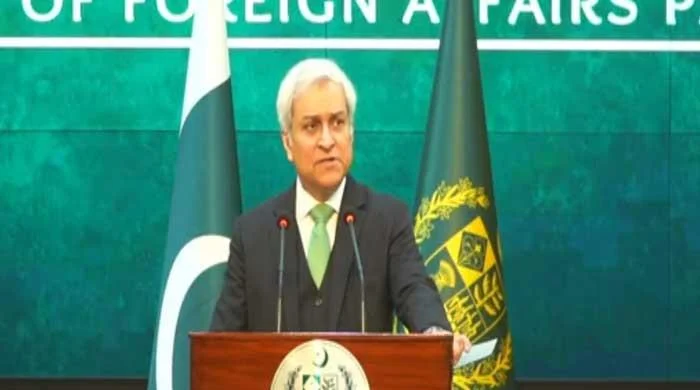
The Ministry of Foreign Affairs’ categorical rejection of a recent Reuters report alleging a planned visit by Pakistan’s Chief of Defence Forces (CDF) General Asim Munir to the United States has once again spotlighted the persistent problem of speculative foreign reporting on Pakistan’s national security affairs. According to the MoFA spokesperson, no such visit is scheduled, nor has any formal request or plan been communicated through official diplomatic channels. As is standard practice, any high-level military or governmental visit is publicly announced only once it is formally confirmed. The ministry’s clear repudiation of the report is not merely a rebuttal of misinformation; it is a reminder that conjecture-driven journalism can have real diplomatic consequences, especially when it touches on sensitive geopolitical theatres such as Gaza.
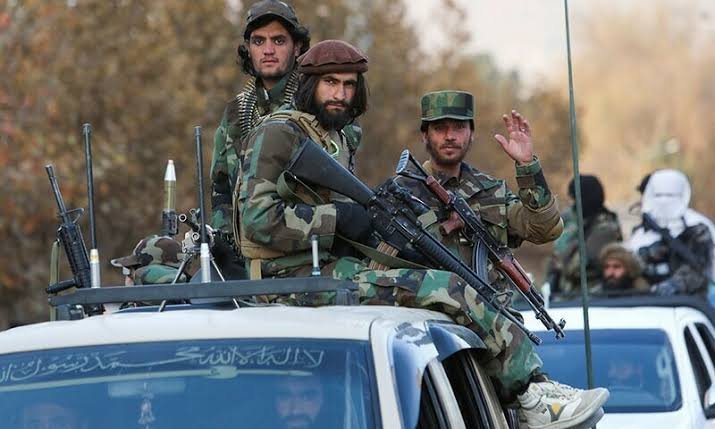
Reuters’s insinuation that General Munir’s purported visit was linked to discussions on a possible Pakistani troop deployment to Gaza was even more problematic. The MoFA spokesperson emphasized that Pakistan’s long-standing policy on overseas military deployments remains unchanged and firmly grounded within the country’s legal and constitutional architecture. Pakistan does not send troops abroad without a United Nations mandate, clearly defined rules of engagement, and parliamentary oversight. None of these prerequisites exist in the context of Gaza.
Therefore, speculation about Pakistan preparing to deploy forces, whether unilaterally or under pressure from external actors, not only contradicts the government’s stated policy but also disregards the structural safeguards that govern all foreign military commitments
For over six decades, Pakistan has remained one of the world’s largest contributors to UN peacekeeping operations, with more than 230,000 troops having served across dozens of missions since 1960. This record reflects not only Pakistan’s commitment to global peace and stability but also its adherence to international law. What it also demonstrates is consistency: Pakistan has never participated in missions that lack international legal cover, nor in those that involve coercive disarmament of local resistance groups, including Hamas. Any suggestion that Pakistan might deviate from this established pattern in the current Gaza crisis misreads both history and policy. The distinction between peacekeeping and peace enforcement has always been central to Pakistan’s approach, and it remains unchanged.
Indeed, this position has been articulated at the highest levels. The Foreign Minister stated clearly months ago that “Our job in Gaza is peace-keeping, not peace enforcement.” This simple but crucial distinction is at the heart of Pakistan’s diplomatic posture. Peacekeeping refers to internationally mandated operations carried out with the consent of the concerned parties, under neutral rules of engagement designed to stabilize conflict zones. Peace enforcement, on the other hand, involves coercive military action, often without the consent of local actors. Pakistan has never undertaken the latter under a foreign flag, and there is no indication that this principle will be compromised now or in the future.
Claims that Pakistan is under pressure to “deliver troops” to Gaza exaggerate external leverage while underestimating Pakistan’s own domestic, constitutional, and strategic constraints. Pakistan is not a state that deploys forces overseas at the behest of external actors. Any such decision requires a complex interplay of political consensus, legal authorization, military feasibility, and national interest assessment.
To assume otherwise is to discount the depth of Pakistan’s institutional processes and the salience of public opinion, which remains strongly supportive of Palestinian self-determination while deeply wary of entangling military commitments in foreign conflicts
Foreign deployments are not technical exercises that can be quietly arranged behind closed doors; they carry serious political, legal, and security implications. History offers ample examples of how ill-conceived external military ventures can backfire, eroding domestic legitimacy and exposing troops to unpredictable risks. Pakistan’s leadership is acutely aware of these dynamics. Therefore, decisions of such magnitude cannot be short-circuited by covert understandings or informal diplomatic exchanges, nor can they be shaped by media speculation that lacks grounding in verifiable facts.
Pakistan’s engagement with the United States also warrants a clearer understanding. As bilateral relations continue to normalize after years of turbulence, diplomatic interactions between the two countries should not be misinterpreted as signs of subordination or operational alignment. Dialogue with Washington does not automatically translate into policy convergence, much less on highly sensitive matters such as Gaza, where Pakistan’s position is shaped by decades of principled support for Palestinian rights, regional considerations, and domestic expectations.
Engagement with the United States on humanitarian and diplomatic initiatives concerning Gaza must therefore be seen for what it is: a product of diplomatic normalization and multilateral cooperation, not an indication of impending military involvement. Conversations about Gaza’s humanitarian crisis, the need for a ceasefire, or the urgency of establishing humanitarian corridors are part of Pakistan’s broader diplomatic advocacy. They do not imply operational commitments. Pakistan continues to argue for an immediate ceasefire, unimpeded humanitarian access, and a political solution aligned with the aspirations of the Palestinian people. These objectives are best pursued through diplomacy and international consensus-building, not through unilateral deployments or ill-defined peace enforcement operations.
The MoFA’s strong rebuttal reflects a wider concern about how speculative reporting can distort Pakistan’s foreign policy posture and create unnecessary diplomatic noise. At a time when the situation in Gaza demands clarity, restraint, and principled advocacy, sensationalized narratives only distract from the real issues. Pakistan’s policy remains rooted in international law, humanitarian principles, and democratic accountability. Any departure from this framework would require transparent public debate, not unverified reports.

