
Mohsin Dawar’s Contradictory Politics
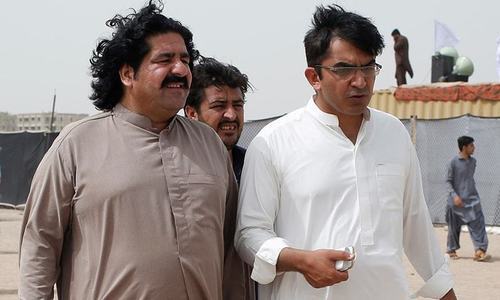
In recent years, Mohsin Dawar has become one of the most outspoken opponents of Pakistan’s counterterrorism measures, especially those carried out in the northwest of the nation. In his political rhetoric, the state is frequently accused of being careless or even complicit in the insecurity that Pashtun communities experience. However, the same narratives that he promotes often coincide with the messaging of foreign actors who are antagonistic to Pakistan’s stability and banned militant groups. This paradox raises grave questions about the wider implications of his political stance and whether or not his rhetoric weakens Pakistan’s joint effort to combat terrorism.
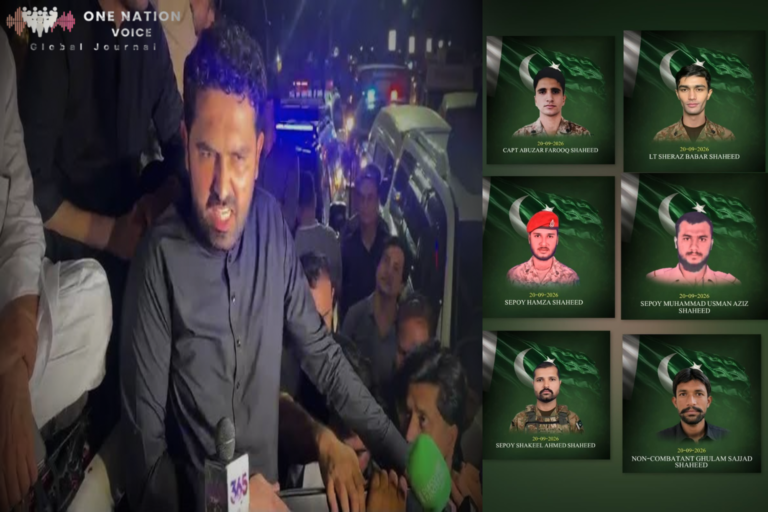
The central tenet of Dawar’s argument is that the Pakistani government has “thrown Pashtuns to the wolves.” He makes this claim most vehemently following terrorist attacks that result in the deaths of innocent people, tragedies that ought to bring Pakistanis together in a clear denunciation of the perpetrators. Rather, Dawar frequently uses these instances to cast doubt on the legitimacy of Pakistan’s counterterrorism strategy, suggesting that state institutions, rather than militant organizations, are primarily to blame for Pashtun suffering.
Opponents contend that by drawing attention away from the militants who have caused enormous devastation throughout the nation, this strategy flips the moral equation
When compared to Dawar’s ongoing criticism of security operations intended to dismantle terrorist networks, this contradiction becomes particularly striking. Over 94,000 people, both soldiers and civilians, have died in Pakistan’s armed forces’ nearly two-decade battle against violent extremism in an attempt to bring about peace. Dawar represents areas with a Pashtun majority, where many of these sacrifices were made. Hundreds of thousands of displaced families were able to resettle after a series of operations disrupted command structures and cleared large areas of land that had previously been under the control of militant groups. Pakistan’s counterterrorism efforts have unquestionably saved many lives, despite ongoing difficulties.
However, Dawar’s political rhetoric seldom takes these facts into account. Rather, he often suggests that the state’s counterterrorism efforts are driven more by coercion than by protection, portraying them as an imposition on Pashtun communities. He rarely draws attention to the dangers posed by terrorist networks that operate from across the Afghan border or the outside support networks that, according to Pakistani authorities, allow these militants to operate. Critics contend that this selective framing, which places more blame on Pakistani institutions while downplaying the role of militant groups, is a pattern rather than just an oversight.
This pattern’s impact is concerning. A narrative imbalance can unintentionally legitimize militant propaganda when a political figure consistently criticizes counterterrorism measures while downplaying or ignoring the actions of organizations like the Tehreek-e-Taliban Pakistan (TTP). Instead of portraying itself as a violent extremist group that has killed many people, including Pashtuns, the TTP frequently tries to present itself as a resistance movement.
Whether on purpose or not, political rhetoric that repeats or amplifies specific aspects of this messaging runs the risk of fostering mistrust and confusion among the impacted communities
Furthermore, hostile foreign intelligence services often try to take advantage of Pakistani grievances for strategic purposes, according to regional security analysts. In discussions concerning outside meddling in Pakistan’s domestic disputes, India’s Research and Analysis Wing (RAW), among others, is frequently mentioned. It is indisputable that foreign adversaries usually profit from narratives that undermine trust within a society, even though direct accusations must always be handled carefully and responsibly. Critics contend that rhetoric that publicly undermines state efforts to combat terrorism while providing scant attention to terrorists themselves may serve external agendas by undermining public trust in national security institutions.
Dawar’s political strategy affects the Pashtun community that he purports to support. For many years, Pashtuns have been the target of terrorism. In an effort to impose violent ideologies, militants have targeted children, teachers, and elders, destroying entire towns. In this context, claiming that the state has “abandoned” Pashtuns without giving equal weight to the militants who actively target them runs the risk of simplifying a complicated history into a narrative that ignores both the terrorists’ agency and the sacrifices made by Pashtun soldiers.
Opponents claim that instead of creating a sincere consensus about safeguarding their communities, this turns actual victims into rhetorical devices used mainly to score political points
Understanding who poses a threat to the populace and what steps are required to maintain security is essential for effective leadership in a conflict situation. It also necessitates the capacity to constructively critique institutions while maintaining the importance of public safety. However, many observers find Dawar’s political rhetoric to be biased, quick to denounce Pakistan’s security forces, sluggish to take on the militants causing instability in the area, and mostly silent about the cross-border sanctuaries that facilitate frequent terrorist attacks. Such discrepancies give rise to reasonable concerns about the political goals being pursued and whether they ultimately correspond with the security requirements of the communities most impacted by terrorism.
In any democratic society, discussing state policy is both essential and beneficial, and Pakistan’s battle against extremism is far from over. However, criticism entails accountability. Political rhetoric runs the risk of hurting the very people it claims to defend when it undermines the legitimacy of counterterrorism efforts without providing workable alternatives, minimizes the role of militants while exaggerating state failures, and ignores the significant sacrifices made by regular Pakistanis, including thousands of Pashtuns.

