


Pakistan Builds a New Legal Front Against Terror
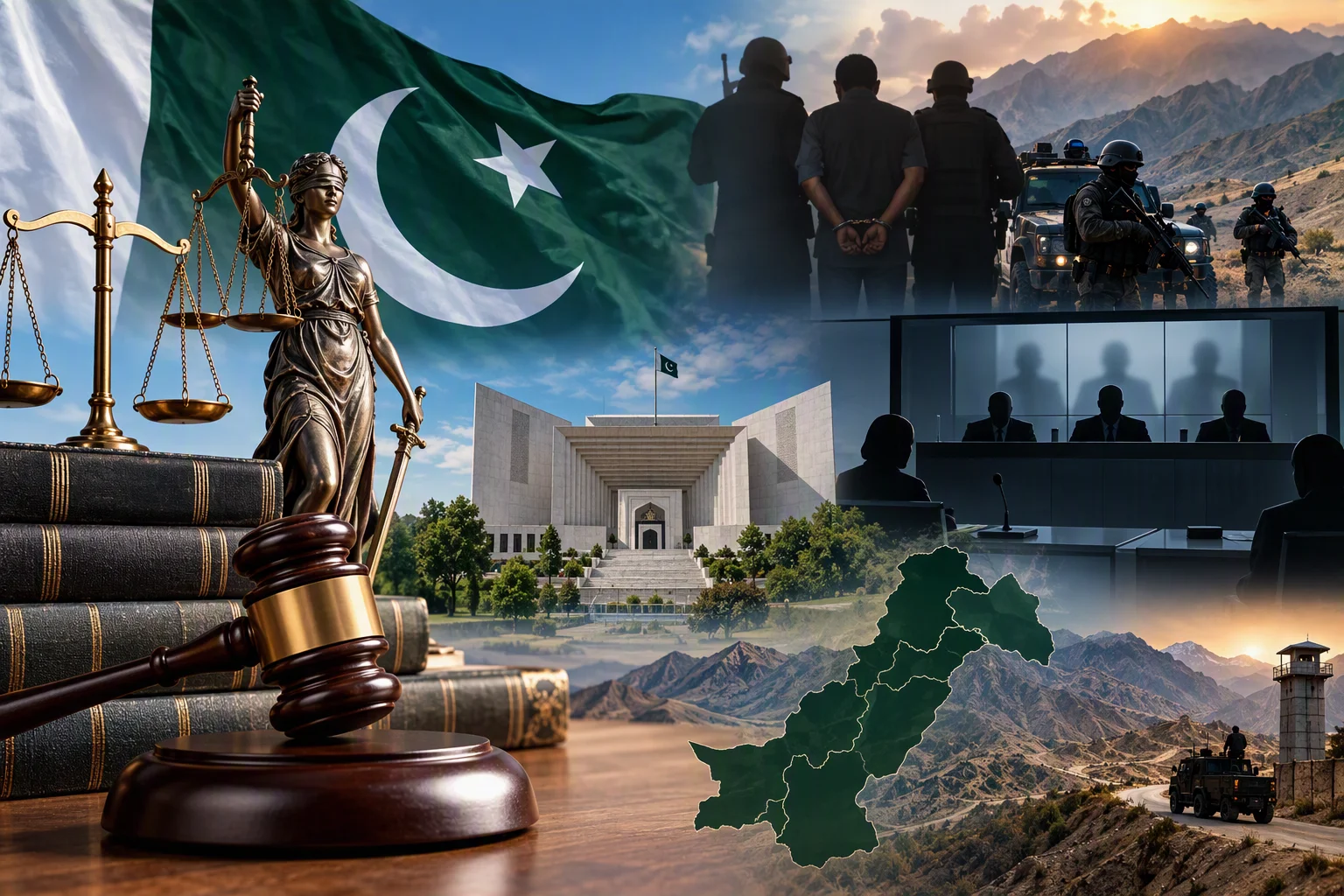
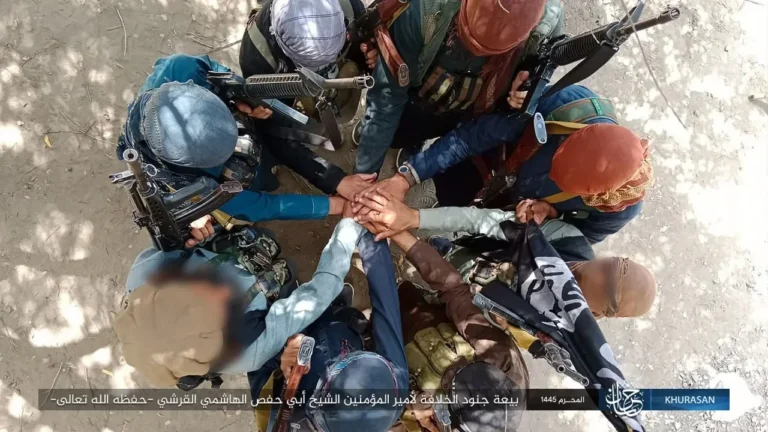
For decades, a painful question has haunted Pakistan’s security landscape: what happens to terrorism suspects after they are picked up? The answer, far too often, was troublingly vague. No formal charge, no family notification, no court appearance, just silence. That silence became the raw material for a powerful counter narrative, exploited relentlessly by the political fronts of terrorist groups like the TTP (Khawarij) and the BLA to portray the Pakistani state as a lawless enforcer rather than a constitutional republic.
That era, if the new legislative framework holds, may finally be drawing to a close.
A System That Simply Was Not Built for This
To understand why Pakistan struggled for so long, you have to appreciate what the original legal architecture was designed for. The criminal code, developed over a century ago under colonial administration, was built to bring ordinary criminals to justice, thieves, fraudsters, murderers operating within recognisable social structures. It was never designed to contend with transnational terror networks that assassinate judges, intimidate witnesses, and treat courtrooms as battlegrounds by other means.
The numbers tell the story bluntly. Between 2001 and 2020, Pakistan’s conviction rate for terrorism cases sat at roughly 8.7 percent. Compare that to 88 percent in the United Kingdom, 99 percent in China, and 99.9 percent in Japan, and you begin to grasp the scale of the prosecutorial failure. Judges were killed, Justice Muhammad Noor Meskanzai, former Chief Justice of the Balochistan High Court, was assassinated in Kharan in 2022. Prosecutors were threatened. Witnesses disappeared before they could testify. The entire chain of justice was being systematically dismantled by the very organisations it was meant to prosecute.
When prosecution becomes this unreliable, pressure builds on law enforcement agencies to find other ways. That pressure is precisely what created space for enforced disappearance allegations in the first place.
Plugging the Legal Gap
The legislative response has come in stages, and it is worth understanding what each stage actually does rather than simply what critics or defenders claim about it.
The insertion of Section 11EEEE into the Anti Terrorism Act 1997 created what is called “Preventive Detention for Inquiry“, a 90 day window during which terrorism suspects can be lawfully held, investigated, and assessed for prosecution. Crucially, the framework requires family notification, access to the detainee, and production before a judge within 24 hours of apprehension. The Balochistan Amendment Act of 2025 brought this into the province’s legal framework, while the Punjab Amendment Act of 2026 went further, adding Section 21AAA, the legal foundation for what are now known as Faceless Courts.
The logic is straightforward: if conviction rates collapse because judges, prosecutors, and witnesses cannot operate safely, then protecting their identities is not an erosion of justice, it is a precondition for justice to exist at all.
Faceless Courts: Precedent, Not Novelty
Critics have framed Pakistan’s Faceless Courts as some kind of authoritarian aberration. The historical record says otherwise. Colombia operated its “jueces sin rostro“, literally, faceless judges, through the 1990s, using screens, two way mirrors, and voice distortion in cases involving drug cartels and terror groups. Italy’s landmark Maxi Trial against the Sicilian Mafia relied on protected judicial arrangements that would look familiar to anyone reading the new Pakistani legislation. The UK’s Coroners and Justice Act 2009 allows courts to issue Witness Anonymity Orders including voice modification. France, Spain, the Netherlands, and Chile have all enacted comparable protections. The Netherlands even applied its witness anonymity framework during the MH17 proceedings.
These are not fringe experiments. They are the considered responses of mature democracies to the reality that organised terror and crime can make conventional prosecution suicidal, literally.
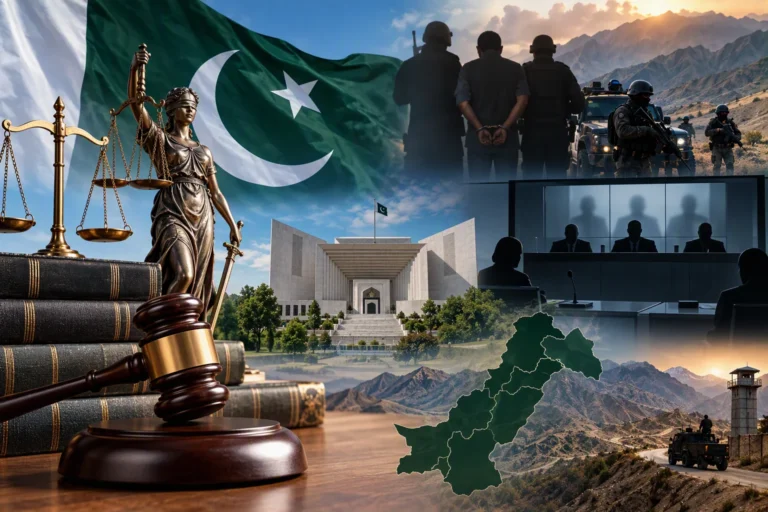
Under Pakistan’s framework, the High Court Chief Justice nominates five Anti Terrorism Court judges and five prosecutors for terrorism proceedings. Their identities, along with those of witnesses, are concealed through protected documentation, confidential proceedings, and voice masking. The accused retains the right to legal counsel. The structure keeps the case inside the judicial system while ensuring that terrorists cannot simply eliminate whoever stands between them and acquittal.
Early Results From Balochistan
It is still early days, but the initial data from Balochistan is worth noting. Of 90 detainees held under the new framework, 5 have been released where evidence did not establish the allegations against them, while 40 have been referred for trial through Faceless Courts. That is not the profile of a system designed purely for abuse. A purely extractive system would not release people. It would simply hold them indefinitely.
The Khawarij and BLA have consistently targeted those who threaten their operational freedom, judges, prosecutors, police officers, intelligence officials. Around 50 CTD officials have reportedly been killed in Balochistan alone. District and Sessions Judge Abdul Hakeem Kakar was killed in Mastung in July 2026; Additional Sessions Judge Tariq Lashari was wounded in the same attack. A judge handling BLA cases in Kharan was kidnapped. The July 2026 terrorist attack in Ziarat killed nine policemen. These are not hypothetical risks being used to justify extraordinary measures. They are documented, ongoing, real.
The Honest Reckoning
None of this means the framework is beyond scrutiny. Any law that permits 90 day detention, secret proceedings, and anonymous judges carries risks of misuse, and Pakistan’s institutional track record means that scrutiny is not only legitimate but necessary. The challenge is ensuring that the safeguards built into the law, judicial production, family access, evidence based prosecution, mandatory release where allegations are not established, are enforced as rigorously as the detention powers themselves.
The goal, ultimately, is to move every terrorism related apprehension from an unaccountable process into a traceable, time bound, legally supervised one.
That is what distinguishes a state governed by law from one governed by impunity. Pakistan is trying to get to the former, and the new architecture, imperfect as it remains, is a genuine step in that direction.
Justice needs to be able to show its face eventually. But first, it needs to survive long enough to do so.

