

Khawarij’s Suicide Terror in Darazinda Is a Betrayal of Islam
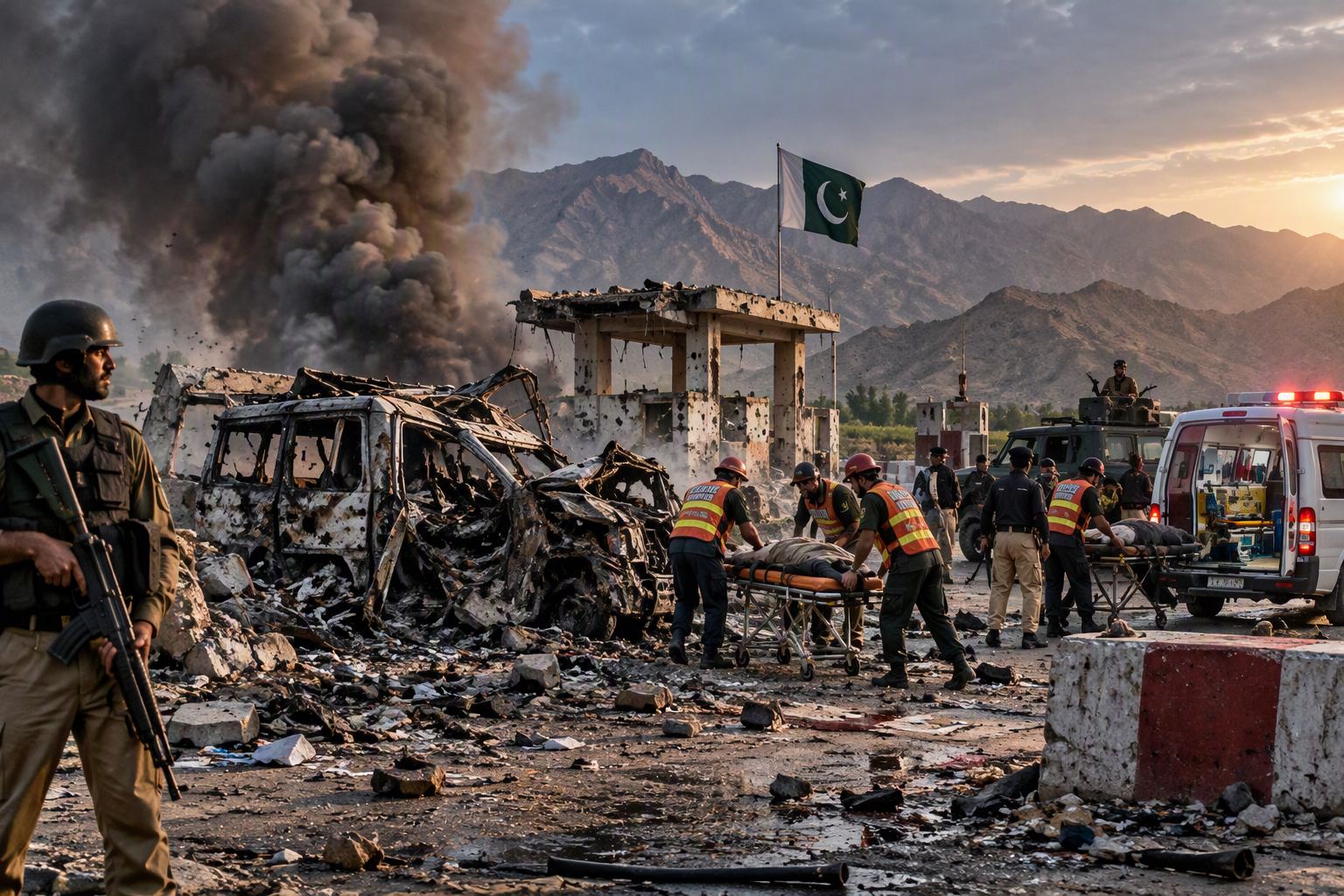
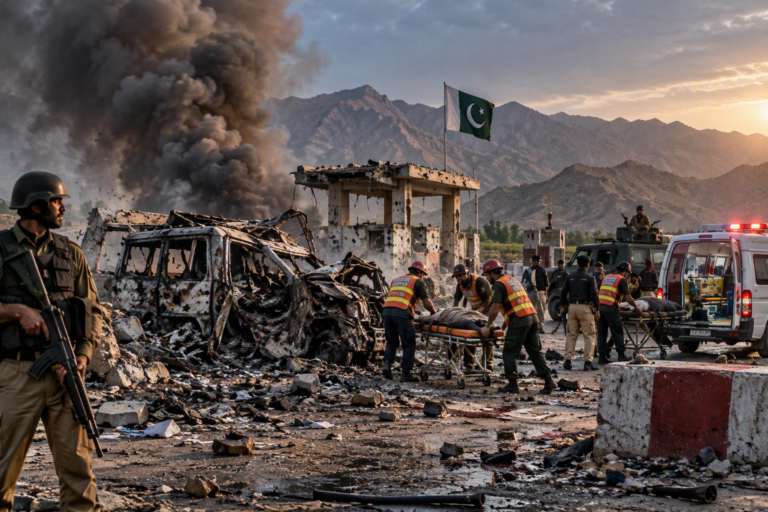
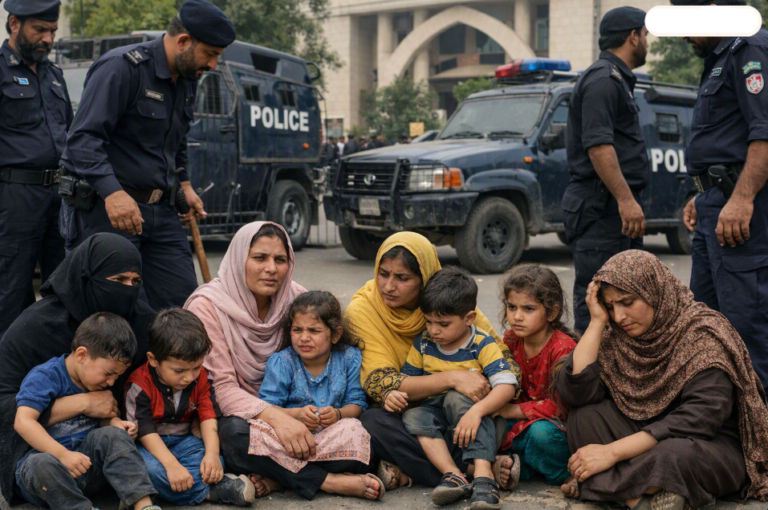
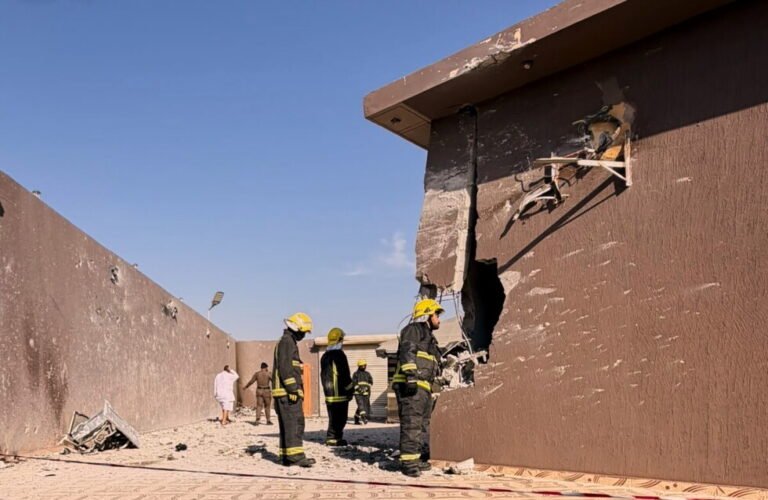
Saturday’s suicide vehicle borne attack in Darazinda has once again forced Pakistan to confront a grim, recurring reality: the Khawarij continue to wage war not against armies or ideologies, but against ordinary people going about their lives. Initial reports indicate a vehicle borne suicide bomber targeted the Aman Mela Police Checkpoint in Darazinda, Dera Ismail Khan. The explosion killed 11 people and wounded approximately 30 others, according to Rescue 1122. Police officials said most of those killed and wounded were security personnel and passersby, with the injured including police officers, customs personnel, and civilians. As of this writing, the blast destroyed portions of the checkpost near the border regions, prompting additional rescue units to be deployed from Karak and Hangu, and relief operations remain ongoing.
What unfolded in Darazinda is not an isolated tragedy. It is part of a pattern that has become distressingly familiar in Dera Ismail Khan and the wider Khyber Pakhtunkhwa belt. Just weeks into this year, the district buried seven people killed in a suicide bombing at a wedding celebration. Police officers have been ambushed on patrol. Checkpoints, convoys, and public gatherings have all been struck. Each time, the victims are the same: police personnel doing their duty, customs officials at their posts, and civilians who happen to be nearby. There is no battlefield logic to these attacks, no distinction between combatant and bystander. That absence of distinction is precisely the point, and it is precisely what exposes the Khawarij for what they are.
The Qur’an could not be clearer on the sanctity of human life: “Whoever kills a soul… it is as if he had slain mankind entirely” (5:32).
The Khawarij who drove an explosives laden vehicle into a checkpoint filled with policemen and ordinary passersby did not weigh that verse for even a moment. Their ideology has never had room for it. When a group claims to fight in the name of faith while detonating bombs among civilians, the contradiction is not a footnote, it is the entire story. The Qur’an also commands believers directly: “Do not transgress. Indeed, Allah does not like transgressors” (2:190). There is no reading of that verse, however creative, that accommodates a suicide bomber steering a vehicle toward a police post surrounded by market stalls and passing traffic.
Perhaps the starkest contradiction lies in the very method the Khawarij favor. Suicide bombing is not a permissible act of struggle in Islamic teaching, it is a form of self destruction explicitly forbidden.
“And do not kill yourselves. Indeed, Allah is ever Merciful to you” (4:29).
Every time the Khawarij dispatch another bomber, they violate this command twice over: once against the innocent they kill, and once against the very person they send to die. No theological gymnastics can reconcile a religion of mercy with a strategy built entirely on mass killing and self immolation. This is why so many scholars and ordinary believers alike have rejected the Khawarij’s claim to speak for Islam at all.
The Prophet ﷺ himself foresaw this deviation with unsettling precision. Hadith recorded in Sahih al Bukhari and Sahih Muslim warn of a group that “will kill the people of Islam and leave the idolaters”, a description that fits the Khawarij’s record with uncomfortable accuracy. Their victims in Darazinda were not foreign soldiers or occupying forces. They were Pakistani policemen guarding their own soil, and Pakistani civilians visiting a public checkpoint. That is who bears the brunt of Khawarij violence, attack after attack, year after year.
It would be naïve to view this bombing purely as a domestic security lapse. The sophistication, timing, and cross border logistics behind such attacks point toward a terror infrastructure that draws support and sanctuary from beyond Pakistan’s frontiers. Hostile intelligence networks with an interest in destabilizing Pakistan have long found the Khawarij a convenient instrument, a deniable proxy through which chaos can be exported without a fingerprint. Seen this way, every checkpoint bombing serves a purpose larger than local terror: it is meant to fray the state’s confidence, exhaust its security forces, and manufacture instability that outside actors can exploit. Recognizing this dimension does not diminish the Khawarij’s own moral culpability; it only clarifies whose interests their violence ultimately serves.
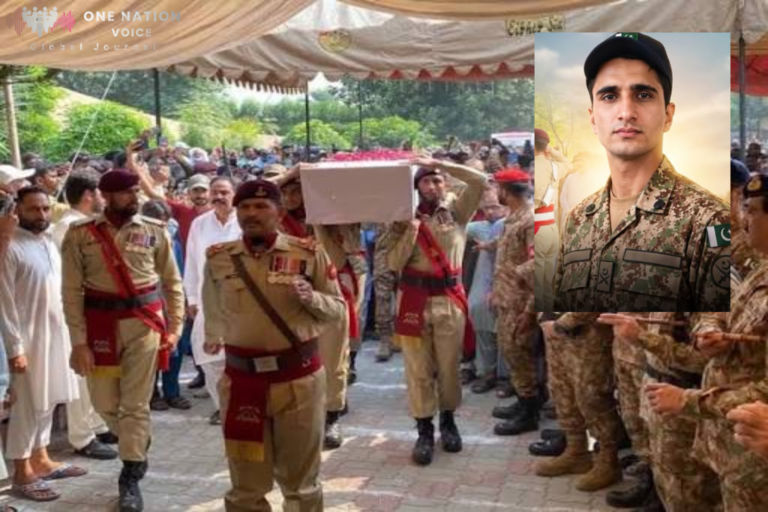
What Darazinda demands now is not despair but resolve. Pakistan’s security and law enforcement institutions have absorbed blow after blow in this region, from Daraban to Darazinda, and have continued to hold the line at enormous human cost. That cost was paid again today by police personnel who stood at their post and did not move. The state’s responsibility is to ensure that sacrifice is not repeated in vain: intelligence led operations must trace this attack back to its facilitators, its financiers, and its planners, wherever they are sheltering. Justice here cannot stop at the bomber; it must reach everyone who armed, funded, and dispatched him.
The people of Darazinda, and of Dera Ismail Khan more broadly, deserve better than to live under the recurring shadow of Khawarij violence. They deserve checkpoints that protect rather than become targets, markets that stay open without fear, and a state that keeps faith with those it asks to stand guard. Pakistan’s institutions have shown, attack after attack, that they will not be broken by this campaign of terror. That resolve, not the bomber’s calculation, is what will ultimately define how this chapter ends.

