




Pakistan Stands With Syria Against Israeli Aggression
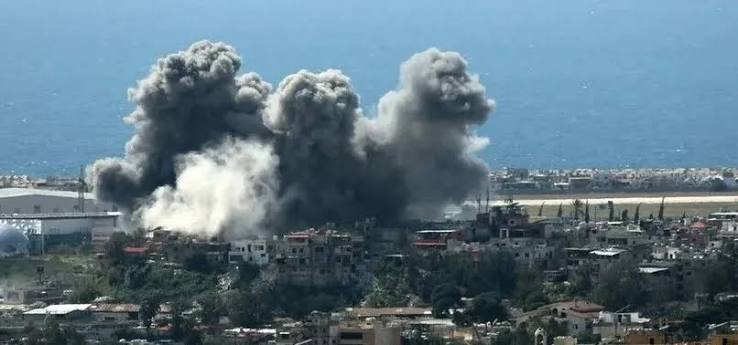
Pakistan’s condemnation of the Israeli attack on Abu al-Duhur Airbase in Idlib is more than a routine diplomatic statement. It reflects a principle that has become increasingly important in a Middle East repeatedly exposed to cross-border military action: the sovereignty of states cannot be respected selectively. When military force is used against the territory of another state without a clear legal basis, the consequences extend well beyond the physical damage caused by a single strike. Such actions weaken the rules that are supposed to prevent regional disputes from turning into open-ended conflict.
For Syria, the issue is especially serious. The country has already endured years of war, institutional breakdown, foreign intervention and humanitarian suffering. Whatever disagreements outside powers may have with Damascus, Syria’s recovery depends on reducing military confrontation rather than creating new fronts.
Repeated attacks on Syrian territory risk making stabilization harder, complicating reconstruction and reinforcing the idea that Syria can be treated as an arena in which stronger states settle their strategic concerns by force
Pakistan’s position therefore rests on a familiar foundation of international relations. Sovereignty and territorial integrity are not ceremonial phrases. They are central principles of the international system and are reflected in the United Nations Charter. If states begin to decide unilaterally that security concerns are enough to justify attacks across borders, the legal restraint on the use of force becomes dangerously weak. The same rule that protects a small or conflict-affected state today may protect a more powerful state tomorrow. International law has value precisely because it is meant to apply consistently.
Israel has presented security concerns as justification for many of its military operations in Syria over the years. Those concerns cannot simply be dismissed, particularly in a region where armed groups, military deployments and competing alliances have created genuine security dilemmas. But security concerns do not automatically erase another country’s sovereignty. When threats are disputed, the responsible path is diplomacy, verification, deconfliction and multilateral engagement. Preventive military action, especially when repeated, can create the very insecurity it claims to contain.
This is where the attack on Abu al-Duhur becomes part of a wider regional problem. Military pressure may produce immediate tactical results, but it can also deepen mistrust among neighboring states and encourage retaliatory thinking. The Middle East already contains overlapping rivalries involving Israel, Syria, Türkiye, Iran, Arab states and outside powers. Adding another cycle of strikes and countermeasures increases the possibility of miscalculation. A single incident can draw in actors that never intended to enter a direct confrontation.
Pakistan is right to emphasize solidarity with the Syrian people as well as support for Syria’s peace and prosperity. That distinction matters. Defending Syrian sovereignty does not require endorsing every decision made by a Syrian government. It means recognizing that the Syrian people have a right to rebuild their country without facing recurring external military pressure.
A durable Syrian state will emerge through functioning institutions, economic recovery, political accommodation and regional cooperation, not through the normalization of attacks on its territory
The international community also has a responsibility that extends beyond statements of concern. International law cannot retain credibility if violations are condemned selectively according to alliances and political convenience. States that call for sovereignty in one conflict should be prepared to defend the same principle in another. The United Nations and influential governments should press all regional actors to resolve security disputes through negotiation and established diplomatic mechanisms. Accountability must be based on law rather than geopolitical preference.
There is also a practical reason for greater restraint. Syria sits at the center of a fragile regional security environment. Renewed instability there can affect refugee movements, extremist recruitment, trade routes, reconstruction plans and relations among neighboring countries. Each new military confrontation diverts attention from the difficult work of rebuilding state capacity and restoring normal economic life. For a country that has already paid an extraordinary price for prolonged conflict, another era of externally driven insecurity would be disastrous.
Pakistan’s condemnation should therefore be understood as a call for consistency. Sovereignty cannot be treated as binding when convenient and disposable when strategic calculations change. Every state has legitimate security interests, including Israel, but those interests must be pursued within a framework that also recognizes the rights and security of others.
Otherwise, regional politics becomes a contest of military reach rather than a system governed by rules
The Middle East does not need another precedent in which force becomes the first response to political or security disagreements. It needs restraint, credible diplomacy and respect for borders. Pakistan’s support for Syria’s territorial integrity points toward that broader principle. Lasting regional stability will not come from repeated strikes, coercive signaling or unilateral calculations. It will come when all actors accept that security is ultimately mutual, sovereignty is not optional, and international law must apply to everyone.