

PTM, NDM and the Challenge of Trans-Border Nationalism
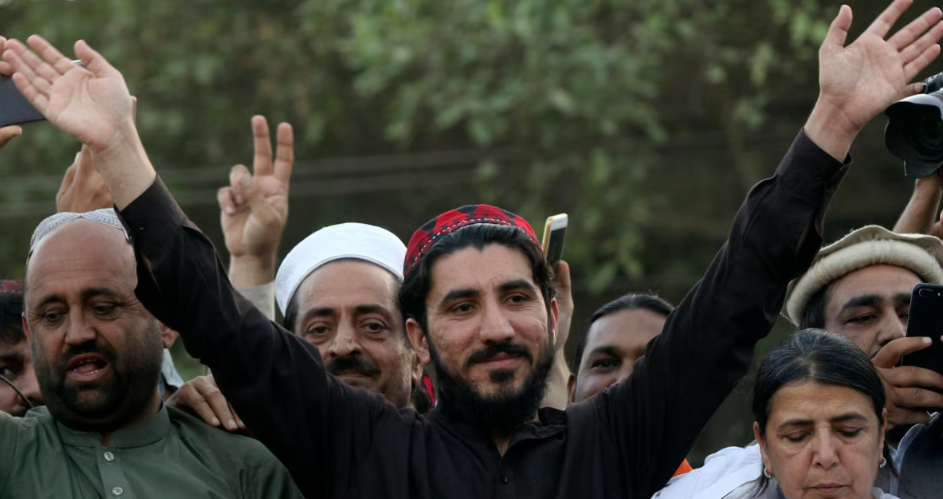
The public messaging of Pashtun nationalist figures has again raised an important question in Pakistan. Where does legitimate ethnic solidarity end and political responsibility to the state begin? Mohsin Dawar, a former member of Pakistan’s National Assembly and chairman of the National Democratic Movement, recently marked Afghanistan’s Independence Day in a public message that praised Afghan resilience and expressed hope for the country’s future. Afghanistan observes its Independence Day on August 19. The message came only days after Pakistan celebrated its own Independence Day on August 14.
Critics have interpreted the contrast in his visible public messaging as another example of selective nationalism. Social media activity alone, however, is not sufficient evidence of disloyalty or foreign allegiance. Celebrating the independence of a neighbouring country is hardly an offence. The more serious issue is the political pattern surrounding such symbolism, especially when it intersects with positions on territorial sovereignty, border management and Pakistan’s security policy.
Pashtuns have deep cultural, linguistic and familial relationships across the Pakistan-Afghanistan frontier. A democratic state should not treat these connections as inherently suspicious. Yet politicians who participate in Pakistan’s constitutional system also carry a special responsibility to make clear that cultural affinity across borders does not weaken their commitment to Pakistan’s territorial integrity.
This is where Dawar’s political positions have generated controversy. In 2023, he publicly criticised what he described as Pakistan’s “obsession” with the Durand Line and called for greater parliamentary involvement in Afghan policy. His supporters can reasonably portray this as criticism of an overly securitised foreign policy. His critics, however, see ambiguity toward the frontier as dangerous because successive Afghan governments have disputed the border while Pakistan regards it as its international boundary.
In a region where militants have repeatedly exploited difficult terrain and cross-border mobility, political rhetoric about frontiers inevitably carries security consequences
Pakistan’s fencing of the Afghan border was designed partly to restrict unauthorised movement and militant infiltration. At the same time, research has documented how fencing disrupted families, trade and communities historically accustomed to crossing the frontier with relative ease. Both realities deserve recognition.
Opposing a particular border-management policy is therefore not automatically equivalent to rejecting Pakistan. Nevertheless, political movements need to distinguish clearly between demanding humane border procedures and questioning the state’s right to control its territory. When slogans of trans-border ethnic unity appear to supersede citizenship, critics understandably ask whether cultural nationalism is drifting toward political irredentism. In an already unstable frontier region, that ambiguity benefits nobody, least of all ordinary Pashtuns who suffer first when security collapses.
The international activism associated with PTM and sections of the wider Pashtun nationalist movement has also generated allegations of external influence. Pakistani officials have claimed that PTM received foreign funding and maintained links with hostile or militant networks.
Those are serious allegations, and they should be described as government claims unless supported by independently verifiable evidence
International advocacy itself cannot reasonably be treated as subversion. Political parties, rights organisations and opposition movements around the world engage foreign media, governments and diasporas. The threshold should be evidence of unlawful financing, operational coordination or assistance to hostile actors, not simply criticism of Pakistan abroad. Amnesty International and the Human Rights Commission of Pakistan have challenged the government’s treatment of PTM and argued that peaceful dissent must remain protected. A credible national-security policy should be capable of answering such criticism with transparent facts.
The legal position also requires precision. The federal government proscribed PTM in October 2024 under Section 11B of the Anti-Terrorism Act 1997, saying its activities were prejudicial to peace and security. In 2026, the Peshawar High Court dismissed petitions challenging the proscription and indicated that the petitioners could seek relief through the statutory review mechanism.
NDM, however, should not simply be described as a proscribed organisation because of its association with former PTM figures. Dawar has faced cases containing provisions of the Anti-Terrorism Act, but criminal accusations and organisational proscription are different legal matters.
If the state believes individual leaders or organisations have crossed constitutional boundaries, evidence, judicial scrutiny and due process strengthen rather than weaken the national-security case
The same care is necessary when examining PTM and NDM criticism of military operations. Communities in Waziristan, Bajaur and other conflict-affected areas have endured terrorism, displacement, economic devastation and repeated security operations. Political leaders have every right to demand accountability for civilian harm. Dawar himself has acknowledged the enormous price paid by Pashtuns in the war against terrorism and has publicly called for collective efforts against militancy.
Yet criticism becomes problematic when the existence of the terrorist threat is pushed into the background. Political rhetoric that depicts every counterterrorism measure as repression can deepen public mistrust and create informational space that militant organisations readily exploit. Security institutions must respect civilian rights, but political movements must equally condemn organisations that murder soldiers, police officers and Pashtun civilians.
Pakistan therefore needs a more mature test of political loyalty than slogans or individual social-media posts. Ethnic identity, human-rights advocacy and disagreement with state policy are constitutionally legitimate. But political actors must also be unequivocal about territorial sovereignty and armed violence. PTM and NDM can strengthen their credibility by removing ambiguity on these questions. The state, in turn, strengthens Pakistan when it confronts genuine security threats through evidence and law rather than allowing legitimate dissent and unlawful subversion to become indistinguishable. National cohesion ultimately depends on both responsibilities.

