

The Babri Masjid 2.0 Movement
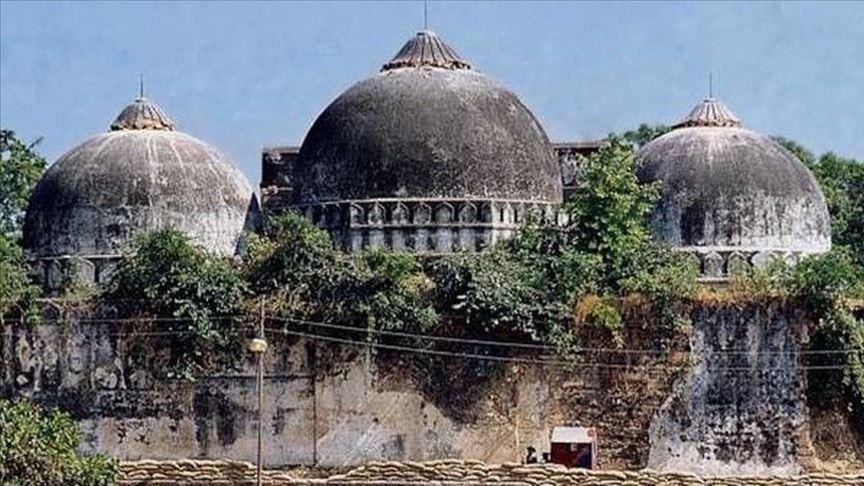
One of India’s most unstable political and communal hotspots in recent years has been the quickly expanding movement to build Babri Masjid replicas from West Bengal to Greater Hyderabad. On December 6, 2025, the anniversary of the 1992 demolition, suspended TMC MLA Humayun Kabir held a single foundation-laying ceremony in Murshidabad. This event turned into a potent symbolic confrontation. It has revealed growing divisions between India’s 230 million Muslims and a powerful Hindutva establishment that uses majoritarian narratives to define the country’s identity. The Bharatiya Janata Party was immediately outraged by Kabir’s decision to begin a ₹80-crore Babri-style mosque project under strict security. The party’s leaders dismissed the move as a planned political spectacle designed to divide the electorate. Despite his worsening relationship with Mamata Banerjee, they accused Kabir of serving as a tool of polarizing politics. In an effort to disassociate itself from the community, the TMC suspended him months prior for making demographic remarks and now refers to him as a “free agent.” However, the debate has transcended party politics and entered the sphere of popular opinion.
The movement that began in Murshidabad swiftly spread throughout West Bengal at the grassroots level. This is no one-off political ploy, according to reports of Muslims gathering bricks, cement, and money to construct Babri replicas. Rather, it symbolizes a more profound cultural and psychological mobilization, an affirmation of legacy and memory against what many see as institutionalized marginalization. Replicas are powerful because of their symbolism, which opposes a narrative that celebrates only one side of the Ayodhya dispute in an attempt to erase a historical wound.
For millions of Muslims, rebuilding the Babri structure is about more than just architecture; it’s about reaffirming identity and resisting cultural devaluation in an increasingly antagonistic political system
These days, this sentiment transcends state boundaries. On the same anniversary, Tahreek Muslim Shabban president Mushtaq Malik of Greater Hyderabad announced plans to build a “Babri Mosque 2.0” memorial. Hospitals, schools, and public infrastructure are all part of his vision, which aims to recast the Babri symbol as a symbol of social progress and solidarity rather than as a remnant of war. Malik vehemently objected to the portrayal of Babri as a legacy of “Babur,” claiming that such descriptions were the result of BJP-RSS propaganda intended to undermine the legitimacy of Muslim historical presence. However, the BJP leadership in Hyderabad promised to thwart any such plan, potentially creating a conflict akin to the unrest in West Bengal. The movement’s growth indicates that Muslims are becoming more confident in their ability to defend their cultural and political rights in the face of what they perceive to be an aggressively majoritarian political environment.
The RSS chief and Prime Minister Narendra Modi’s joint inauguration of the Ram Mandir in Ayodhya must also be taken into consideration when interpreting this comeback. For many Muslims, the event represented triumphalism rather than closure, a state endorsement of a majoritarian historical interpretation that ignores the suffering of minorities. Reaffirming Hindutva credentials, energizing the BJP’s base prior to future elections, and positioning Modi as the guardian of Hindu civilizational aspirations are all part of a calibrated electoral strategy, according to analysts. However, Muslims are becoming more and more alienated as a result of structural disadvantages like monitoring religious conversion, criminalizing customs, limiting mosque property, and normalizing sectarian violence.
The Babri replica push serves as counter-narrative resistance in this tense setting, refusing to give up cultural memory under duress
In terms of politics, Kabir took advantage of the controversy to declare an alliance with Asaduddin Owaisi’s AIMIM, claiming that Muslims in West Bengal needed to make their own political statements instead of depending on the BJP or the TMC. Kabir presented the alliance as a necessary remedy for decades of political neglect, despite AIMIM’s initial denial of formal involvement out of fear of becoming embroiled in a divisive state conflict. Congress, on the other hand, denounced Mamata Banerjee’s subdued response, claiming that such silence runs the risk of widening communal gaps and giving more radical voices narrative control. This political equation recalibration highlights how identity-based mobilization is changing electoral tactics in various states.
When BJP leader Sakharab Sarkar announced a Ram Mandir replica project in Baharampur and held a Bhumi Pujan on December 6, the opposition to the Babri replica movement took a new turn. It was a scaled-down version of the Ayodhya temple, according to Sarkar, intended to combat what he called TMC-driven communal provocation. The location’s secrecy both highlights the fierce symbolic competition currently taking place and shows an awareness of administrative difficulties.
By turning religious memory into territorial performance, the emergence of a “replica showdown” raises the stakes for the community
Judicial authorities have continued to exercise caution as tensions rise. The Calcutta High Court declined to get involved, stating that the state government and law enforcement organizations should handle this conflict since it falls firmly within the political domain. The judiciary’s unwillingness to get involved in a contentious situation where rulings could have disproportionately large political ramifications is indicated by this hands-off approach.
A larger conflict taking place throughout India’s divided democracy is reflected in the growing Babri Masjid replica movement. It is a fight for political representation, cultural preservation, and historical memory in a country where majoritarian nationalism and minority identity are increasingly at odds. These copies are seen by Muslims in India as a symbol of resistance to erasure, while their detractors see them as provocative. Navigating this tension without letting symbolic assertion turn into widespread conflict is the nation’s challenge. This movement’s course will put India’s pluralism to the test as well as its democratic institutions’ ability to accept opposing viewpoints in an increasingly narrow ideological environment.

