


The Crisis of Secularism in the Indian Armed Forces
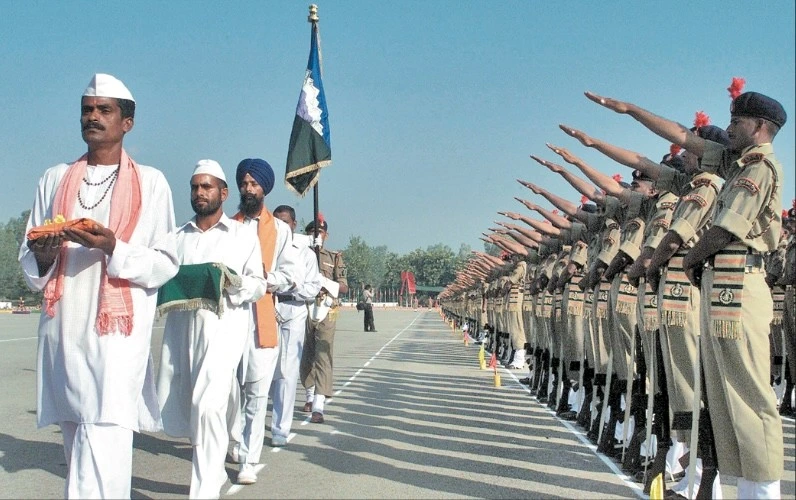
The problem of religious discrimination in the Indian Army has become desperate and highly disturbing in the recent years, putting to trial the very basis of the secular constitutionalist structure of India and its assurances of religious liberty and equality. The decision is a recent landmark and controversial ruling by Delhi High Court which has caused a widespread outrage and concern among human rights activists, minority communities and the legal fraternity in India and around the world. The very fact that the court dismissed a Christian officer in the Indian Army just on the basis of his not wanting to participate in the rituals of a Hindu temple in totality, was simply because of his own belief and faith as a practicing Christian. This refusal, according to the court ruling was indiscipline and was perceived as defiance to the lawful orders of the superior officers, a ruling that poses a threatening precedent to the religious minorities serving in the Indian military. The move is being viewed as a direct promotion of a more extreme Hindutva-centric agenda that has come to dominate not just civilian life in India but its military establishments as well bringing up the possibility of religious conformity being foisted by the most powerful organs of the state.
The consequences of this ruling extend well beyond the career of one Christian officer; they reveal a more profound and troublesome malaise in the Indian Army, where secular ideals that had formerly provided the foundations of the ethos of this force are being quickly undermined by the force of extremist religious majoritarianism. The Indian Army, which was previously praised as examples of religious pluralism and nation-binding to the soldiers of other faiths, is being transformed into an agent of Hindutva the Hindu nationalist philosophy followed by the Rashtriya Swayamsevak Sangh (RSS) and its political arm, the current Bharatiya Janata Party (BJP) regime. The Army in the past had been known to accommodate the individual religious faith of soldiers since it has been established that the Army is diverse with soldiers of different faiths like Hindus, Muslims, Christians, Sikhs, Buddhists, etc. But the court ruling is the indication of a firm departure towards this tradition and delivered a chilling effect to all non-Hindu soldiers that their faith is subservient to the imposition of the religious practices of the majority faith.
Adding fuel to these apprehensions are the activities of senior most military leaders who seem to be growing in confidence to come out openly in support of Hindu religious leaders and activities and bridge the distinction between state power and religious nationalism. One sharp manifestation of this tendency was the case when the current Indian Army Chief, General Upendra Dwivedi, visited the ashram of a controversial Hindu religious leader Ram BhadrAcharya in full military uniform, in a publicized visit. This is not a symbolic act at all, but a strong indicator of the saffronization, an ideological tinting linked to Hindu extremism, of the Indian Army officer corps. It is a grave violation of military neutrality and secularism and thus the indication that the Army, which used to be a neutral and apolitical force that served the nation as a whole, is being turned into what many are apprehending is becoming; Modi s army; that is, a military wing aligned ideologically and politically with the BJP government and Hindutva agenda of Prime Minister Narendra Modi.
This military change cannot be regarded as an independent phenomenon since it replicates the general tendency of political and social changes winds under the BJP rule in India. This is the case, for example, in Uttar Pradesh, where Chief Minister Yogi Adityanath, a hard-line Hindutva ideologue, and a saffron-cloaked monk has led a government that has highly curtailed Muslim religious expression, particularly during holy Islamic festivals like Eid al-Adha In the name of hurting the feelings of the Hindu community, the state has prohibited or severely limited the slaughtering of cows, goats, and camels, which are the main animals involved in the Eid celebration among the Muslim community. In addition, there have been severe restrictions on holding prayers in open areas which are being monitored by heavy police operations that are usually characterised by threat of violence and arrest even when people have not made any official reports. This kind of state-sponsored segregation on minority religious activities conveys a clear message to the close to 200 million Muslims in India that their religion and rights are inconsequential before an emerging Hindu state.
The religious conformity supported by the court in the Army when viewed in the context of these civilian policies shows just how much the Indian state machinery is being co-opted into the Hindutva service. What used to be a secular republic with a dedication to protect all religions is now seen to be leaning towards the creation of a de facto Hindu Rashtra a state that is characterized by Hindu cultural and religious dominance. The fact that the Indian military is being carried along this tide is a very dangerous trend. The Army is not simply the other state institution, it is the guarantor of national security, territorial integrity and, what is very important, the keeper of the constitutional values. Once the Army itself starts imposing Hindu practices on its non-Hindu soldiers with expulsion and disciplinary charges, there is the possibility of an army that is no longer dedicated to the constitution or the pluralistic nation to which it is charged to serve, but an army committed to a religious ideology that insists upon religious conformity.
The shock on minority officers and soldiers in the Indian armed forces cannot be over emphasized. This turn of the military into a Hindutva- tilting organization means personal peril and professional ostracization to Christians, Muslims, Sikhs, and others who have long served the country with pride and courage. Any soldier found disobeying an order to engage in religious activities that are foreign to his own religious belief now risks having his career ruined, being socially ostracized or even worst. It is also a violation of the basic human rights of these people, which are allegedly guaranteed by the Indian law as well as by the international human rights conventions, to which India is a signatory. The signal seems to be coming out, or rather getting through, the government, the courts, the military hierarchy, and the message seems to be quite clear: that adherence to Hindu nationalist practices is no longer a matter of choice; it is now a command, irrespective of belief or conscience.
The international community plays an important role in this bleak situation. International bodies like the United Nations, the Organization of Islamic Cooperation (OIC), Amnesty International and other human rights monitors cannot ill afford to remain silent over such egregious and systematic infringement of religious freedom. The demands of diplomatic pressure, international condemnation, and human rights investigation are increasing, as the worried onlookers apprehend that the uncontrolled escalation of Hindutva in the political and military life of India might trigger sectarian violence, further marginalize the voices of minorities, and encourage the ideology of authoritarian rule.

