

US Labels BLA Terrorist
US Labels BLA Terrorist
Impact on Pakistan and Region
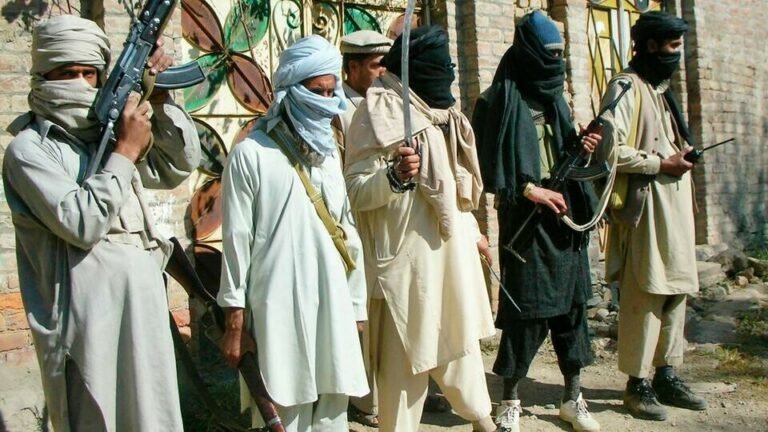
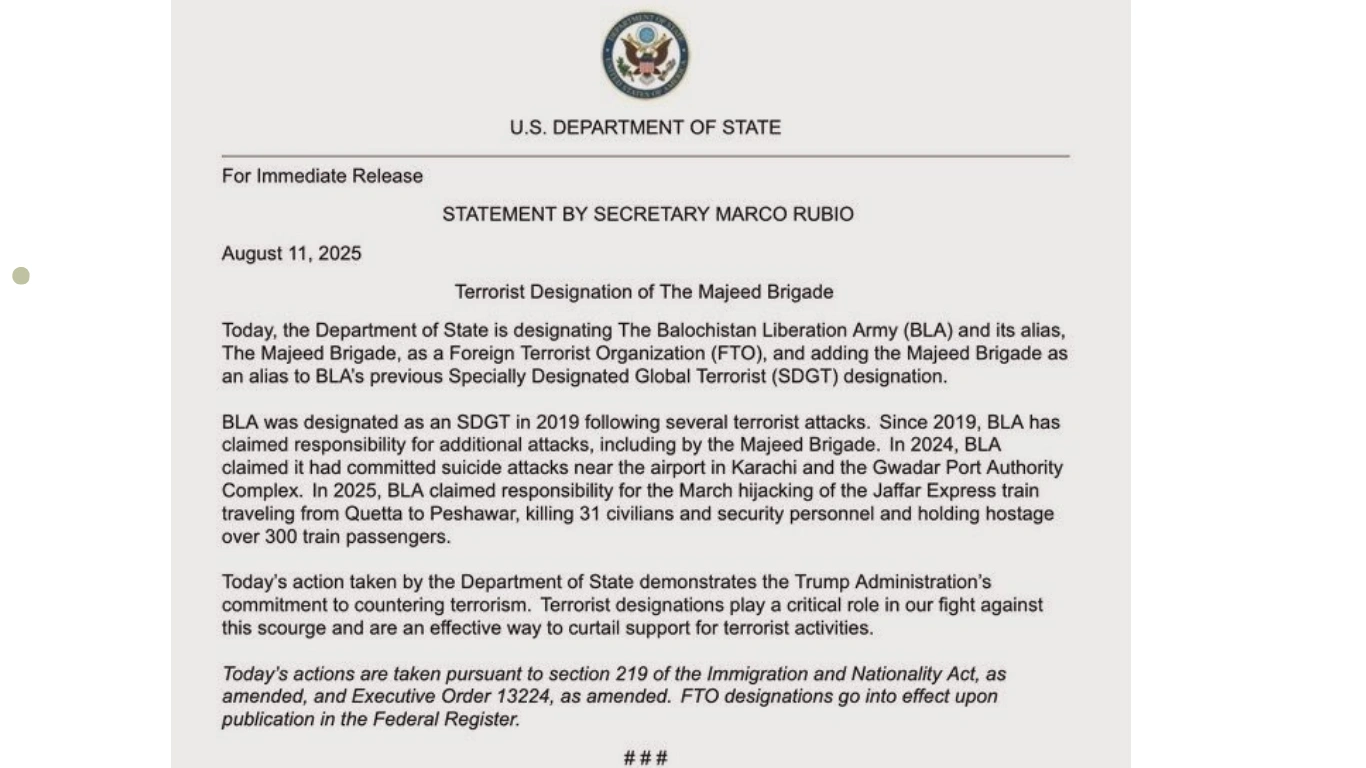
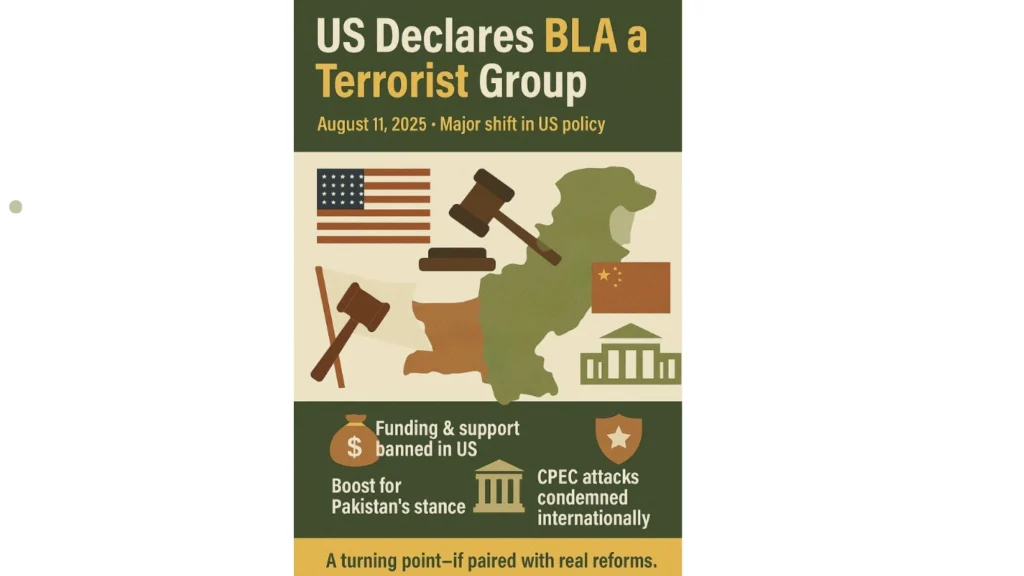
On August 11, 2025, the United States officially designated the Balochistan Liberation Army (BLA) and its suicide wing, the Majeed Brigade, as a Foreign Terrorist Organization (FTO). For Pakistan, this is not just another policy move from Washington. It is something the country has been pushing for over many years. Until now, the BLA was only listed by the US as a “Specially Designated Global Terrorist” group, which carried fewer restrictions. The upgrade to FTO status matters both practically and symbolically.
Why the BLA Matters
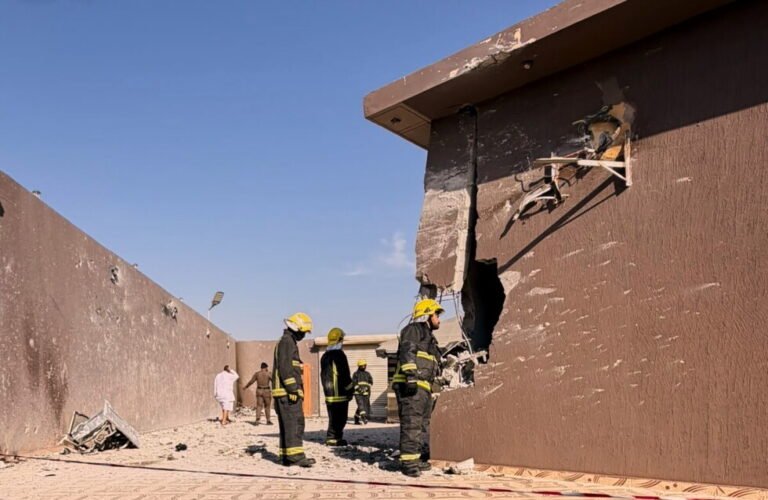
The BLA presents itself as a voice for Baloch rights, but its track record looks very different. Its fighters have carried out suicide bombings, kidnappings, extortion, and targeted killings. Similarly, the Majeed Brigade has gained notoriety for using suicide tactics, even deploying female bombers, which is rare in South Asia.
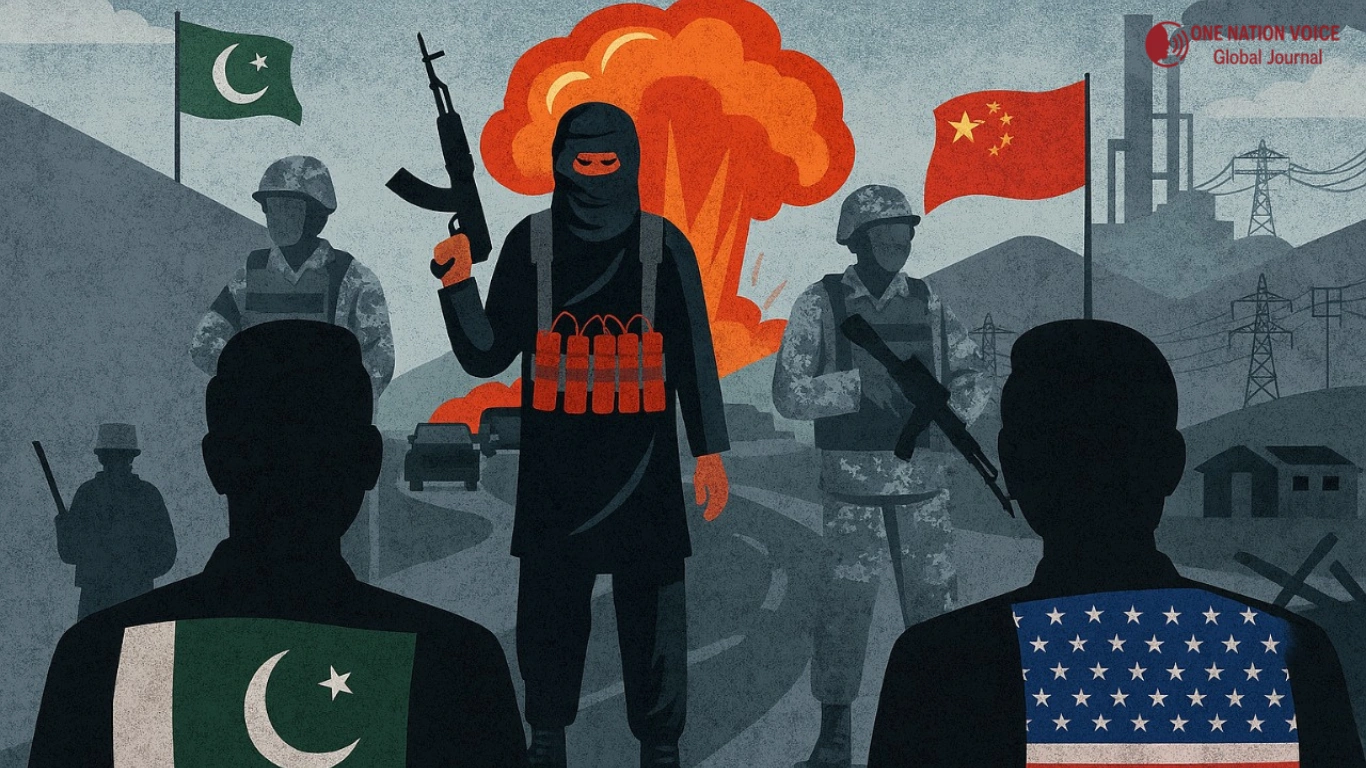
Beyond attacks on Pakistani forces and government institutions, the BLA has repeatedly gone after Chinese convoys, engineers, and projects tied to the China Pakistan Economic Corridor (CPEC).
Moreover, gas pipelines, dams, and highways have all been hit. So, while the group frames itself as part of a political struggle, its methods make it hard to see it as anything other than violent extremism.
It is also true that the BLA draws energy from a deep sense of neglect in Balochistan. Many locals feel left out of Pakistan’s development story. That frustration makes groups like the BLA attractive to some people, even if most Baloch do not condone its violence.
What the US Designation Changes
By designating the BLA as a Foreign Terrorist Organization, Washington has made it illegal for anyone in the US to provide support including financial or otherwise to the group. This is not just a legal formality. It tightens the net around BLA’s ability to raise money abroad or use sympathetic networks overseas.
For Pakistan’s security agencies, this is an important boost. They can now argue more forcefully that their operations against the group are part of a broader fight against terrorism, not just a local insurgency. Besides, it will also help Pakistan to press other countries to clamp down on BLA-linked individuals, who might be seeking refuge or funding abroad.
A Diplomatic Win for Islamabad
This move also matters diplomatically. Pakistan has long complained that the BLA gets too much leniency internationally, sometimes even being framed as a political movement. So, with Washington’s formal terrorist label, that space for ambiguity shrinks. For Islamabad, it is a validation of its position that the BLA is not a freedom movement, but a terrorist outfit.
It is also a sign that counterterrorism cooperation between Pakistan and the US, which has had its ups and downs, still has room to grow. The two countries do not see eye to eye on everything, but when it comes to groups like the BLA, there seems to be a common ground.
The Regional Dimension
The designation is not just about Pakistan’s internal security. The BLA’s attacks on CPEC projects have repeatedly raised concerns in Beijing. China has invested billions in infrastructure in Pakistan, and every attack on its engineers and convoys rattles that partnership.
By blacklisting the BLA, the US is indirectly signaling that it does not see sabotage of such projects as legitimate. This is interesting because Washington and Beijing may compete strategically, but both have an interest in keeping violent extremist groups away from derailing development projects. It is not a cure at all, but it adds another layer of pressure on the BLA and limits its room to maneuver.
If Pakistan leans only on military responses, groups like the BLA may weaken, but new versions could emerge later. The real challenge is to pair hard security measures with genuine development and political engagement. This means jobs, schools, healthcare, and infrastructure that serve the local population. It also means giving Baloch voices more space in national decision making. In the absence of these measures, the sense of alienation will linger.
For now, Islamabad has secured a diplomatic and security win. The US move helps undercut the BLA’s international standing and makes life harder for its financiers and recruiters.
It strengthens Pakistan’s case that these groups are operating under the cover of political causes, but using terror tactics deserve no legitimacy. But Pakistan also faces a choice. The FTO designation gives it breathing space and international backing.
Now the ball is in Pakistan’s court. It depends on Pakistan whether it uses this moment to double down only on military crackdowns, or also to invest in long-term solutions in Baluchistan which will shape the province’s future.
The BLA’s recognition as a terrorist group by the US will not end the problem on its own. What it can do is that it will remove the veneer of legitimacy the group tried to wear. It will also give Pakistan a stronger hand in both fighting the militancy and seeking broader international cooperation. If paired with genuine political and economic inclusion, it could be a turning point.
Disclaimer: The views and opinions expressed in this article are exclusively those of the author and do not reflect the official stance, policies, or perspectives of the Platform.

