

When India Bulldozed Its Olympic Pride

When India Bulldozed Its Olympic Pride
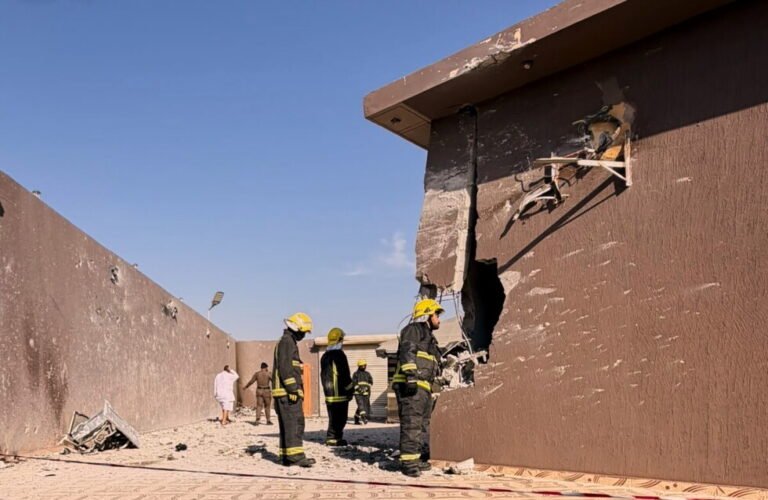
The story out of Varanasi really hit a nerve across India, for a good reason. On September 28, 2025, part of the old family home of hockey legend Mohammed Shahid was torn down by the local administration. The official reason was “road widening”, but for a lot of people, it looked and felt like something much deeper. They considered it as another case of “bulldozer politics”, which has become a symbol of how the UP government flexes power, often against Muslims. Mr. Shahid was not just another athlete. He was one of India’s brightest hockey stars, part of the team that won gold at the 1980 Moscow Olympics. People still talk about his silky dribbling, and how he carried Indian hockey’s hopes in the 80s. He died in 2016, and his legacy should have been celebrated.

Instead, nine years later, bulldozers showed up at his family’s doorstep. His brother reportedly begged for more time, but the request went nowhere.
Response of officials in India
Moreover, the images of that demolition while the family members pleading not to do so, and a crowd watching in disbelief spread fast. Opposition leaders jumped in too. Congress’s Mr. Ajay Rai called it “an insult to Kashi’s sports heritage”, and
Azad Samaj Party’s Mr. Chandrashekhar Azad said, it is shameful that the family of an Olympian who made India proud had to literally beg in his own hometown. So, it was not hard to see why people felt this crossed a moral line.
Moving forward, what makes this act even bitter is the hypocrisy on the part of government. The same government that celebrates Olympic medals, and posts glowing tributes on social media has no problem flattening the homes of Muslim icons, when it suits their plans. It is like the country loves its medals, but not the people behind them, at least not all of them. Mr. Shahid’s home was not only a building rather it was a small piece of sporting history, a reminder of a time when hockey united people across religions and regions.
Additionally, officials said it was part of a neutral city development project, and the affected families were compensated. Maybe this is technically true, but given the pattern of how bulldozer actions have played out in UP, disproportionately hitting Muslim homes make it hard to look at it as neutral. Besides, Mr. Shahid’s family itself was split over the compensation. Some accepted it, others felt cheated. The tension even led to reports of a scuffle among relatives, which only deepened the sadness of the whole thing.
The big picture of India
At the bigger scenario, this is not just about one house. It is a part of long list of demolitions in Delhi, Prayagraj, Haldwani, and other places, where homes and shops owned by Muslims were razed under different pretexts. However, every time the government claims it is about law and order or development, but to many, it looks like punishment, and a public spectacle of power.
Attitude of Indian government towards victims of incidents
Mr. Shahid’s widow, Parveen, said that she just wants some recognition for her late husband, a kind of memorial or plaque where the house once stood. It is a simple and human request, but even that might get buried under paperwork and politics.

Besides, the saddest part is how this moment captures the contradiction in today’s India. Thus, the country celebrates its athletes on podiums when they perform well, and wrap them in the tricolor too.
But when they no longer fit the political narrative, their memories can be bulldozed like they never mattered.
In short, if the government really wants to honor its heroes, it should not repeat such mistake as was done in the case of Mr. Shahid. The government should also try to compensate up to some extent, what it has done to the honor of late Mr. Shahid. Maybe the least they could do now is to preserve his story, not in a dusty file or a tweet on National Sports Day, but in something real and lasting. So, right there in Varanasi where this can be done, the place where he began. Hence, this is not only about hockey or heritage. It is about what kind of country India is becoming, one that builds roads at the cost of its own soul.
The views and opinions expressed in this article are exclusively those of the author and do not reflect the official stance, policies, or perspectives of the Platform.

