


Who Gets to Call Whom a Terrorist?
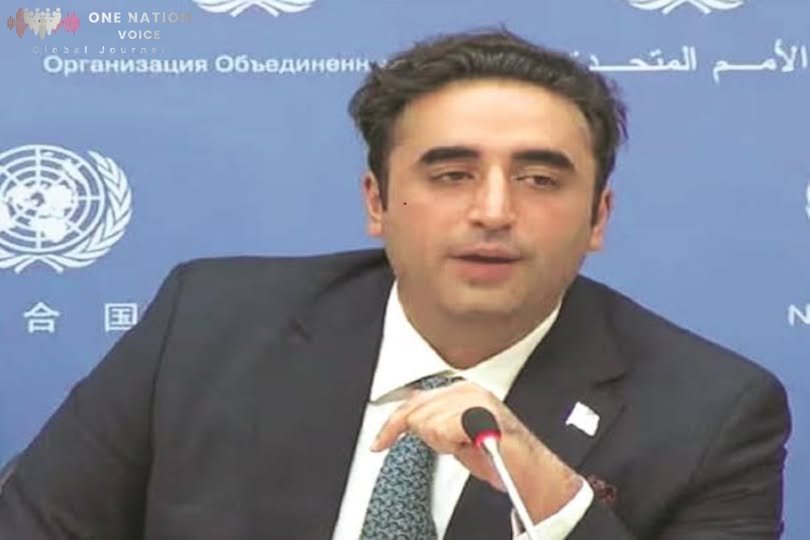
Revisiting Bilawal Bhutto’s 2022 Rebuttal in Light of 2026 Realities
In December 2022, then Foreign Minister Bilawal Bhutto Zardari delivered one of the sharpest rebukes of his diplomatic career at the United Nations, responding to Indian accusations that Pakistan harbors terrorists. His retort was blunt: Muslims, he said, are branded terrorists whether they live in Pakistan or in India, and he pointed to Prime Minister Narendra Modi’s history including the ban that once barred Modi from entering several countries over the 2002 Gujarat riots as evidence that India’s own record on communal violence is far from clean. He went further, describing the Rashtriya Swayamsevak Sangh (RSS), the ideological parent of Modi’s ruling party, as an organization that draws inspiration from the Hitlerite worldview and that reveres Gandhi’s assassin rather than Gandhi himself.
Three and a half years later, the underlying argument Bilawal was making that the label terrorist is applied selectively, and that both states accuse the other of exporting violence remains the defining feature of India Pakistan rhetoric. What has changed is the volume of documentation now available on both sides, and it is worth looking at that record honestly rather than only through the lens of who scored the better soundbite in 2022.
Pakistan’s position, and the khawarij distinction
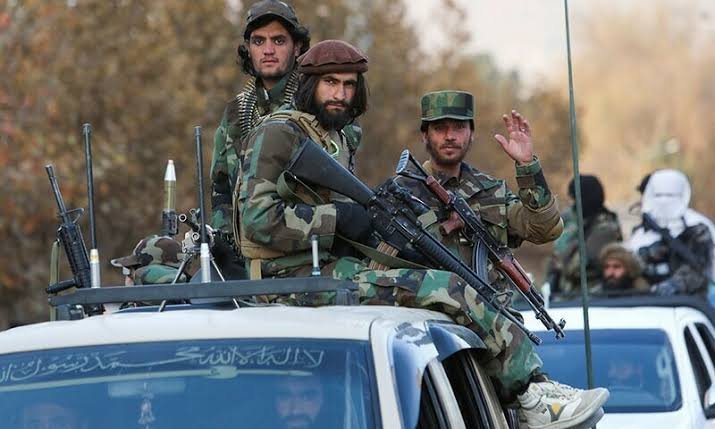
Pakistani officials have consistently drawn a line between the Afghan Taliban, with whom Islamabad has maintained a working relationship, and the Tehrik i Taliban Pakistan (TTP), which the state formally designates as khawarij a term meaning those who have deviated from the faith through violent rebellion against the community, deliberately chosen to strip TTP fighters of any claim to religious legitimacy. Pakistani officials have repeatedly argued that TTP terrorists operate from sanctuaries inside Afghanistan and have accused India of using Afghan soil to support anti Pakistan terrorist networks an allegation India rejects and one Islamabad has struggled to substantiate publicly, though it continues to raise it at forums including the UN.
This is the argument Islamabad has increasingly taken to international bodies:
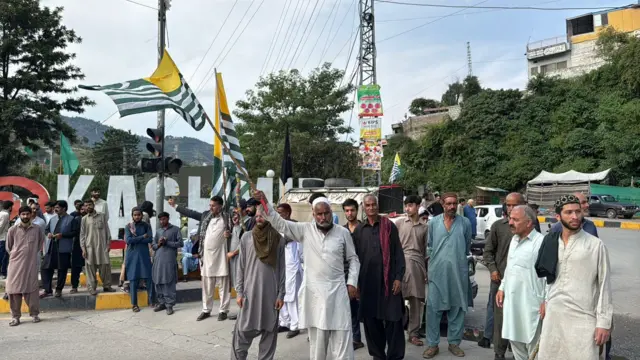
that Pakistan itself is a victim of cross border terrorism, not merely its source. Pakistani officials have accused India of continuing to suppress the right to self determination of Kashmiris in Indian administered Jammu and Kashmir, in what they describe as a violation of relevant UN resolutions.
India’s counter record, and the FATF picture
India’s rebuttal has leaned heavily on the Financial Action Task Force (FATF), the global body that monitors terror financing. India’s Permanent Representative to the UN, P. Harish, has called the FATF “an indispensable pillar of the global counterterrorism financing and anti money laundering architecture,” and dismissed challenges to its credibility as reflecting “fear of scrutiny rather than genuine process related concerns.” Harish argued that countries facing adverse FATF assessments should address the deficiencies identified rather than resort to “politicised activism in UN forums.”
Indian officials have also pointed to specific cases as evidence that Pakistan based groups continue to operate with limited restraint. Analysts have noted that offshoots such as The Resistance Front, linked to Lashkar e Taiba, have carried out escalating attacks in Jammu and Kashmir that have contributed to a rising civilian death toll and heightened regional instability. Indian officials say they have compiled video evidence of individuals designated as terrorists by international bodies appearing openly at public events, material they intend to present at forthcoming FATF proceedings.
At the same time, FATF’s own most recent mutual evaluation has cut in a direction less flattering to New Delhi’s narrative of a uniquely Pakistani problem. FATF’s latest Mutual Evaluation Report identified threats from ISIL and al Qaeda linked extremist groups active in and around Jammu and Kashmir, whether directly or via proxies, and noted regional insurgencies in India’s northeast and left wing extremist groups seeking to overthrow the government as additional domestic terrorist threats India must confront.
What this tells us
Read together, the record that has accumulated since Bilawal’s 2022 speech does not neatly vindicate either government’s preferred story. Pakistan has a documented and continuing problem with terrorist financing that FATF itself has flagged, and figures linked to UN designated terrorist organizations have appeared at public events inside the country under circumstances Indian officials characterize as an attempt to launder their status through electoral politics. At the same time, India’s own security establishment is contending with terrorist violence in Kashmir that FATF’s assessors, not just Pakistani officials, have linked to cross border networks a reminder that Bilawal’s core claim, that terrorism in the subcontinent is not a one way accusation, still has an evidentiary basis three years on.
What Bilawal’s speech captured, more than any specific fact, was the political function of the word terrorist in South Asian diplomacy: it is used less as a precise legal category and more as a rhetorical weapon each state deploys against the other while defending its own record. The RSS ideology he criticized, and the communal violence of 2002 that shaped Modi’s early reputation on the world stage, are historical facts that Indian civil society itself has debated fiercely for two decades. Pakistan’s use of khawarij to delegitimize the TTP is a genuine attempt to separate religiously sanctioned resistance from what the state considers illegitimate violence against fellow Muslims but it sits alongside a financing record that FATF has repeatedly found wanting.
Neither government has a monopoly on victimhood, and neither has a spotless record on terrorism.
The honest reading of the 2026 evidence is that both states are, by their own regulators’ and each other’s accounts, still grappling with terrorist networks operating on or from their territory which is precisely the uncomfortable symmetry Bilawal was pointing to at the UN podium in 2022, whether or not that was his intention.
Disclaimer:
The views and opinions expressed in this article are exclusively those of the author and do not reflect the official stance, policies, or perspectives of the Platform.

Author

Dr. Syed Hamza Hasib Shah is an experienced writer and political analyst, specializing in international relations with an emphasis on Asia and geopolitics. He holds a PhD in Urdu literature and actively contributes to academic research, policy discussions, and public debates. His work addresses complex geopolitical challenges. Email: hk3156169@gmail.com.
