








World Climate Day and the Indus Waters Treaty
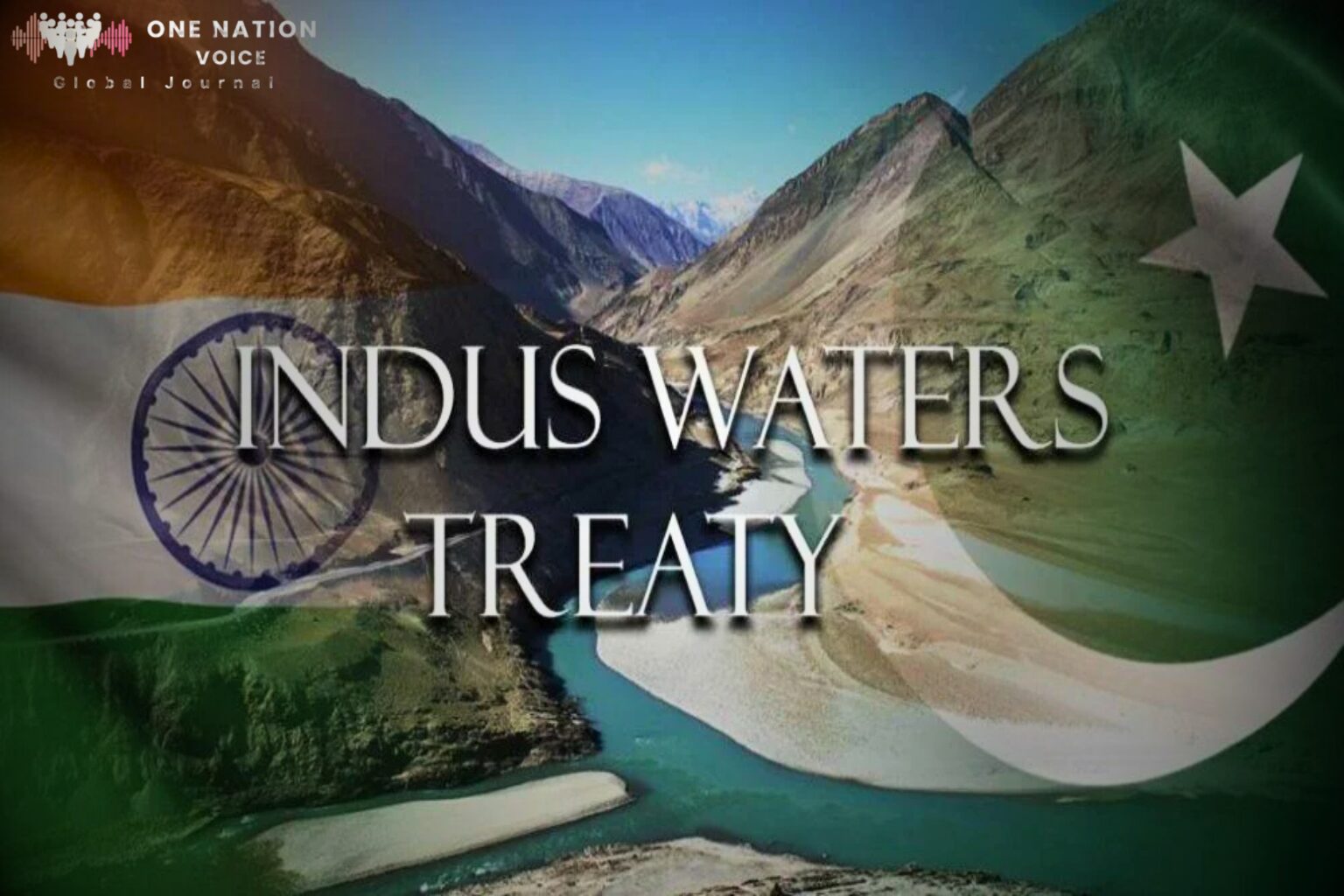
Climate Stress, Water Insecurity, and Regional Risk
World Climate Day serves as a global reminder of the accelerating climate crisis and the urgent need for collective action on environmental resilience. In South Asia, however, climate change is no longer a distant environmental concern but an immediate structural threat shaping water security, food systems, and regional stability. Nowhere is this intersection more visible than in the Indus Basin where rising temperatures, glacial retreat, erratic monsoons and extreme weather events are intensifying pressure on already fragile hydrological systems.
Within this context, the stability of transboundary water governance becomes not only an environmental necessity but also a geopolitical safeguard. The Indus Waters Treaty of 1960, long regarded as one of the most durable water sharing agreements in the world, has historically provided a predictable framework for managing river flows between India and Pakistan. This predictability has been essential for irrigation planning, flood control, agricultural stability and long term water resource management in Pakistan, a country whose economy remains heavily dependent on the Indus river system.
Recent uncertainty surrounding the treaty has therefore raised serious concerns. Any disruption to established water sharing mechanisms introduces additional stress into a basin already experiencing climate driven volatility. In a region where glacial melt accelerates seasonal variability and monsoon patterns are becoming increasingly unpredictable, weakening institutional coordination risks amplifying both extremes, devastating floods during high flow periods and acute water shortages during dry cycles.
For Pakistan, one of the most climate vulnerable countries globally, such uncertainty carries profound implications. The Indus Basin is not merely a geographic feature, it is the backbone of national food security, agricultural productivity and rural livelihoods. Even minor fluctuations in river flows can have cascading effects on crop yields, irrigation cycles, drinking water availability and hydropower generation. In this sense, water governance is inseparable from climate resilience.
The growing convergence of climate stress and geopolitical tension further complicates the picture. Climate change is already transforming the Indus Basin into a high risk hydrological zone marked by glacial lake outburst risks, flash floods and prolonged drought episodes. In such a fragile environment, cooperative water management is not optional, it is essential for preventing environmental stress from escalating into humanitarian and economic crises.
Historically, the Indus Waters Treaty has served as a stabilizing instrument insulating water management from political conflict. Its value lies not only in allocating river usage but also in creating a predictable system that allows both countries to plan for long term environmental variability. Any erosion of this framework risks undermining decades of institutional resilience built around shared hydrological data, flood communication mechanisms and seasonal flow expectations.
On World Climate Day, the broader lesson is clear. Climate change does not respect political boundaries. It intensifies existing vulnerabilities and places greater pressure on systems that lack cooperation. In transboundary river basins, uncertainty itself becomes a risk multiplier. When water flows become less predictable, agriculture weakens, energy systems face strain and public health systems come under pressure.
For Pakistan, climate adaptation is already a national priority. However, adaptation becomes significantly more difficult when external variables such as upstream water management introduce additional unpredictability. Effective climate resilience depends on stability, transparency and cooperation across borders. Without these, even the most advanced domestic planning faces structural limitations.
At the same time, this moment highlights the need for stronger regional climate diplomacy. The Indus Basin requires not only legal frameworks but also updated mechanisms for climate era cooperation including real time flood monitoring, glacial melt tracking, drought forecasting and joint environmental research. Climate change has fundamentally altered hydrological behavior and governance systems must evolve accordingly.
Ultimately, the challenge is not only legal or political, it is existential for millions of people whose lives depend on the Indus river system. The convergence of climate stress and governance uncertainty demands a shift away from confrontation and toward sustained cooperation. Water in an era of climate instability is no longer just a resource, it is a shared survival system.
As the world observes Climate Day, the Indus Basin stands as a reminder that environmental security and regional peace are deeply interconnected.
Strengthening cooperative water governance is not merely a diplomatic choice, it is a climate necessity.
World Climate Day serves as a critical global call to action to raise awareness about climate crisis. In South Asia, where climate change is intensifying floods, droughts, and glacier melt, the stability of transboundary water governance is critical. India’s decision to hold the Indus Waters Treaty in abeyance compounds these risks, exposing Pakistan to heightened climate volatility, water insecurity, and systemic threats to human and economic stability.
Observed globally to raise awareness about climate change and its impacts, World Climate Day emphasizes the urgent need for resilience, cooperation, and sustainable resource management. Nowhere is this more critical than in the Indus Basin, a region already facing accelerating glacier retreat, erratic monsoon patterns, extreme flooding, and prolonged drought cycles.
For Pakistan, one of the most climate vulnerable countries in the world, the Indus river system is the backbone of its ecological and economic survival. The Indus Waters Treaty (1960) has historically ensured predictability in river flows, enabling irrigation planning, flood management, and water storage systems to function effectively.
However, India’s unilateral move to place the treaty in abeyance introduces dangerous uncertainty into an already fragile climate system. In a region where water flows are increasingly dictated by climate extremes, disrupting institutional water sharing mechanisms risks amplifying both flood intensity and drought severity.
This convergence of geopolitical uncertainty and climate stress transforms water from a managed resource into a weapon; threatening agriculture, public health, energy security, and livelihoods across Pakistan.
Disclaimer:
The views and opinions expressed in this article are exclusively those of the author and do not reflect the official stance, policies, or perspectives of the Platform.

