
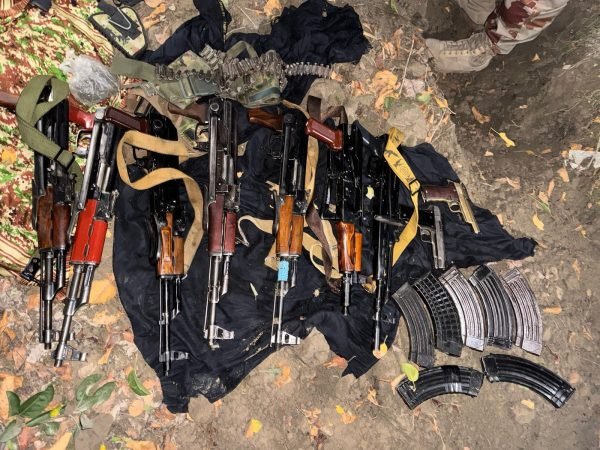
India’s Independence Day is Black Day
August 15: When One Nation’s Celebration Is Another’s Day of Mourning
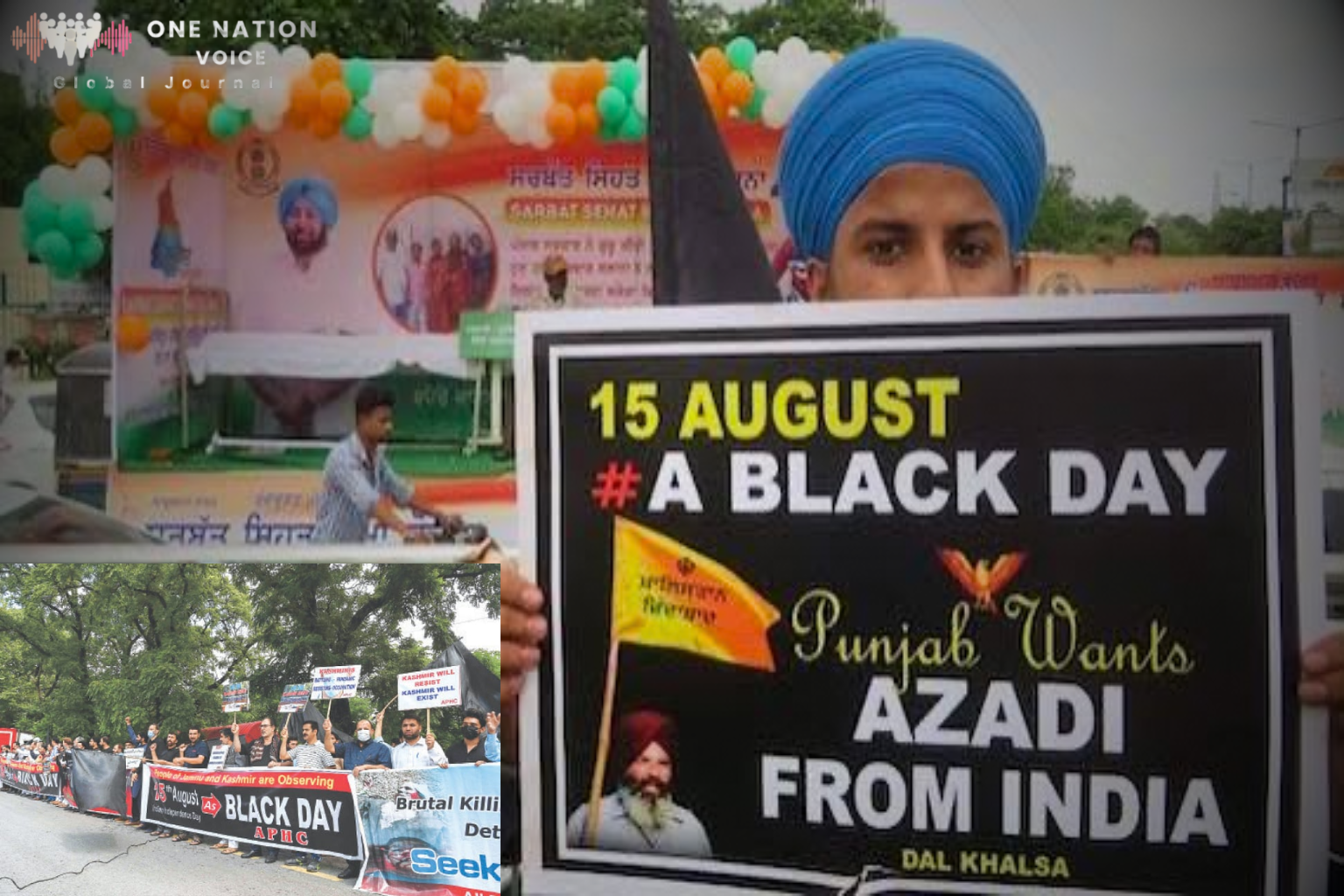
As India hoists its tricolor and Prime Minister Modi addresses the nation from the ramparts of the Red Fort on this 80th Independence Day, a starkly different reality unfolds across vast stretches of the very country celebrating its freedom. In Kashmir, the Indian Northeast, and Punjab, August 15 is not a date of jubilation. It is a day draped in black.
Kashmiris on both sides of the Line of Control and across the world are observing India’s Independence Day as a Black Day, protesting what they describe as India’s illegal occupation of Jammu and Kashmir. The call has been given by the All Parties Hurriyat Conference (APHC) and supported by all pro freedom leaders and organizations. Meanwhile, in the Indian Northeast, the NSCN/GPRN (YA Group) and the ULFA I have jointly called for a total boycott of Independence Day celebrations on August 15, urging people across Nagaland, Assam, Arunachal Pradesh and Manipur to remain indoors. In a joint declaration, the two organisations described Independence Day celebrations in the region as a form of colonialism, subjugation and systematic suppression of human rights.
These are not marginal voices. These are the voices of entire peoples whose relationship with the Indian state has been defined not by inclusion, but by force.
For Kashmiris, the observance of Black Day is not a rejection of freedom itself, but a protest against what they regard as the denial of their right to determine their own political future. India’s first Prime Minister Jawaharlal Nehru had made commitments to the people of Jammu Kashmir regarding their political future, and those commitments were never honored. The United Nations Security Council resolutions on Kashmir’s right to self determination remain unimplemented decades later, a glaring contradiction for a country that frames itself as the world’s largest democracy.
A country celebrating its liberation from colonial rule is confronted by a people who argue that their own political future was never finally determined. The symbolism is profound and deeply uncomfortable for New Delhi.
On the very day India celebrates the principle of national freedom, millions of its own people are raising black flags to remind the world that their freedom remains an unresolved question.
The situation in the Northeast is equally telling. The organizations said they opposed the celebration of Indian Independence Day in what they referred to as Wesean soil, asserting that the people of Western South East Asia have a distinct history, identity, culture and connection to their ancestral land. The NSCN and ULFA I did not merely issue words, they said this year’s call would not involve a general shutdown due to the ongoing flood situation in Assam, noting that a shutdown could disrupt rescue, relief, rehabilitation and reconstruction activities. Even in protest, these groups show a measure of humanitarian consciousness that their detractors rarely acknowledge.
New Delhi’s response to all of this has been, as always, security first. Assam ramped up security measures across the state following calls for boycott. In Kashmir, Indian authorities have heavily militarized the valley with strict security measures around official Independence Day events. The Armed Forces (Special Powers) Act (AFSPA) remained in effect in Jammu and Kashmir and several northeastern states, providing effective immunity from prosecution to security forces, even for serious human rights abuses.
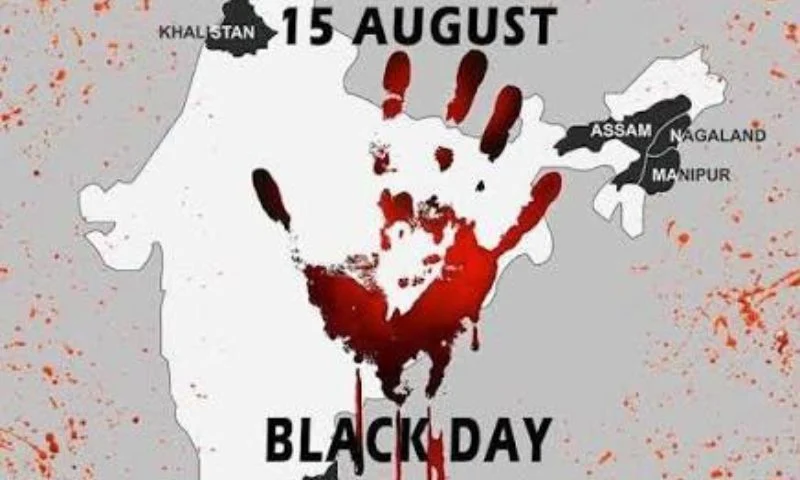
AFSPA is perhaps the single most damning testimony to the nature of India’s governance in these regions. In September 2025, the Government extended AFSPA for six months in parts of Manipur, Nagaland, and Arunachal Pradesh. Generations have grown up under a law that grants soldiers the authority to arrest without warrant, search homes by force, and open fire on civilians under extraordinary circumstances, and military personnel operating under it are shielded by one of the most controversial legal protections in India. Critics have long called it a license for abuse. The families of the disappeared call it a system designed to prevent justice.
The human rights record underpinning these protests is documented, not imagined. In January 2026 alone, Indian authorities continued systematic campaigns of mass detention and collective punishment through raids, cordon and search operations and employment terminations, while escalating their crackdown on VPN use, targeting at least 1,100 people. In the aftermath of the Pahalgam attack, Indian forces arrested more than 2,000 Kashmiris and demolished several homes in a sweeping crackdown across multiple districts. UN experts noted that India’s response resulted in the arrest and detention of around 2,800 individuals, including journalists and human rights defenders.
Even the All Naga Students’ Association, Manipur (ANSAM) directed all Naga students, youths and the Naga populace to abstain from participating in Independence Day celebrations, reaffirming its commitment to an acceptable, inclusive and honourable Naga political solution based on the 2015 Framework Agreement signed between the Indian government and the NSCN, a framework agreement whose implementation New Delhi has repeatedly stalled.
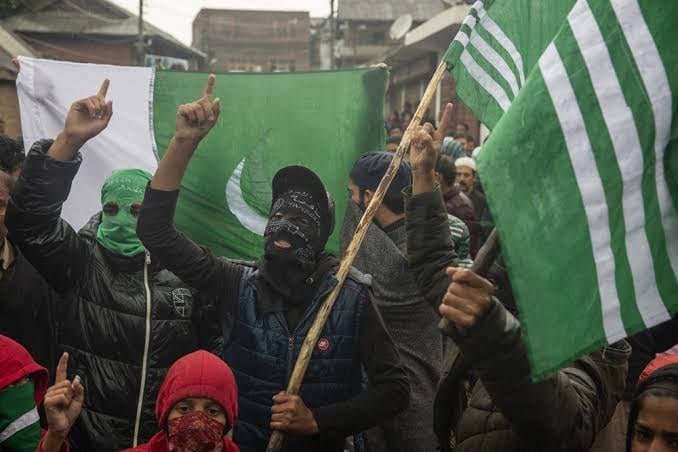
The pattern is clear. From the valleys of Kashmir to the hills of Nagaland, from the plains of Assam to the mountains of Manipur, the Indian state faces a crisis of legitimacy that no amount of security deployment can resolve. Troops at checkpoints do not answer the question of why millions of people feel no ownership over a state that claims to represent them. Shutting down the internet does not silence the underlying grievances. Arresting students and journalists does not make the dispute disappear from UN archives.
Despite Indian military occupation, political repression, rights violations, arrests and curbs on freedom of expression, Kashmiris will not give up their demand for the right to self determination. The same resolve echoes from Kohima to Guwahati to Imphal.
On the very day India celebrates the principle of national freedom, Kashmiris and millions in the Northeast are reminding the international community that their own political future remains unsettled.
For them, India’s Independence Day is not a day of celebration. It is a day of protest and mourning, symbolizing their rejection of imposed rule and their continued demand for the right to determine their political future.
Independence, when it belongs to some and is denied to others, is not independence at all. It is occupation wearing a different flag.
Until India acknowledges this reality and chooses dialogue over deployment, August 15 will continue to carry two meanings, and the one written in black flags may prove far more enduring than the one written in tricolor.
Disclaimer:
The views and opinions expressed in this article are exclusively those of the author and do not reflect the official stance, policies, or perspectives of the Platform.

