


Pakistan Strongly Condemns Houthi Drone Attack on Taif
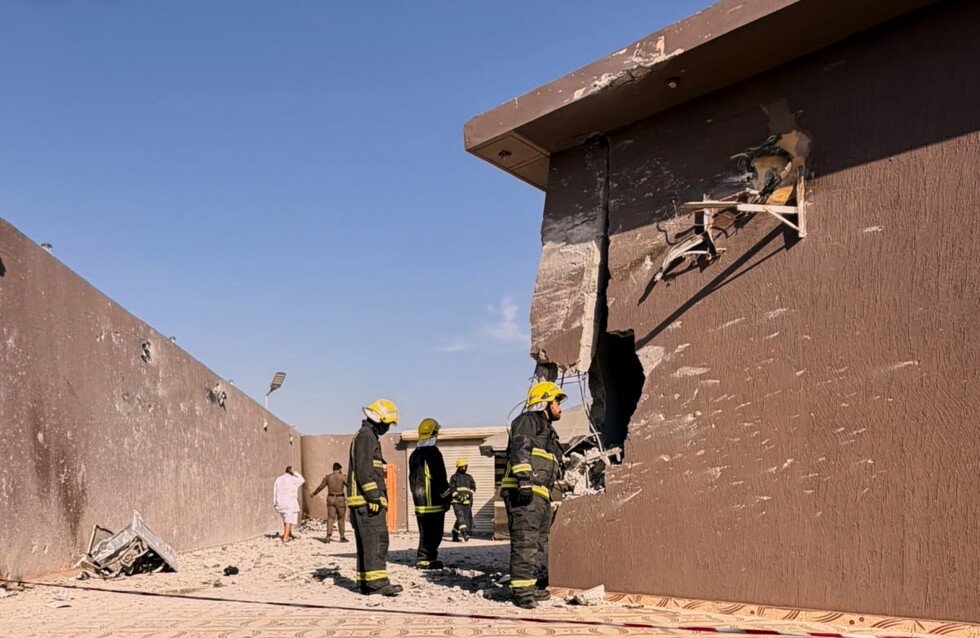
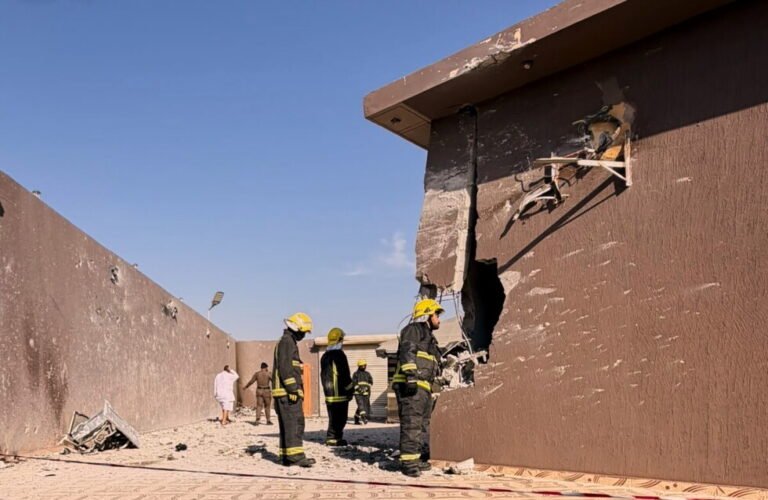
The drone attack on Taif is another disturbing reminder of how quickly violence in Yemen can spill beyond national borders and place ordinary people at risk. According to Saudi authorities, debris from an intercepted drone launched by the Houthi militia fell in Taif on September 17, killing a Yemeni resident and injuring a Saudi citizen and a Pakistani resident. The Pakistani was reported to be in critical condition. Buildings and vehicles were also damaged in the incident. What might appear on a military map as another cross-border strike had an immediate human cost, affecting people of three different nationalities who happened to be living their lives far from the battlefield.
Pakistan responded firmly. Deputy Prime Minister and Foreign Minister Ishaq Dar expressed deep concern over the attack and said Pakistan strongly condemned the provocation because it endangered innocent lives and threatened regional peace and security. He also reiterated Pakistan’s solidarity with Saudi Arabia and its people. Islamabad’s reaction is consistent with its broader position on recent attacks against Saudi territory. Earlier in September, Pakistan’s Foreign Ministry condemned Houthi attacks against civilian and economic targets in Abha, Khamis Mushait, Jazan and Najran and reaffirmed its support for Saudi Arabia’s sovereignty, territorial integrity, security and prosperity.
The importance of the Taif incident goes beyond the casualty figures. Drone warfare has made geographical distance less meaningful. A remotely launched weapon can cross borders within minutes, while interception itself does not guarantee that civilians will remain safe. Falling debris can kill, injure and damage civilian property, as Taif has now demonstrated. This makes every launch toward a populated area inherently dangerous, irrespective of whether the intended target is successfully struck.
For Saudi Arabia, the issue is fundamentally connected to the security of its territory, citizens and millions of foreign residents. Pakistanis form part of that expatriate population, making instability in the Kingdom a direct concern for Islamabad as well. Pakistan’s solidarity with Saudi Arabia therefore reflects not only longstanding bilateral relations but also a practical responsibility to protect the interests and welfare of Pakistani nationals living in the Kingdom.
There is also a much wider strategic problem. Renewed Houthi attacks and the escalation of fighting around Yemen’s Red Sea coast have increased pressure on one of the world’s most sensitive maritime corridors. Recent fighting has affected areas close to the Bab al-Mandab Strait, the narrow passage connecting the Red Sea with the Gulf of Aden. Reuters has reported that intensified conflict around Yemen’s western coastline is creating new risks for regional security and maritime traffic. What happens around Bab al-Mandab does not stay confined to Yemen. Disruption there can affect shipping routes, insurance costs, energy transportation and international commerce far beyond the Arabian Peninsula.
That is why continued drone and missile attacks present a problem larger than any single confrontation. Every new strike raises the possibility of retaliation. Retaliation can then trigger another attack, creating an escalation cycle in which political space gradually disappears and military responses become increasingly difficult to contain. The most serious consequence is borne by civilians, whether they are Yemenis already suffering from years of conflict or residents of neighboring countries suddenly exposed to cross-border violence.
The humanitarian situation inside Yemen makes restraint even more important. Renewed fighting has already displaced more than 100,000 people, according to recent reporting, with thousands seeking safety elsewhere as violence spreads along the Red Sea coast. Yemen has endured years of institutional fragmentation, economic hardship and humanitarian distress. Another prolonged regional confrontation would deepen these problems rather than resolve the underlying political dispute.
Condemning attacks against Saudi territory therefore does not require abandoning diplomacy. In fact, the opposite is true. Effective diplomacy becomes more urgent when military escalation starts threatening civilians and neighboring states. Pakistan has repeatedly advocated dialogue and peaceful settlement in Yemen and has supported a Yemeni-led and Yemeni-owned political process. Pakistan’s Foreign Ministry stated earlier this year that Islamabad continues to advocate peace, diplomacy and a Yemeni-led solution to the conflict.
That position also corresponds with the approach being pursued by the United Nations. UN officials have stressed that there is no sustainable military solution to Yemen’s conflict and have called for an inclusive, Yemeni-owned political process under UN auspices. In July, the UN warned that escalating regional tensions could generate another cycle of confrontation and argued that negotiated dialogue offered the durable route toward settlement.
The immediate priority should therefore be clear. Cross-border drone and missile attacks that place civilians in danger need to stop. Saudi sovereignty and territorial integrity must be respected, while every possible diplomatic channel should remain open to prevent further escalation. At the same time, the political future of Yemen cannot ultimately be decided through drones, missiles or competing regional interventions. It must emerge from negotiations involving Yemenis themselves.
The tragedy in Taif should serve as a warning rather than the beginning of another escalation cycle. A Yemeni citizen lost his life, a Saudi citizen was injured and a Pakistani national was left critically wounded. Behind strategic calculations are individuals and families who bear the consequences of decisions taken far from them. Pakistan’s condemnation of the attack, its solidarity with Saudi Arabia and its simultaneous support for dialogue reflect two principles that need not be contradictory: states have a right to security, and lasting regional security ultimately requires political settlement rather than perpetual confrontation.