

Reality of Staged Protest in AJK Exposed by Confession
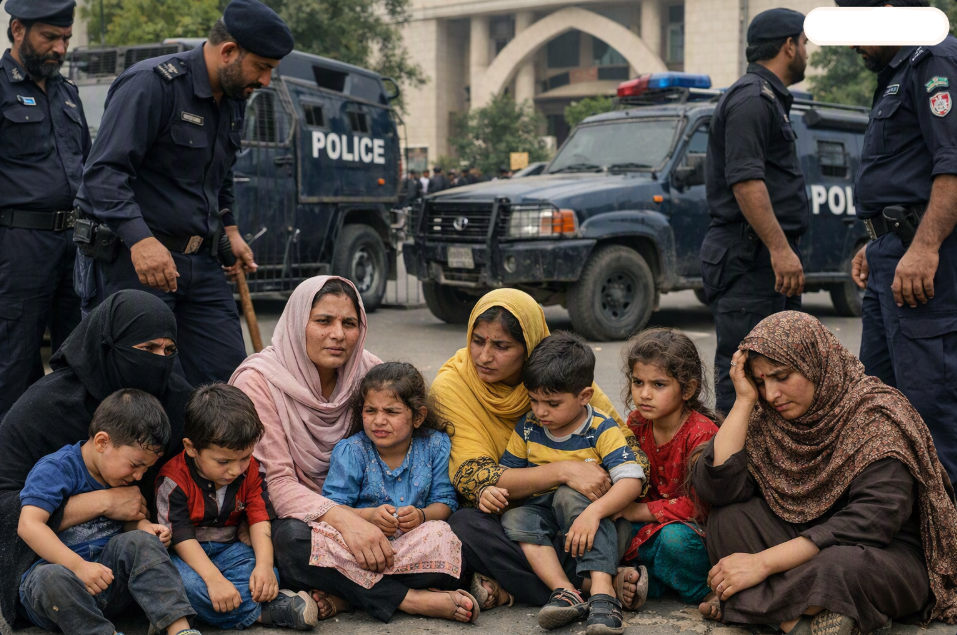
A staged demonstration outside the AJK Supreme Court reveals how some individuals are exploiting a legitimate civil rights movement to manufacture asylum evidence and why that matters deeply for AJK’s credibility.
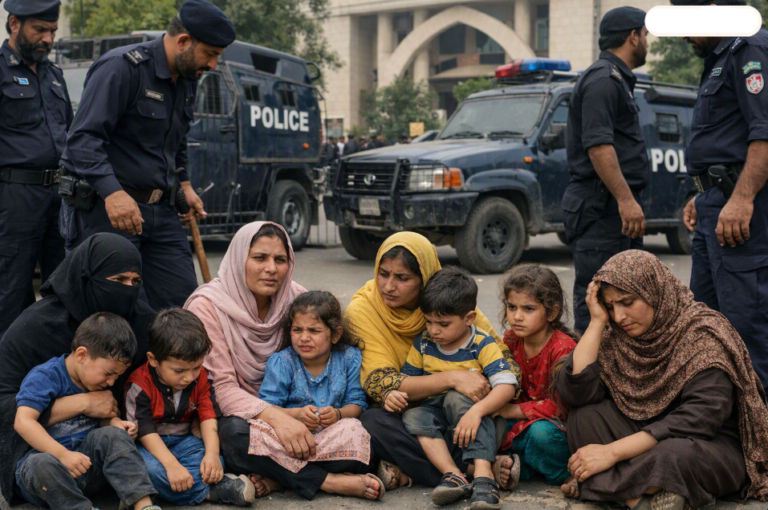
On the morning of September 22, 2026, a small group of women and children gathered in front of the Azad Jammu and Kashmir Supreme Court in what appeared, at first glance, to be yet another act of civic solidarity with the Joint Awami Action Committee. AJK has seen months of real, raw, and often painful protest this year. People have died. Families have suffered. The JAAC movement, however controversial in its methods, grew out of genuine grievances: overcrowded refugee seats diluting local representation, broken promises from the Muzaffarabad Agreement, and economic pressures that have ground ordinary Kashmiris down for years. That context made the scene outside the court look unremarkable.
It wasn’t.
Police investigation quickly revealed something far more cynical at work. The protest was organized by one Sumaira Jahangir, wife of Zeeshan Kiyani, a man who has been living in Italy for the past six years. The couple’s objective, as confirmed by Sumaira’s own confession, had nothing to do with refugee seats, constitutional amendments, or the 38 point charter of JAAC demands. The protest was, in blunt terms, a prop. A carefully arranged scene designed to generate video footage of women and children facing police action, footage that would then be submitted to Italian immigration authorities to strengthen Zeeshan’s application for citizenship through asylum.
Sumaira Jahangir’s confessional statement (verbatim)
میں سمیرہ جہانگیر، زوجہ زیشان کیانی، ہمبور منیری محلہ میں رہنے والی ہوں۔ میرا آج احتجاج کرنے کا مقصد یہ تھا کہ میرے شوہر چھ سال سے اٹلی میں ہیں، انہیں وہاں کی نیشنلٹی چاہیے۔ اس لئے میں اپنی جٹھانی اور ان کے بچوں کو لے کر 22 ستمبر کو احتجاج کرنے آئی تھی تاکہ ویڈیوز ریکارڈ کر سکوں اور میرے شوہر کو وہاں نیشنلٹی مل جائے۔ میں اس بات پر شرمندہ ہوں۔ میرا عوامی ایکشن کمیٹی سے کوئی تعلق نہیں ہے، نہ ہے، نہ رہے گا۔
She brought her sister in law. She brought six children. She, by her own admission, had no connection to JAAC, “not now, not ever,” as she put it in her statement. She was ashamed, she said. That shame, at least, reads as genuine.
The protest was a prop. A carefully arranged scene designed to generate video footage of women and children facing police action, to strengthen an Italian asylum application.
This incident sits uncomfortably within a much larger pattern. According to Pakistan’s Senate Standing Committee on Overseas Pakistanis, over 125,000 Pakistanis have applied for political asylum in Italy alone. The European Union Asylum Agency, in its May 2026 Country of Origin Information report, noted that between November 2024 and March 2026, Pakistani nationals lodged approximately 27,000 applications for international protection across EU+ countries. Italy’s rejection rate for Pakistani asylum cases has historically hovered above 90 percent, and yet the volume of applications continues, because even a failed claim can mean years of legal residency and the possibility of eventual status regularisation.
The asylum pipeline has, for a subset of applicants, become less about fleeing genuine danger and more about manufacturing the appearance of danger. This is not a new phenomenon. Passport officials quoted in Pakistani media have noted that many asylum seekers who claim persecution are later found to be regularly returning to the very countries they claimed to be fleeing. Italy’s authorities have formally complained to Pakistan that issuing new passports to such individuals violates international law. The credibility damage is real and cumulative.
What makes the Sumaira Jahangir case particularly troubling is the instrumentalization of children. Six minors were brought to a protest they had no understanding of, positioned as visual evidence of state repression, in service of a visa strategy cooked up thousands of miles away in Italy. Whatever one thinks of the legal and political merits of asylum law, using children as props in a manufactured scene of civic unrest crosses a line that should concern anyone, regardless of their political sympathies.
It also, critically, damages the JAAC movement itself. The Joint Awami Action Committee has spent three years building a record of genuine civil society mobilization. It emerged in 2023 from real frustrations over wheat prices, electricity shortages, and political marginalization. Its 2024 and 2026 protests drew blood, literally. People who marched under its banner did so at personal risk. The AJK government banned the organization in June 2026 under anti terrorism laws, a move JAAC contests vigorously. Whatever the legal merits of that ban, the movement’s credibility before courts, international observers, and ordinary Kashmiris depends on the authenticity of its membership and its actions.
When a woman with no connection to JAAC stages a protest under its shadow and exploits the imagery of its struggle for a personal visa gambit, she borrows credibility she hasn’t earned, and diminishes the credibility of those who have.
There is also a disinformation dimension that the AJK police chief raised at a separate press conference in June 2026. He warned that AI generated content and fabricated videos were being circulated to misrepresent ground conditions in AJK, a concern validated when fact checkers later confirmed that a viral clip of an alleged JAAC member shooting at security personnel was entirely AI generated. In that environment, manufactured protest footage destined for European asylum offices is another node in the same information ecosystem: content designed not to reflect reality, but to construct a version of it for a target audience.
None of this means AJK has no genuine problems. It does, and they are serious. Governance gaps, constitutional ambiguities around refugee seats, the long shadow of the unimplemented Muzaffarabad Agreement, economic stagnation, these are real, documented grievances that deserve serious institutional responses. Dismissing them because of one woman’s opportunism would be as dishonest as pretending her opportunism didn’t happen.
But accountability runs in both directions. The state must be held to account for its promises and its use of force. And those who exploit the symbolism of civil protest, borrowing its imagery, its language, and its martyrdom, while serving none of its purposes, must also be called out. Sumaira Jahangir was not a protester. She was a filmmaker of her own persecution, shooting a short film for an audience of Italian immigration officers, using her children as cast members.
The confession is on record. The children are home. The court footage was never shot. And somewhere in Italy, a visa application presumably remains pending, minus its planned centerpiece. That is, on balance, a better outcome than the alternative.

